Strike CEO Jack Mallers dismisses idea that Wall Street threatens Bitcoin

In a recent statement, Jack Mallers, the CEO of Strike, addressed the ongoing concerns regarding Wall Street's influence on Bitcoin. He firmly dismissed the notion that traditional financial institutions could pose a significant threat to the cryptocurrency's existence. Mallers contended that if Wall Street were to "kill" Bitcoin, it would only serve as a testament to the asset's fundamental weaknesses, suggesting that its success should not hinge on external factors like institutional interest or manipulation. His comments come at a time when the cryptocurrency market is navigating a complex landscape of regulatory scrutiny and evolving relationships with established financial players.
To better understand Mallers' perspective, it's important to consider the historical context of Bitcoin and its development. Since its inception in 2009, Bitcoin has positioned itself as a decentralized alternative to traditional finance, promoting the idea of a peer-to-peer monetary system free from centralized control. Over the years, Wall Street has gradually engaged with Bitcoin, leading to the emergence of Bitcoin futures, ETFs, and other investment vehicles. This relationship has sparked debates about the integrity of Bitcoin's decentralized ethos and whether institutional participation might undermine its core principles.
The implications of Mallers' stance are significant for the broader cryptocurrency market. If Bitcoin were to be viewed as impervious to the influence of Wall Street, it could foster greater confidence among retail investors and crypto enthusiasts alike. This sentiment might encourage more individuals to adopt Bitcoin as a viable asset class, potentially driving demand and price appreciation. Conversely, if Wall Street's involvement were perceived as a threat, it could lead to increased volatility and skepticism within the market, deterring new investments and innovations.
Industry reactions to Mallers' comments have been mixed. Some experts agree with his assertion, emphasizing that a truly resilient asset should withstand external pressures and market fluctuations. Others, however, caution against underestimating the power of institutional investors, pointing out that their strategies and interests could shape the market in unforeseen ways. The ongoing dialogue reflects a broader tension within the crypto community about the role of traditional finance in a space that has long championed decentralization and autonomy.
Looking ahead, the relationship between Bitcoin and Wall Street will likely continue to evolve. As regulatory frameworks become more defined, and as institutional players further integrate into the cryptocurrency ecosystem, the dynamics will shift. Mallers' remarks may ignite further discussions about Bitcoin's future and its ability to maintain its independence amid growing institutional interest. Stakeholders across the spectrum will be watching closely to see how these developments unfold and what they mean for the future of Bitcoin and the cryptocurrency market as a whole.

CoinMagnetic Team
Crypto investors since 2017. We trade with our own money and test every exchange ourselves.
Updated: May 2026
From our insights:
Related news

GameStop possibly forfeits $31 million in Bitcoin gains from options trade

Researchers trace 1.1 million Bitcoin to early miner but Satoshi's identity remains unclear

Bitcoin, ether perpetual volumes on Kalshi are dominated by an unusual, repetitive trade, data shows
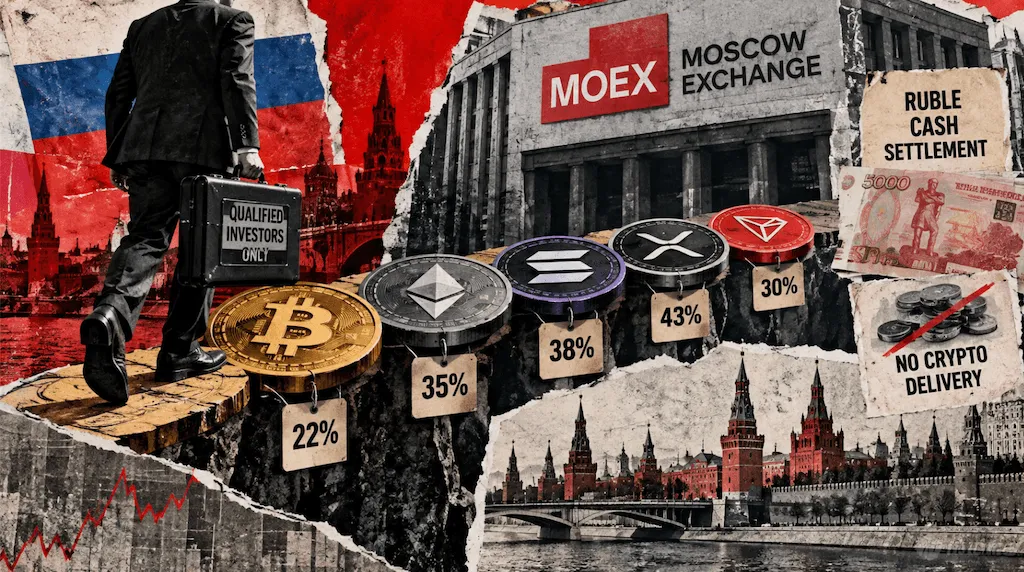
Moscow Exchange introduces 5 crypto perpetual futures amid 600 billion ruble demand

SoFi begins stablecoin settlement on Mastercard network for program expected to exceed $25 billion in annualized volume