Strategy's Saylor's explanation for bitcoin's slide isn't what bears think

In recent discussions surrounding Bitcoin's recent price decline, MicroStrategy's CEO Michael Saylor offered a perspective that diverges from the more pessimistic interpretations held by market bears. Saylor posited that the drop in Bitcoin's value is largely a result of capital rotation into artificial intelligence (AI) technologies, rather than a fundamental weakness in the cryptocurrency itself. He emphasized that investors are reallocating their resources towards AI, which has been gaining substantial traction and visibility in the financial landscape, thereby impacting Bitcoin's market performance. This assertion highlights a shift in investment priorities that Saylor believes is not an indictment of Bitcoin's long-term prospects.
To understand the context of Saylor's argument, we must consider the broader market dynamics at play. The emergence of AI as a transformative technology has drawn significant attention and investment, particularly as companies and institutions race to harness its potential. The hype surrounding AI innovations has led to a surge in stock prices within the tech sector, prompting investors to pivot away from traditional assets like Bitcoin. Historically, Bitcoin has often been viewed as a hedge against inflation and market instability, but in the current environment, it seems to be competing with the allure of cutting-edge technologies that promise higher returns.
This capital rotation is crucial for the cryptocurrency market, as it reflects changing investor sentiment and priorities. Saylor's view suggests that the recent downturn in Bitcoin is not indicative of a loss of faith in the asset itself, but rather a response to broader economic trends. If this theory holds true, it may imply that Bitcoin's value could rebound as the initial excitement around AI settles and investors reassess their portfolios. However, the continued allure of AI could pose long-term challenges for Bitcoin if the trend persists and shifts capital away from digital currencies for an extended period.
The industry response to Saylor's assessment has been mixed, with some experts endorsing his view while others remain skeptical. Proponents of Bitcoin argue that its fundamentals–such as its scarcity and decentralized nature–still provide a solid foundation for growth, irrespective of short-term market fluctuations driven by other sectors. Critics, however, contend that the current bearish sentiment is rooted in deeper issues, such as regulatory concerns and macroeconomic pressures, which could undermine Bitcoin's value in the long run. This ongoing debate highlights the complexity of market dynamics and the challenges of predicting price movements in an evolving landscape.
Looking ahead, the trajectory of Bitcoin will likely hinge on a combination of external market forces and internal developments within the cryptocurrency space. As AI continues to capture investor interest, it will be essential for Bitcoin advocates to articulate its unique value proposition and relevance in a rapidly changing financial environment. Furthermore, any shifts in regulatory policies or macroeconomic conditions could influence how investors allocate their capital between Bitcoin and emerging technologies like AI. As we navigate this uncertain terrain, the ongoing dialogue among industry participants will be crucial in shaping Bitcoin's future prospects.

CoinMagnetic Team
Crypto investors since 2017. We trade with our own money and test every exchange ourselves.
Updated: June 2026
From our insights:
Related news

Bitcoin's weekly close above $81,000 signals potential rise to $90,000

Elon Musk's X integrates bitcoin trading options for U.S. users
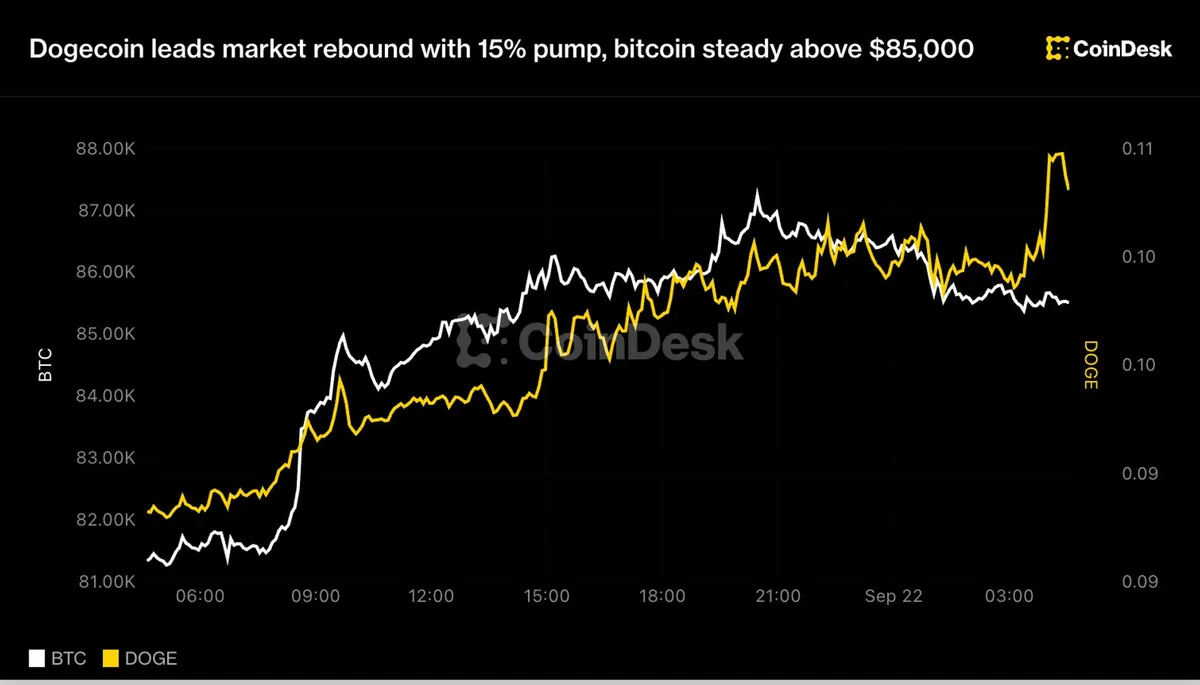
Dogecoin's 15% surge drives market recovery as bitcoin stabilizes above $85,000

Cardano adds tools for AI agent payments, joining Solana and XRP Ledger

Trueo prediction market moves from Base to Ethereum