Brent Kovar found guilty in $24 million AI crypto fraud case
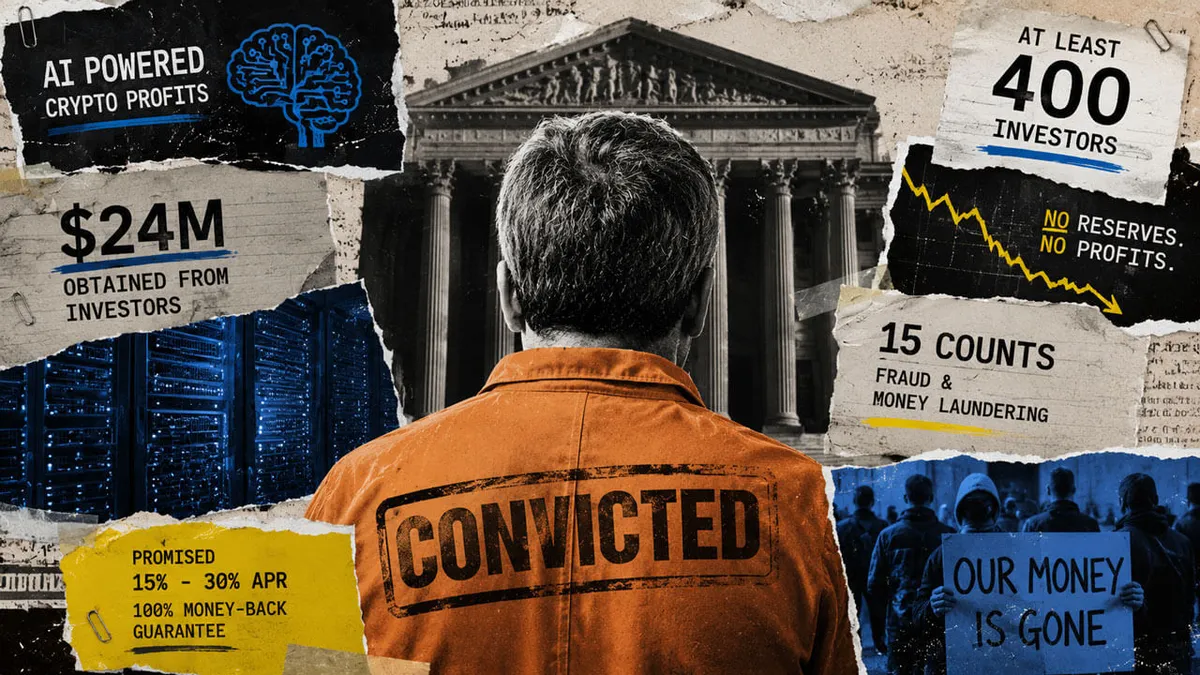
Brent Kovar, the owner of Profit Connect, has been convicted by a federal jury on 15 counts related to a fraudulent scheme that amassed at least $24 million from investors. Prosecutors revealed that Kovar misled over 400 investors by making false promises about returns and claiming the existence of reserves that were never actually there. This verdict highlights the severe legal repercussions for those who engage in fraudulent practices in the rapidly evolving crypto landscape.
This case sheds light on the ongoing issues surrounding investor trust and regulatory oversight within the cryptocurrency sector. The emergence of AI-driven investment schemes has attracted both legitimate interest and nefarious actors looking to exploit those eager to capitalize on technological advancements. Kovar's actions are not isolated; they represent a concerning trend of scams that prey on unsuspecting investors, particularly in the fast-paced world of cryptocurrency, where information asymmetry can lead to significant financial losses.
The implications of Kovar's conviction extend beyond individual accountability and into the broader market sentiment. As the crypto industry continues to mature, regulatory bodies are likely to scrutinize investment schemes more closely, particularly those that leverage buzzwords like AI to draw in investors. Such convictions may serve as a deterrent to potential fraudsters but could also instill caution in investors, affecting their willingness to engage in new opportunities.
Industry experts have expressed a mix of relief and concern following the verdict. Some see it as a necessary step toward holding individuals accountable for fraudulent activities, while others warn that it could lead to increased regulatory pressures that may stifle innovation. The case is a reminder of the importance of due diligence and transparency, as well as a signal to regulators that more stringent measures may be needed to protect investors in this volatile market.
Looking ahead, this conviction may pave the way for more significant regulatory actions against fraudulent schemes in the crypto space. Stakeholders will need to remain vigilant as the landscape evolves and new technologies emerge. The focus will likely be on enhancing investor protections and ensuring that legitimate projects can thrive without being overshadowed by fraudulent activities.

CoinMagnetic Team
Crypto investors since 2017. We trade with our own money and test every exchange ourselves.
Updated: August 2026
From our insights:
Related news

French committee adopts stablecoin swap and exit taxes before rejecting budget
CFTC seeks to classify event contracts as swaps amid ongoing legal battles

OpenAI and Anthropic war-game AI cyberattacks to prepare rapid congressional briefings

Blockchain.com applies for US licenses to launch event contracts and futures
New York AG secures up to $35 million from former Celsius CEO Alex Mashinsky