Meet Qwable: The Free Local Model That Thinks Like Claude Fable

Recently, the crypto community has been buzzing with the introduction of Qwable, a new model that has been designed to operate locally while mimicking the reasoning style of Claude Fable, particularly that of Fable 5. This innovative model is being lauded for its ability to process information and generate responses without the overhead of extensive resources typically required for larger models. The creators of Qwable fine-tuned Fable 5's reasoning capabilities to create a more efficient and accessible version, which has sparked interest among developers and businesses alike. Interestingly, the model has been stripped of its conscience, leading to discussions about the implications of such a design choice.
To understand the significance of Qwable, it's essential to consider the context within which it has emerged. Fable 5 has been a noteworthy player in the realm of AI, known for its advanced reasoning capabilities and wide range of applications. However, the high computational requirements of such models often create barriers for smaller enterprises or individual developers looking to leverage AI technology. By creating a local variant, Qwable aims to democratize access to sophisticated reasoning capabilities, potentially leveling the playing field in the tech landscape. The decision to remove the model's conscience raises ethical questions about the responsibilities of AI developers and the potential consequences of creating models that operate without ethical considerations.
The introduction of Qwable carries significant implications for the market. As businesses increasingly seek AI solutions that are not only effective but also cost-efficient, Qwable's local model could become a popular choice among startups and smaller companies. This shift may lead to a broader adoption of AI across various sectors, fostering innovation and competition. Moreover, the ability to run AI models locally can enhance privacy and security, as sensitive data does not need to be sent to external servers for processing. This could attract businesses concerned about data protection and compliance, further driving interest in Qwable.
Industry reactions to the launch of Qwable have been mixed, with some experts praising its potential for practicality and accessibility, while others express concern over the ethical implications of a model without a conscience. Critics argue that removing moral considerations from AI could lead to unintended consequences, especially in applications that require empathy or social understanding. Proponents, however, contend that the model's efficiency and localized operation make it a valuable tool for tasks that do not hinge on moral judgments. As the conversation around AI ethics continues to evolve, Qwable has undoubtedly become a focal point for discussions about the future of responsible AI development.
Looking ahead, the trajectory of Qwable will be closely monitored by both enthusiasts and skeptics alike. Its impact on the market will depend on how effectively it can be integrated into existing systems and whether it can carve out a niche among its larger counterparts. As more developers experiment with Qwable, we may see a diverse range of applications emerge, demonstrating the versatility of AI when tailored to specific needs. Additionally, ongoing discussions regarding the ethical implications of AI will likely influence future iterations of models like Qwable, potentially leading to a renewed focus on incorporating conscience and moral reasoning back into AI systems.

CoinMagnetic Team
Crypto investors since 2017. We trade with our own money and test every exchange ourselves.
Updated: June 2026
From our insights:
Related news
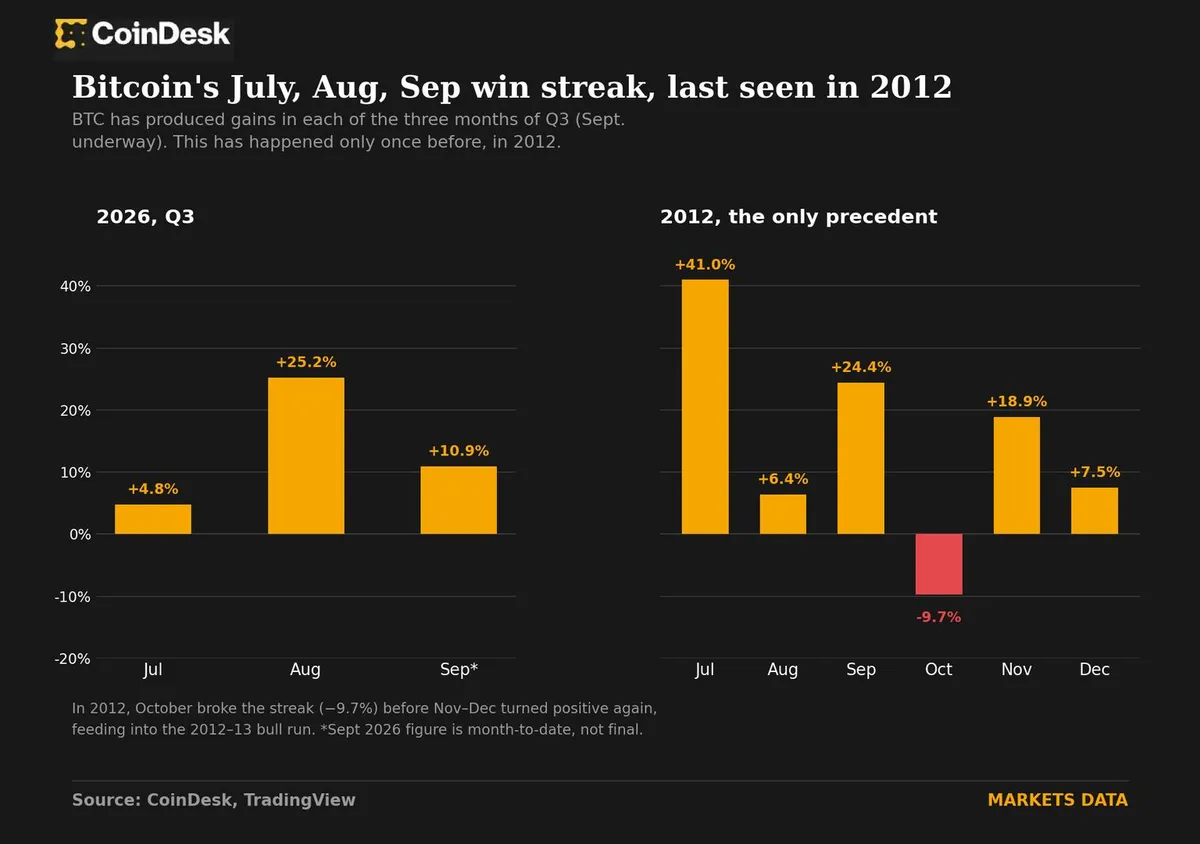
Bitcoin's on a streak it hasn't hit since 2012

CFTC warns against risky prediction market contracts following Trump's speech trades
CFTC issues advisory on risks of cheating in prediction markets

CFTC issues warning on manipulation risks in prediction markets tied to mentions

Ancient wallets move $161 million in bitcoin, including 600 BTC today