‘Materially softer demand’: Bitcoin hits two-month low below $69,000 amid institutional outflow streak, fading onchain interest

Bitcoin has recently experienced a significant downturn, dropping below the $69,000 mark–a two-month low that has raised concerns among investors. This decline comes amid a streak of institutional outflows, with exchange-traded funds (ETFs) witnessing an outflow of $3.45 billion over just 11 days. Additionally, the market has seen $742 million in liquidations, indicating high volatility and a shift in investor sentiment. This combination of factors has contributed to a notable decline in on-chain interest, leading to questions about the future performance of Bitcoin and the broader cryptocurrency market.
To better understand this situation, it's essential to consider the context and background of the current market dynamics. Bitcoin had previously enjoyed a period of robust growth, spurred by increasing institutional adoption and positive regulatory developments. However, the recent trend of outflows from Bitcoin ETFs suggests that institutional investors may be reassessing their positions in the cryptocurrency space. This trend is not isolated; it reflects broader market sentiments and the potential impact of macroeconomic factors such as interest rate changes and global economic uncertainties.
The implications of Bitcoin's decline are significant for the market as a whole. A drop to a two-month low can trigger further selling pressure, particularly among retail investors who may be influenced by psychological price levels. Furthermore, the substantial outflows from ETFs may indicate a broader retreat from riskier assets, potentially leading to lower liquidity and increased volatility in the market. Investors will be closely monitoring how these dynamics unfold, as they could set the tone for Bitcoin's performance in the near term.
Industry reactions have been varied, with some experts expressing caution while others view this as a potential buying opportunity. Analysts point to the importance of understanding the underlying factors driving the current market sentiment, emphasizing the need for a long-term perspective. Comments from institutional players suggest that while short-term fluctuations can be unsettling, many remain optimistic about Bitcoin's fundamental value and its role as a digital asset. This divergence in opinions highlights the complexity of the crypto market and the differing strategies employed by various investors.
Looking ahead, the key question will be how the market responds to this downturn and whether it can regain momentum. As we move forward, the focus will likely shift to upcoming regulatory developments and macroeconomic indicators that could influence investor behavior. Additionally, signs of renewed on-chain interest or stabilization in ETF flows may signal a potential recovery for Bitcoin. The next few weeks will be crucial in determining whether this price action is a temporary setback or a sign of a more prolonged bearish trend.

CoinMagnetic Team
Crypto investors since 2017. We trade with our own money and test every exchange ourselves.
Updated: June 2026
From our insights:
Related news
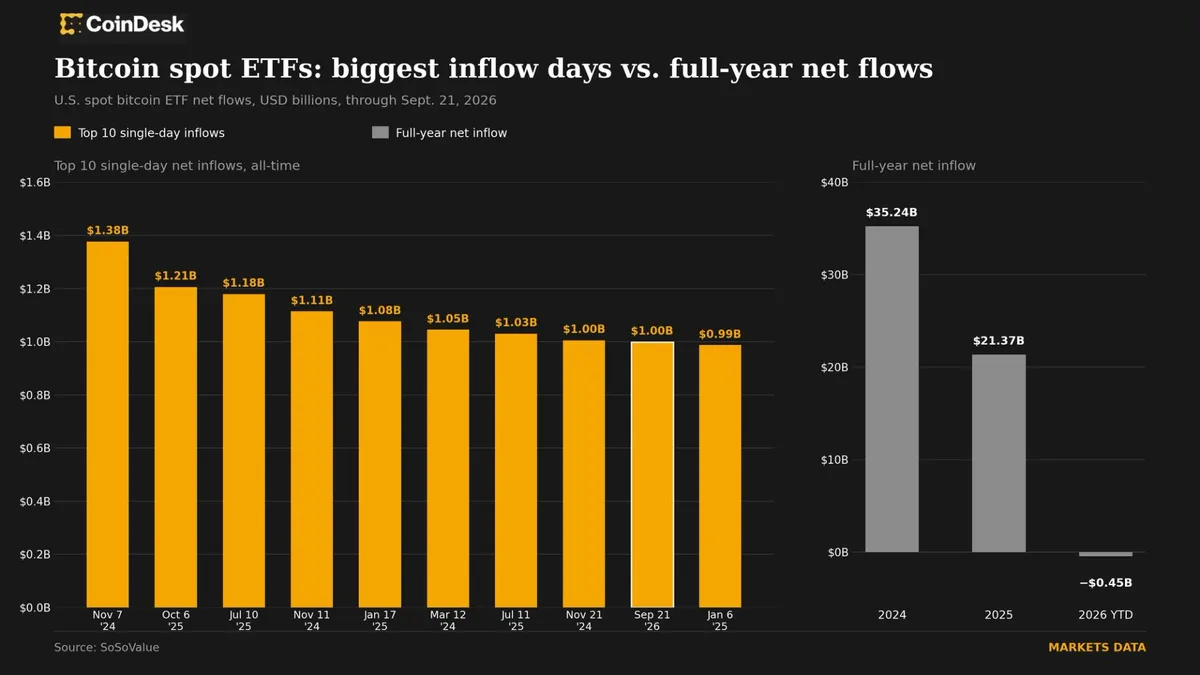
Spot bitcoin ETFs see nearly $1 billion inflow as bitcoin hits January highs

US spot Bitcoin ETFs see nearly $1 billion inflow, highest since October 2025

Bitcoin's rise to $86,000 restores profitability for ETF investors

Apple and Google seek crypto experts, signaling potential stablecoin initiatives

ECB initiates bond purchases using its own funds in crypto-linked system