JPMorgan sees limited institutional demand for perpetual futures

JPMorgan recently released a report indicating that institutional demand for perpetual futures in the cryptocurrency market remains limited. The bank emphasized that these financial instruments are more aligned with speculative trading rather than serving as effective hedging tools. This observation reflects a broader trend where institutional players are cautious about entering into perpetual futures contracts, primarily due to their inherent volatility and the speculative nature of the assets involved. The report highlights that while perpetual futures have gained popularity among retail traders, institutional investors seem to be hesitant to adopt them in their trading strategies.
To provide some context, perpetual futures are a type of derivative that allows traders to speculate on the price of an asset without an expiration date, differing from traditional futures contracts. They are designed to closely track the underlying asset's price, making them attractive for traders looking to capitalize on short-term price movements. However, the intrinsic risks associated with these products, such as high leverage and market volatility, have made institutional investors more skeptical. Historically, institutions have preferred more stable and transparent instruments for risk management, which perpetual futures do not always provide.
This limited interest in perpetual futures could have significant implications for the broader cryptocurrency market. If institutional demand continues to remain muted, it may signal a lack of confidence in the stability and long-term viability of cryptocurrency derivatives. Such a scenario could lead to decreased liquidity in the perpetual futures market, impacting price discovery and potentially increasing volatility. Furthermore, it might also hinder the development of more sophisticated trading strategies that institutions could otherwise bring to the crypto space.
Industry reactions to JPMorgan's assessment have been mixed. Some experts agree with the bank's findings, pointing out that the complexities and risks associated with perpetual futures may deter traditional institutional investors, particularly those who prioritize risk management. Others argue that the current sentiment could shift as the market matures and as institutional participants become more familiar with these products. They believe that with improved regulation and better risk mitigation strategies, perpetual futures could eventually gain traction among institutional players.
Looking ahead, it will be interesting to see how the perpetual futures market evolves in response to these insights. If JPMorgan's analysis holds true, we may witness a continued emphasis on developing more robust risk management tools that address the unique challenges posed by perpetual futures. Moreover, as the cryptocurrency market continues to mature, institutional demand could shift towards more innovative and tailored products that align better with their investment strategies, potentially paving the way for a new era of crypto derivatives.

CoinMagnetic Team
Crypto investors since 2017. We trade with our own money and test every exchange ourselves.
Updated: June 2026
From our insights:
Related news
Citi clients can now process stablecoin payments via Coinbase's banking rails
Goldman Sachs brings $100 billion Treasury fund into crypto’s institutional plumbing

Evernorth's XRP purchasing capacity at risk from SPAC shareholder redemptions
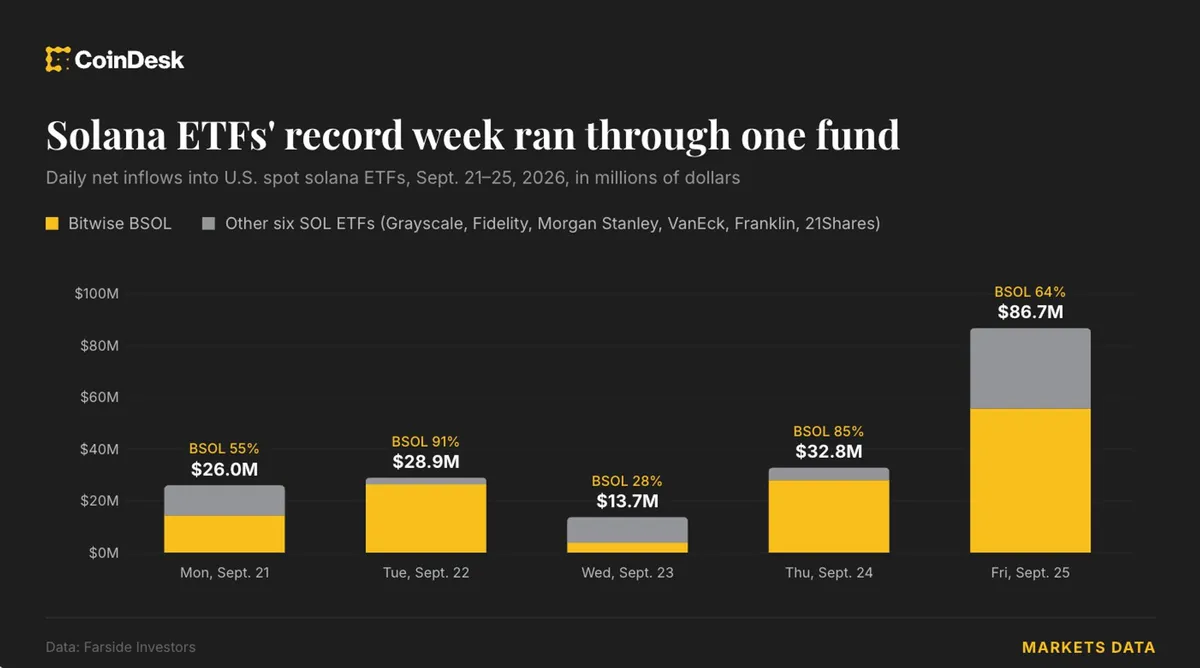
Solana ETFs draw record $188 million in a week as Bitwise takes two-thirds of inflows

Institutional investors divided on Bitcoin's future as market bets change