New Ethereum rule could extend reward lock-up to 2,048 ETH
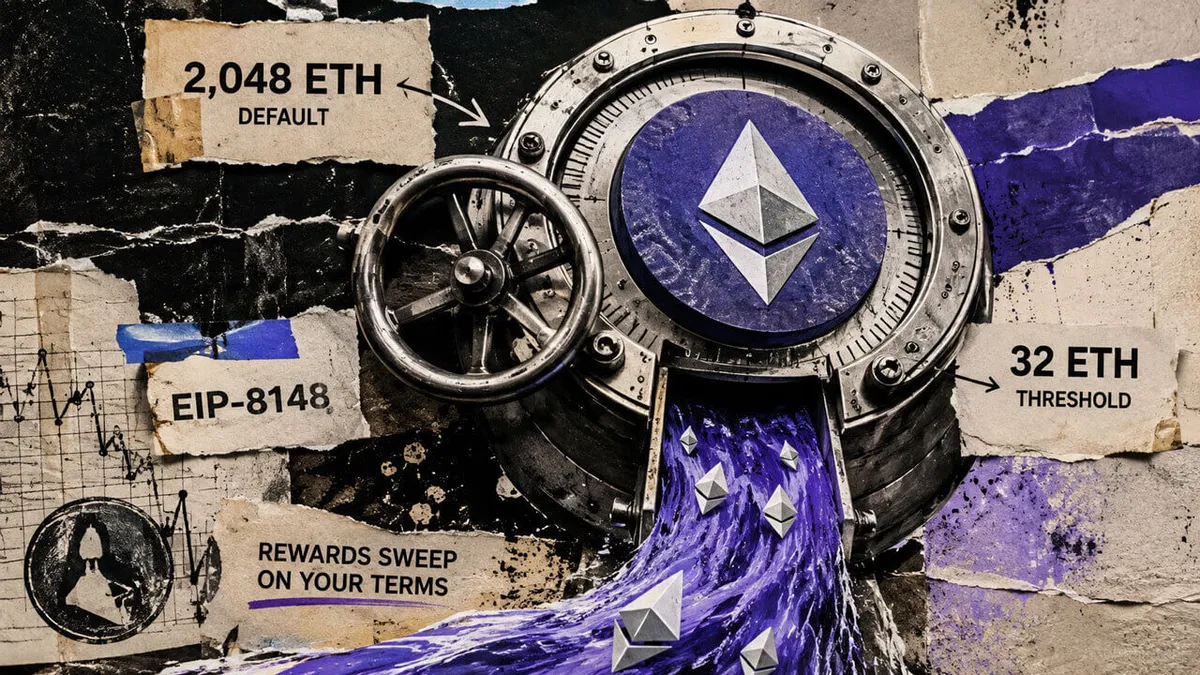
Ethereum is set to introduce a new staking rule under EIP-8148 that could significantly change how users engage with their rewards. This proposal allows for staking thresholds ranging from 32 ETH to a maximum of 2,048 ETH, while maintaining the existing withdrawal and exit mechanics. This means that while users can still exit their staking positions, the potential for longer lock-up periods could impact their liquidity and reward access depending on the amount staked.
The context of this development stems from Ethereum's ongoing evolution towards a more scalable and user-friendly platform. As Ethereum continues its transition to a proof-of-stake consensus mechanism, the introduction of new staking rules is designed to enhance network security and incentivize larger stakes. The adjustment to the staking thresholds reflects a balancing act between encouraging larger contributions and ensuring that user rewards remain accessible.
This change is significant for the market, particularly for those who are actively staking ETH or considering it as part of their investment strategy. By allowing larger stakes, Ethereum aims to attract more substantial investments, which could lead to increased network security and potentially higher reward yields. However, the longer lock-up periods could deter some users who prefer the flexibility of quick access to their staked assets.
Reactions within the industry have been mixed. Some experts see the new rule as a positive step towards enhancing Ethereum's staking ecosystem and promoting decentralization through larger stakes. Others are concerned about the implications for liquidity, noting that locking up rewards for extended periods could lead to frustration among smaller stakers who may not have the capital to meet the higher thresholds.
Looking ahead, it will be crucial for the Ethereum community to monitor the effects of this new staking rule and gather feedback from users to understand its broader implications. The ongoing discussions around staking practices and user experiences will likely shape future proposals and adjustments to Ethereum's staking model, ensuring it aligns with the needs of both large and small holders.

CoinMagnetic Team
Crypto investors since 2017. We trade with our own money and test every exchange ourselves.
Updated: August 2026
From our insights:
Related news

Ajay Shinjin jailed for role in $265,000 SIM-swap crypto theft spree
Spot Bitcoin ETFs see $484.9 million outflow in a single day as trends shift

NFL argues Kalshi's sports contracts are gambling in Supreme Court brief

Decrypt launches self-custodial platform on Solana for financial services

NUVA brings U.S. residential mortgage credit to offshore investors