GSR’s Baehr says tokenized fixed income could play key role in institutional collateral

Andy Baehr, managing director of asset management at GSR, recently shared insights on the potential of tokenized fixed income in the realm of institutional collateral. He emphasized that the concept of mass tokenization of equities is particularly exciting, suggesting that it could lead to more efficient and accessible financial markets. Baehr's perspective highlights an evolving trend where traditional asset classes are increasingly being integrated with blockchain technology, paving the way for innovations in how these assets are utilized in various financial operations.
The backdrop to Baehr’s comments is the growing interest in tokenization across the financial sector. As institutions seek to enhance liquidity and reduce transaction costs, the adoption of blockchain technology presents a viable solution. Tokenization not only allows for fractional ownership but also facilitates quicker settlement times and improved transparency–qualities that are becoming essential in today’s fast-paced markets. The discussion around tokenized assets has gained momentum, particularly as regulatory frameworks continue to evolve, creating a more conducive environment for institutional adoption.
The implications of tokenized fixed income for the market are profound. By enabling assets to be represented digitally, institutions could see significant improvements in the way collateral is managed. This could lead to increased participation from investors who were previously sidelined by high barriers to entry. Additionally, the efficiency of managing tokenized assets could enhance liquidity in fixed income markets, potentially resulting in tighter spreads and better pricing for assets. Overall, this shift could reshape capital markets and redefine investment strategies for institutional players.
Industry experts are largely optimistic about the potential of tokenized assets. Many believe that as the technology matures, we will see a broader acceptance of tokenized fixed income instruments among institutional investors. The excitement around these developments is not limited to GSR, with various firms and startups actively exploring solutions to leverage tokenization for greater operational efficiency. As this narrative unfolds, discussions around best practices and regulatory compliance will likely take center stage, guiding the future of tokenization in finance.
Looking ahead, the next steps for tokenized fixed income will involve deeper collaboration between institutions and technology providers. As more pilot projects and real-world applications emerge, the industry will need to address challenges such as security, regulatory compliance, and interoperability between different blockchain networks. The path forward is promising, and as the dialogue continues, we anticipate significant advancements that could very well redefine the landscape of institutional finance.

CoinMagnetic Team
Crypto investors since 2017. We trade with our own money and test every exchange ourselves.
Updated: August 2026
From our insights:
Related news

BlackRock previews potential for tokenized investment portfolios in finance

Anchorage Digital lays off 17% of staff amid expansion efforts
BNB Chain crosses $1B in tokenized stocks, ETFs as market hits $3.7B

Bitcoin rebounds as ETF demand rises ahead of US jobs data
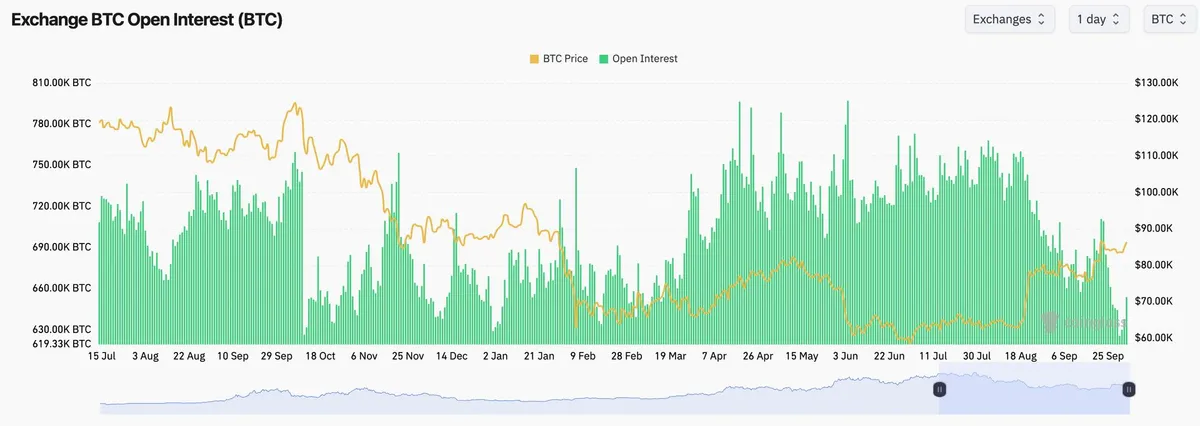
Rising perpetual funding rates indicate bullish sentiment as bitcoin hits $86,500