Goldman Sachs notes tied to Strategy set to pay just 22 cents on the dollar at maturity
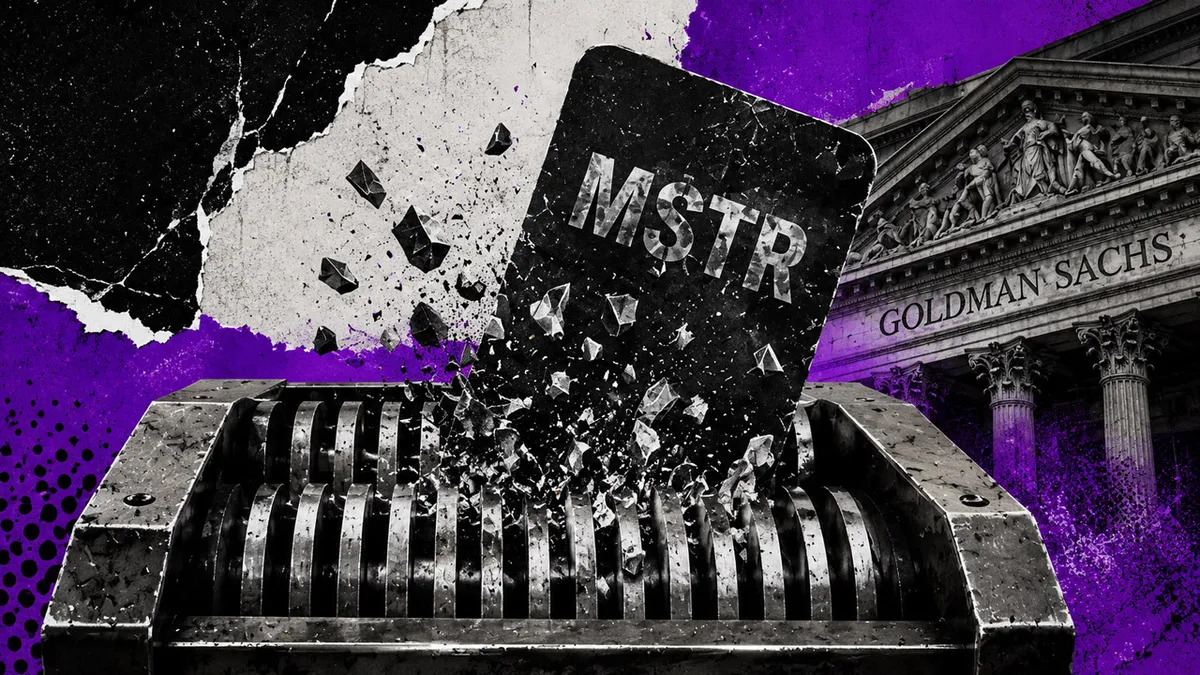
Goldman Sachs has recently indicated that certain notes tied to its structured investment strategy are poised to yield a mere 22 cents on the dollar at maturity. This revelation comes after the company's latest financial assessments, suggesting a significant underperformance for these notes. Specifically, the notes tied to the MicroStrategy (MSTR) stock closed at $217 per $1,000 investment, pending the final calculations from Goldman Sachs & Co. As investors digest this news, it raises questions about the viability of such structured investments and the broader implications for the financial sector.
To understand the gravity of this situation, it is essential to look at the context surrounding Goldman Sachs' strategy. The investment bank has been known for its innovative financial instruments, which are often complex and carry inherent risks. The notes in question are a part of a structured product that links returns to the performance of specific assets, in this case, MicroStrategy's stock. MicroStrategy has been a controversial player in the cryptocurrency space, with its aggressive Bitcoin acquisition strategy leading to both significant gains and losses. The volatility of these assets can directly impact the outcomes of structured notes, highlighting the risks associated with such investments.
The implications of Goldman Sachs' announcement extend beyond just the performance of the notes themselves. A payout of 22 cents on the dollar signals a troubling trend in the market for structured products, particularly those linked to high-risk assets like cryptocurrency. Investors may reevaluate their appetite for such investments, leading to a potential decrease in demand for similar financial instruments. This shift could affect overall market liquidity and investor sentiment towards both traditional and crypto-linked structured products, as market participants weigh the balance between risk and reward.
Industry experts have expressed mixed reactions to the news. Some analysts suggest this could serve as a wake-up call for both investors and financial institutions to reassess their strategies in the face of unpredictable asset performance. Others argue that this is part of the natural evolution of the market, where riskier investments inevitably face corrections. The sentiment seems to indicate a cautious approach moving forward, with many urging a closer examination of the underlying assets tied to structured products before committing capital.
Looking ahead, it remains to be seen how Goldman Sachs will navigate the fallout from this announcement and what adjustments they might make to their structured investment strategies. The firm may need to bolster its risk assessment protocols to regain investor confidence and ensure its offerings align more closely with market realities. Additionally, the broader financial community will likely keep a close eye on how this situation unfolds, as it could set a precedent for the handling of structured products linked to volatile assets in the future.

CoinMagnetic Team
Crypto investors since 2017. We trade with our own money and test every exchange ourselves.
Updated: July 2026
From our insights:
Related news
VanEck Wealth Builder ETF targets a 2 percent bitcoin allocation via spot ETP

Robinhood integrates Ripple RLUSD stablecoin and trading tools

Robinhood adoption of RLUSD builds on Ripple and BNY custody partnerships

Janus Henderson launches first licensed onchain fund with Centrifuge on Stellar
CF Benchmarks bridges traditional and decentralized finance with onchain pricing data