Fidelity International launches Moody’s-rated tokenized fund on Chainlink

Fidelity International has made headlines with its recent launch of a tokenized liquidity fund that has received a Moody’s rating. This innovative fund operates on the Chainlink network and utilizes infrastructure provided by Sygnum, a digital asset bank. Notably, JPMorgan is responsible for delivering daily Net Asset Value (NAV) data to aid in the fund's pricing. The introduction of this tokenized fund signals Fidelity's commitment to integrating blockchain technology into traditional finance, creating new avenues for investment in a rapidly evolving asset landscape.
To understand the significance of this development, it is essential to consider the broader context of tokenization in finance. Over the past few years, the financial sector has witnessed a growing trend toward digitization and the use of blockchain technology. Tokenization refers to the process of converting physical assets into digital tokens that can be traded on a blockchain. This method offers numerous benefits, including increased liquidity, greater accessibility for investors, and enhanced transparency in transactions. With firms like Fidelity leading the way, the acceptance and implementation of tokenized funds are becoming more mainstream.
This launch is vital for the market as it reflects a shift toward more innovative financial products that cater to the needs of modern investors. By leveraging blockchain technology, Fidelity is not only enhancing the liquidity of its fund but also providing a more efficient and transparent way for clients to invest. The use of a Moody’s rating adds an additional layer of credibility, which can attract institutional investors who may have been hesitant to enter the crypto space due to concerns over risk and regulation. As more established financial institutions adopt such practices, it could pave the way for increased adoption of crypto assets in traditional portfolios.
Industry experts have responded positively to this launch, highlighting the potential for tokenization to transform the investment landscape. Many believe that Fidelity's move could encourage other asset managers to explore similar offerings, fostering competition and innovation within the sector. Analysts have pointed out that the collaboration between Fidelity, Chainlink, Sygnum, and JPMorgan illustrates a growing trend of partnerships between traditional finance and fintech companies, which can lead to the development of more robust and secure financial products.
Looking ahead, we can expect to see further developments in the tokenized fund space, especially as more companies recognize the benefits of blockchain technology. Fidelity's entry into this arena may inspire other financial institutions to explore tokenization, thus accelerating the adoption of digital assets. As the market evolves, we will be monitoring how these changes impact investor sentiment and the overall dynamics of the financial landscape, particularly in relation to regulatory developments and technological advancements.

CoinMagnetic Team
Crypto investors since 2017. We trade with our own money and test every exchange ourselves.
Updated: May 2026
From our insights:
Related news

21shares launches first European ETP for Zcash after US ETF debut
Bitcoin ETFs attract nearly $1B in a single day as holders regain profitability
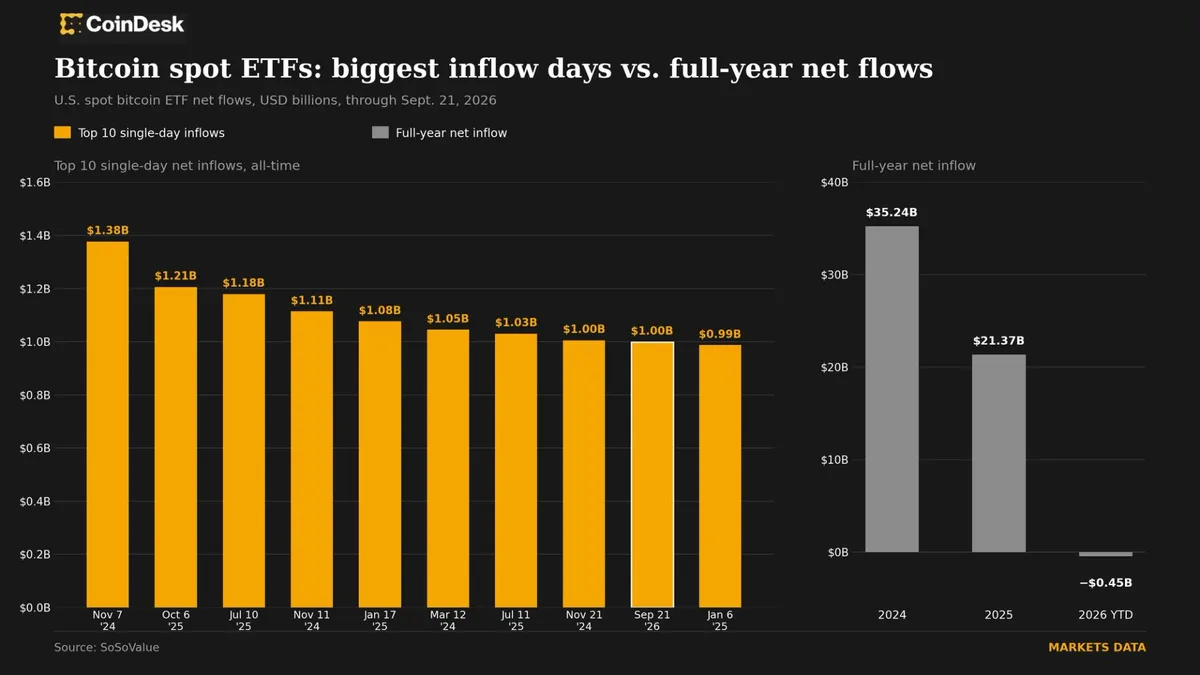
Spot bitcoin ETFs see nearly $1 billion inflow as bitcoin hits January highs

US spot Bitcoin ETFs see nearly $1 billion inflow, highest since October 2025

Bitcoin's rise to $86,000 restores profitability for ETF investors