Ethereum’s Glamsterdam test runs near 200 million gas per block after upgrade
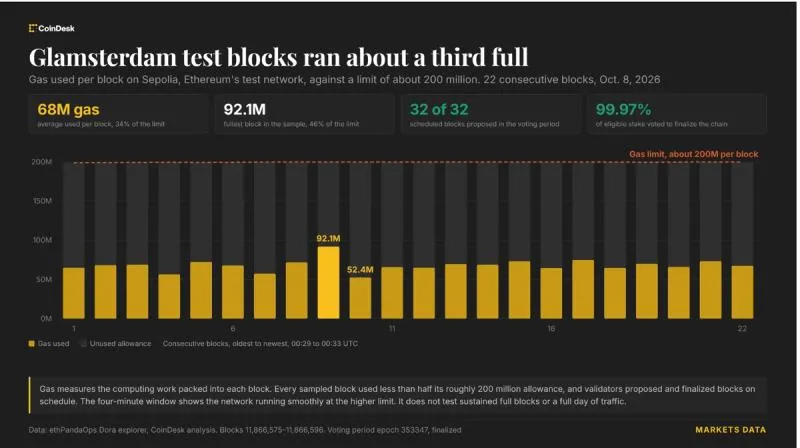
The recent upgrade to Ethereum’s Glamsterdam test network has shown promising results, achieving a processing capacity of nearly 200 million gas per block. This significant enhancement comes from the ongoing Sepolia rehearsal, which has more than tripled the network's gas limit. However, it is worth noting that the sampled blocks during this testing phase utilized less than half of that allowance, indicating that there is potential for further optimization and scaling.
The context of this upgrade lies in Ethereum's continuous efforts to improve scalability and efficiency, particularly following the transition to proof-of-stake with the Ethereum 2.0 upgrade. The Glamsterdam test network serves as a vital platform for developers to experiment with new features and improvements before they are rolled out to the mainnet. By increasing the gas limit, the test aims to accommodate more transactions and reduce congestion, which has been a significant issue for users on the Ethereum network.
This upgrade matters for the market as it demonstrates Ethereum's commitment to enhancing its infrastructure. A higher gas limit can lead to reduced transaction fees and faster processing times, which are crucial factors for attracting new users and developers to the ecosystem. As Ethereum continues to evolve, its ability to handle increased demand will be essential for maintaining its position as a leading smart contract platform in a competitive landscape.
Industry reactions have been largely positive, with experts noting that this upgrade could set a precedent for future enhancements across blockchain networks. Many believe that the lessons learned from the Glamsterdam test will inform subsequent upgrades, not just for Ethereum, but for other platforms as well. The ability to efficiently utilize increased gas limits while ensuring network stability is a critical area of focus.
Looking ahead, the developments from the Glamsterdam test network may pave the way for broader upgrades on the Ethereum mainnet. As testing continues and feedback is gathered, we can expect further refinements that could lead to a more robust and scalable Ethereum ecosystem in the near future.

CoinMagnetic Team
Crypto investors since 2017. We trade with our own money and test every exchange ourselves.
Updated: October 2026
From our insights:
Related news

Cuomo urges crypto industry to evenly support parties for legislation

‘Don’t rush anything’: Vitalik Buterin warns against hasty wallet migrations amid growing AI threats

Canton CEO emphasizes adoption to shield crypto from US policy changes

Samsung to launch USDC transfers on Solana for US Galaxy users

Cointelegraph looks for buyer as web traffic declines significantly