Ethereum's latency target met with new 4-GPU solution for proving problem
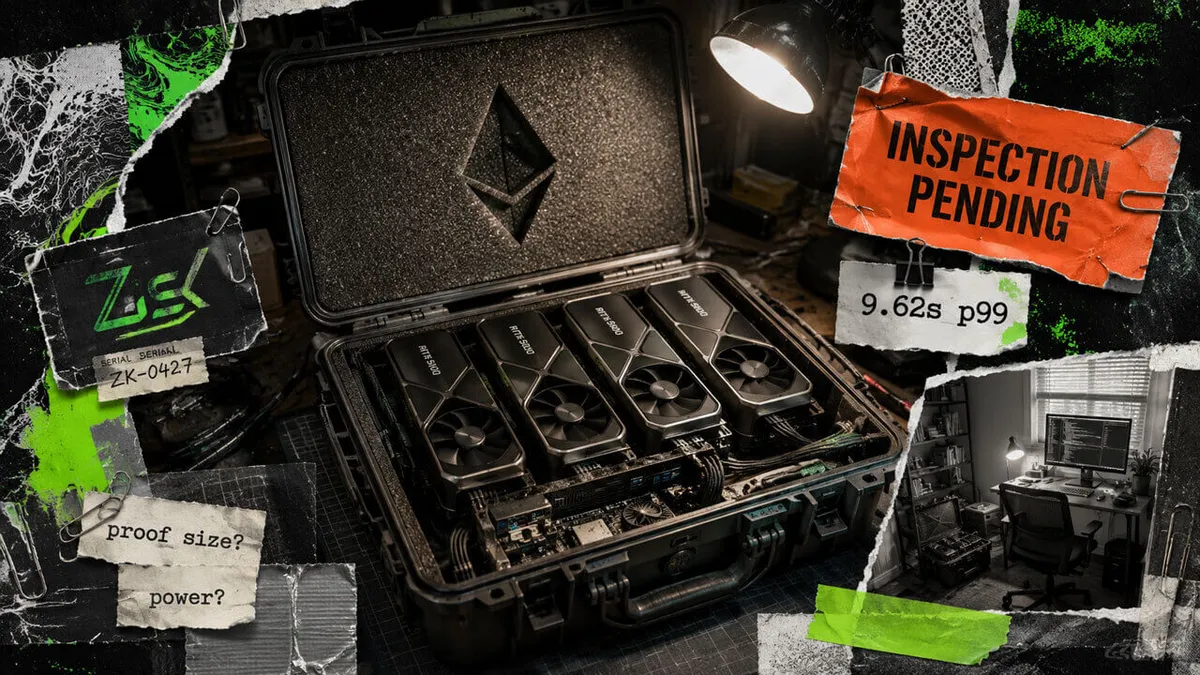
A new solution addressing Ethereum's 12-GPU proving problem has emerged, now boasting a 4-GPU configuration that reportedly meets the network's latency requirements. This breakthrough claims a p99 latency of 9.62 seconds, which aligns well with Ethereum's performance targets. However, the specifics regarding workload distribution, proof mechanisms, and overall system power consumption have yet to be disclosed. As Ethereum continues to evolve, innovations like this could play a significant role in enhancing its efficiency and scalability.
The context surrounding this development is rooted in Ethereum's ongoing efforts to improve its network performance, particularly as it transitions to a more sustainable proof-of-stake mechanism. The original 12-GPU setup was deemed necessary to handle the complex calculations required for validating transactions and creating new blocks. However, the introduction of a more efficient 4-GPU solution suggests that advancements in hardware and software are enabling more streamlined approaches to transaction validation.
This new configuration could have substantial implications for the Ethereum market, particularly concerning transaction speeds and costs. Faster validation times can lead to reduced congestion on the network, which, in turn, might lower transaction fees for users. As Ethereum strives to position itself as a leading blockchain for decentralized applications and smart contracts, improvements in latency and efficiency will be critical for maintaining its competitive edge against other platforms.
Industry experts have praised this innovation, noting its potential to significantly enhance Ethereum's transaction throughput. While many in the community are eager for the full technical details to be disclosed, the initial results are promising. Developers and miners alike are looking forward to seeing how this reduced GPU requirement could democratize access to Ethereum mining and validating, making it more accessible for smaller participants.
Looking ahead, the Ethereum community will likely keep a close eye on the performance metrics of this new 4-GPU solution as more information becomes available. If it continues to meet or exceed expectations, we may see a wider adoption of similar configurations, potentially reshaping the landscape of Ethereum's mining and validation processes. As the ecosystem adapts, innovations like this will be crucial in addressing the challenges of scalability and efficiency.

CoinMagnetic Team
Crypto investors since 2017. We trade with our own money and test every exchange ourselves.
Updated: August 2026
From our insights:
Related news

Arbitrum halts new Stylus activations due to AI attack vulnerabilities

Falling GPU rental prices challenge AI hosting companies, new hedges emerge

Trump may appoint Jay Clayton to lead AI innovation and tech oversight

MiCA enhances trust in regulated crypto firms, says Bitpanda co-CEO

With $85,000 sell wall removed, Bitcoin eyes $100,000 milestone