Easy money on Polymarket and Kalshi is disappearing as prop firms deploy AI agents
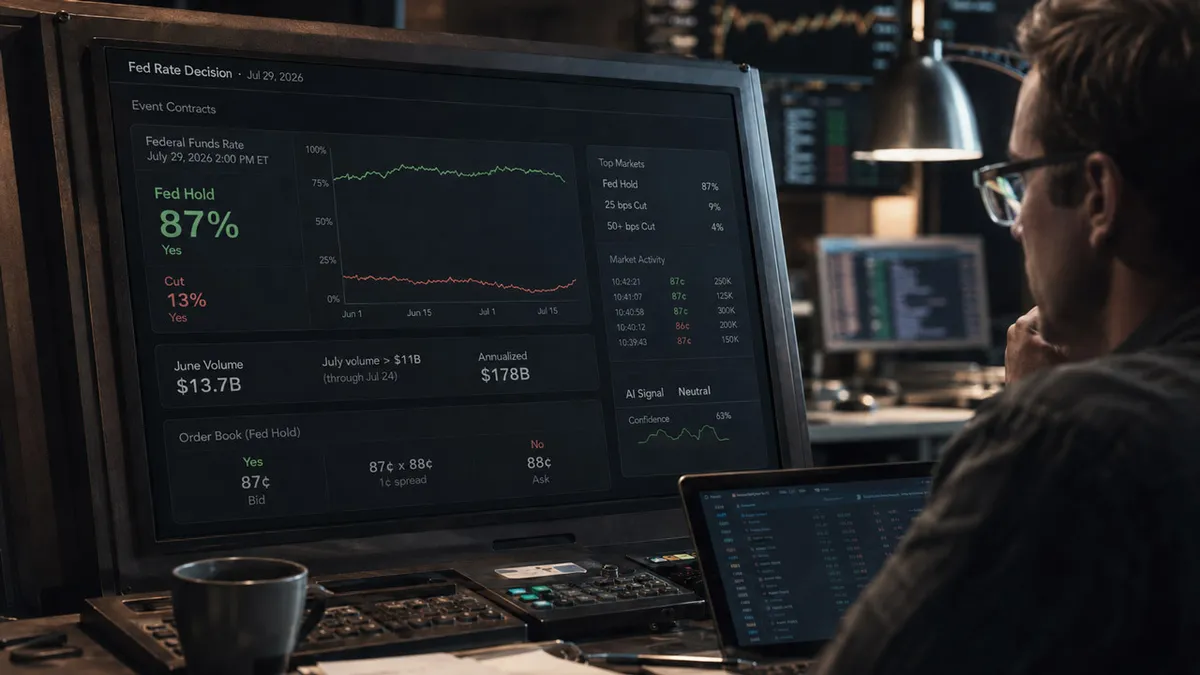
In recent developments, the trading landscape on platforms like Polymarket and Kalshi is undergoing significant changes as proprietary trading firms increasingly leverage artificial intelligence agents. These AI-driven systems are designed to analyze market trends and make real-time trading decisions, thereby enhancing their competitive edge. As we approach the Federal Reserve's upcoming meeting on July 28 and 29, where key interest rate decisions are expected to be made, the dynamics of how traders engage with these platforms are shifting. With the anticipation of market volatility tied to the Fed’s announcements, many traders will be looking to capitalize on the outcomes through various instruments, including bonds, currencies, and crypto.
The context behind this shift can be traced back to the broader economic environment and the role of the Federal Reserve in influencing market conditions. As central banks globally navigate inflationary pressures and economic recovery post-pandemic, their decisions carry substantial weight in shaping market expectations. The recent poll of 104 economists indicating a unanimous expectation for the Fed's actions underscores the critical nature of this meeting. The advent of AI in trading strategies is not merely a trend but rather a response to the growing complexity of the market, where rapid data analysis and decision-making are essential for success.
This transition is particularly significant for the market as it introduces a new level of sophistication and competition among traders. The deployment of AI agents by proprietary firms could lead to tighter spreads and reduced profitability for individual traders on platforms like Polymarket and Kalshi, where "easy money" strategies were once more prevalent. As these AI systems optimize trading strategies, they may also lead to more efficient price discovery, impacting how traders perceive and react to market movements. Consequently, the landscape could become increasingly challenging for those who rely on traditional methods of analysis and trading.
Industry experts are weighing in on these developments, expressing a mix of caution and optimism. Some analysts believe that while AI could enhance market efficiency, it might also create a more volatile environment as algorithms react to news and data in real-time. Others argue that this technological evolution is a natural progression for the trading industry and could democratize access to advanced trading strategies previously reserved for institutional players. The introduction of AI into trading platforms may also prompt regulatory scrutiny, as concerns arise about market manipulation and fairness.
Looking ahead, the implications of AI integration in trading are set to unfold in real-time, particularly in anticipation of the Fed's decisions. As traders adapt to this new reality, it will be crucial to monitor how these technologies influence market behavior and trader strategies. Whether this leads to an overall enhancement of market efficiency or a more turbulent trading environment remains to be seen. For now, the focus will be on how the upcoming Federal Reserve meeting will impact trading dynamics across various platforms, setting the stage for the next chapter in the evolving landscape of financial markets.

CoinMagnetic Team
Crypto investors since 2017. We trade with our own money and test every exchange ourselves.
Updated: July 2026
From our insights:
Related news

SpaceX and Tesla merger floated by Musk alongside a ninefold jump in AI revenue

Claude Code prompt lets Android TV owners remove ads without root access
OpenAI acquires Orchestra Bio to automate drug development workflows

Utah attorney general targets Kalshi over operations and profit recovery
JPMorgan projects 10% annual return for Bitcoin across a decade