DeFi governance gap allows one wallet to request 98% of Ampleforth treasury’s USDC balance
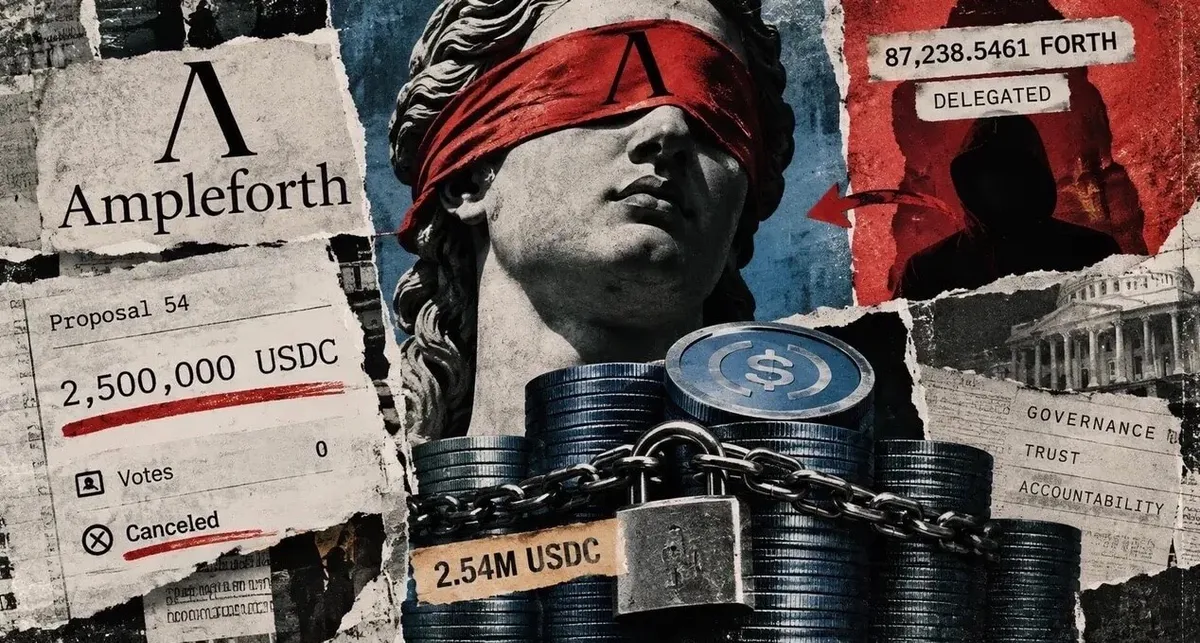
A recent development in the DeFi space has raised eyebrows as one wallet managed to request a staggering 98% of the Ampleforth treasury’s USDC balance. This unusual situation unfolded after the proposing wallet accumulated 87,238 FORTH tokens, which granted it the delegated power to submit the request. However, the proposal ultimately ended with zero votes and no transfer of funds, highlighting a significant governance gap within the Ampleforth ecosystem.
To understand the implications of this incident, it's essential to consider the context of decentralized governance in DeFi projects. Many protocols rely on a token-based governance system where holders can vote on proposals affecting the project's assets and direction. In this case, the ability of a single wallet to propose such a substantial request without any opposition underscores potential vulnerabilities in the governance model, which could allow for manipulation or exploitation by those with large token holdings.
The market impact of this governance gap is noteworthy, particularly for investors and stakeholders within the Ampleforth ecosystem. While the immediate threat was mitigated by the lack of votes, the incident raises concerns about the broader stability and security of DeFi governance structures. Investors may become wary of the risks associated with governance tokens and how they can be leveraged by individuals with significant influence. This situation could lead to a reevaluation of governance practices and security measures across various DeFi projects.
Industry experts have weighed in on the situation, emphasizing the need for stronger governance frameworks to prevent similar occurrences in the future. Some have suggested implementing measures such as quorum requirements or multi-signature wallets to ensure that significant proposals cannot be made or executed without broader consensus. The Ampleforth incident serves as a reminder of the challenges that DeFi projects face as they strive to create equitable and secure governance systems.
Looking ahead, it will be interesting to see how Ampleforth and other DeFi projects respond to this event. The community may push for reforms aimed at strengthening governance protocols to protect against potential abuses of power. As the DeFi landscape continues to evolve, this incident could serve as a catalyst for much-needed discussions on governance structures and their implications for project sustainability and investor confidence.

CoinMagnetic Team
Crypto investors since 2017. We trade with our own money and test every exchange ourselves.
Updated: September 2026
From our insights:
Related news

Kamino hires Yieldstreet co-founder as CEO for New York expansion

DeFi giant with $3 billion in assets proposes to wind down operations

New crypto tax bill introduces $10 fee exception and mining provisions

US House crypto tax bill excludes deferral for mining and staking rewards
U.S. House panel releases crypto tax bill addressing key industry issues