Crypto Clarity rules may be delayed because Congress is somehow stuck arguing over housing
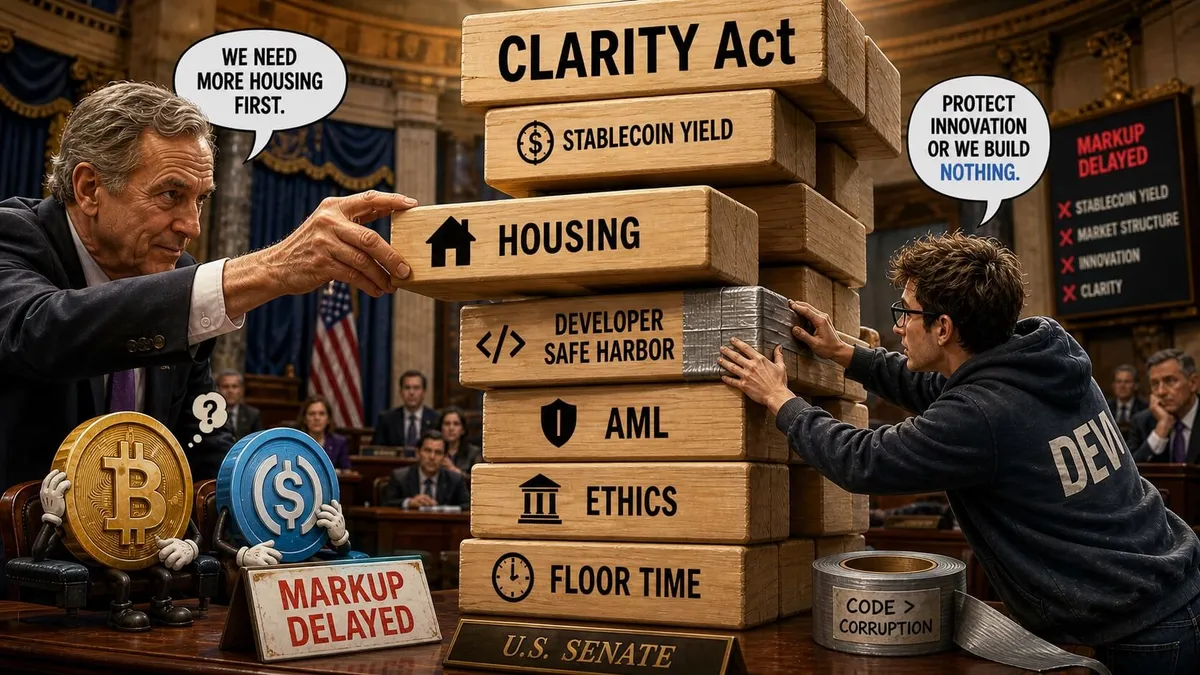
The ongoing discussions surrounding the CLARITY Act, which aims to provide clear regulations for the cryptocurrency sector, have encountered significant delays as Congress grapples with various issues. Recently, the markup process has transitioned from a standoff over stablecoin yields to complications arising from Senator John Kennedy's concerns about housing. This shift highlights the complex interplay of legislative priorities that can impact the timing and effectiveness of crucial crypto regulations. The delays may lead to uncertainty for stakeholders in the industry as they await clarity on how these rules will shape the future of digital assets.
To understand the current situation, it's essential to consider the background of the CLARITY Act itself. Introduced to establish a comprehensive framework for the regulation of cryptocurrencies and stablecoins, the Act has faced numerous hurdles along the way. The initial contention over stablecoin yields focused on how rewards could be structured to align with platform usage, leading to the Tillis-Alsobrooks compromise that aimed to resolve these issues. However, as discussions evolved, other pressing matters emerged, notably the unresolved protections for software developers and the need for Republican consensus on the Senate Banking Committee, led by Chair Tim Scott.
The significance of these developments cannot be understated, as they have broader implications for the cryptocurrency market. The lack of a clear regulatory framework has created an environment of uncertainty that can stifle innovation and deter investment. Stakeholders, from developers to institutional investors, are keenly aware that the outcome of the CLARITY Act could influence everything from operational compliance to market stability. As Congress continues to debate unrelated issues, the urgency for definitive crypto regulations becomes even more pronounced, potentially impacting the market's growth trajectory.
Industry reactions to the delays have been mixed, with some experts expressing frustration at the slow pace of legislative progress. Many argue that the ongoing stalemate in Congress risks leaving the cryptocurrency sector in a state of limbo, hindering its ability to compete on a global scale. Others, however, acknowledge the complexities of legislative negotiation and emphasize the importance of a well-thought-out regulatory framework that protects consumers while fostering innovation. This diverse range of opinions underscores the high stakes involved as stakeholders await clarity on the future landscape of crypto regulation.
Looking ahead, the path for the CLARITY Act remains uncertain. As Congress continues to address housing-related concerns, many in the crypto industry are left wondering when–if at all–the regulatory clarity they seek will be achieved. The ongoing discussions will likely shape the timeline for the Act's implementation, and stakeholders will need to remain vigilant and engaged as the situation develops. Ultimately, the hope is that once these legislative hurdles are cleared, the resulting framework will provide the necessary guidance to support a thriving cryptocurrency ecosystem.

CoinMagnetic Team
Crypto investors since 2017. We trade with our own money and test every exchange ourselves.
Updated: May 2026
From our insights:
Related news

Crypto sector emerges as top donor with $206 million in midterms backing

Stand With Crypto’s 4 million registered advocates couldn’t get the CLARITY Act through the Senate

Kakao Pay, KakaoBank to explore stablecoin opportunities with Fireblocks

US Attorney's investigation into Binance focuses on Iran sanctions compliance

ECB initiates wholesale digital euro for banks and tokenized bond purchases