Citrini points to real-world asset tokenization as the next major financial shift
As the intersection of traditional finance and distributed ledger technology continues to evolve, influential research firm Citrini has highlighted real-world asset tokenization as a primary catalyst for the industry. In a recent assessment, the firm noted that bringing physical assets and traditional financial instruments on-chain could finally provide blockchains with a definitive, scalable role in global finance. This transition moves the conversation away from purely speculative tokens and toward practical economic utility, capturing the attention of institutional players worldwide.
The narrative surrounding asset tokenization is not entirely new, as various protocols and financial institutions have spent years experimenting with digital representations of bonds, real estate, and commodities. However, the current momentum reflects a maturing technological stack and a more accommodating regulatory dialogue in key jurisdictions. Industry participants have long argued that bridging traditional markets with blockchain rails could drastically reduce settlement times, lower intermediary costs, and increase liquidity across historically fragmented asset classes.
For the broader cryptocurrency market, this development matters because it establishes a tangible link between blockchain infrastructure and trillions of dollars in traditional capital. When financial heavyweights begin to issue and settle real-world assets on-chain, the underlying networks benefit from increased utility and sustained transaction volume. This structural shift moves digital assets beyond cyclical retail trading and positions them as core components of future financial architecture, potentially reshaping how institutional portfolios are managed and rebalanced.
Despite the optimistic outlook on adoption, expert commentary emphasizes that the most pressing challenge for market participants is not whether tokenization will happen, but rather where the financial value will ultimately accrue. Analysts point out that while networks and protocols will process the transactions, identifying the specific companies, intermediaries, and decentralized platforms that will successfully capture the revenue remains a complex puzzle. Investors are currently weighing whether value will concentrate at the base layer or flow toward specialized application-layer platforms.
Looking ahead, the market will likely see increased competition among Layer-1 networks and specialized fintech firms vying to become the primary infrastructure for tokenized assets. Regulatory clarity will play a decisive role in determining which jurisdictions and platforms capture the lion's share of institutional volume. As traditional financial institutions run deeper pilots and transition toward production environments, the market will soon discover which participants successfully translate technical feasibility into sustainable business models.

CoinMagnetic Team
Crypto investors since 2017. We trade with our own money and test every exchange ourselves.
Updated: October 2026
From our insights:
Related news
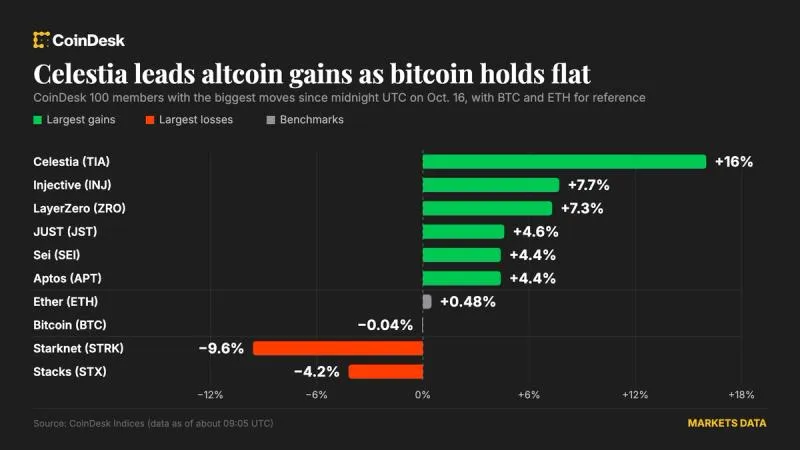
Celestia climbs 16 percent as alternative tokens outperform a flat bitcoin
Starknet initiates vote on exploring independent Layer 1 to counter quantum risks

STRK holders vote on Starknet leaving Ethereum to mitigate quantum risks
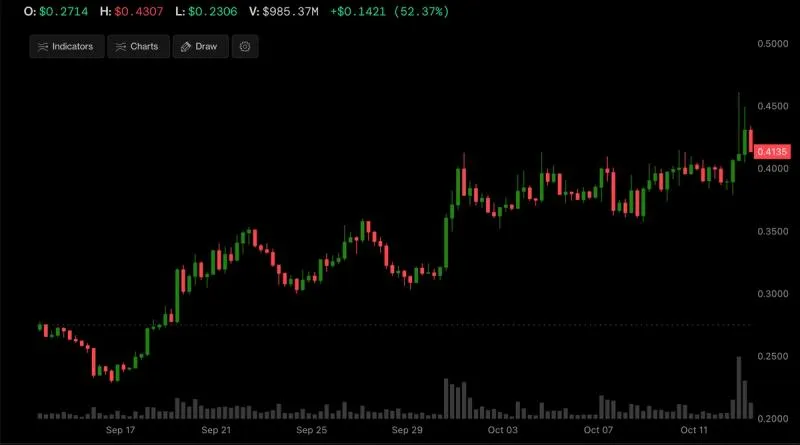
Stacks layer-2 token rallies 50% over four-week trading window

BLUR token drops over 20 percent as NFT marketplace prepares frontend shutdown