Traders lose $52 million on chip-stock contracts in 10 minutes during market closure
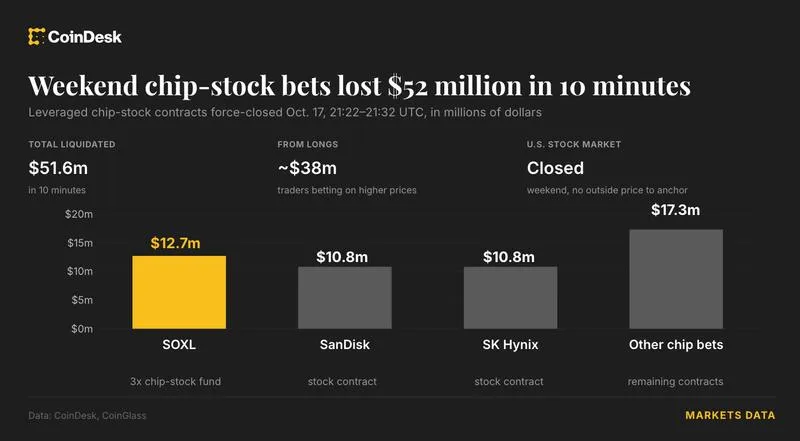
In an unprecedented event, a sudden 10-minute market flush resulted in a staggering loss of $52 million for traders involved in round-the-clock chip-stock contracts, all while U.S. markets were closed. The incident highlights the volatility of the trading environment, especially in markets that operate beyond standard trading hours. With no real share price to reference during the U.S. market closure, traders found themselves vulnerable, leading to rapid sell-offs and significant financial repercussions.
This episode can be contextualized within the broader framework of trading dynamics in the chip sector, which has seen heightened activity due to ongoing global supply chain issues and fluctuating demand. Chip stocks have been of particular interest to investors, especially with the surge in technology and automotive sectors that rely heavily on semiconductor components. However, the lack of liquidity during off-hours trading can amplify price swings, as evidenced by this rapid market movement.
The implications of this incident for the market are noteworthy. It raises concerns about market stability and the risks associated with trading in less regulated environments. Such events can deter investors from engaging in off-hours trading, leading to decreased liquidity and a potential widening of bid-ask spreads. The incident also serves as a reminder of the inherent risks in the trading of derivatives and contracts tied to volatile asset classes, particularly when market conditions are uncertain.
Industry reaction has been swift, with many traders and analysts voicing concerns about the robustness of trading platforms and the mechanisms in place to handle extreme volatility. Experts are advocating for improved systems that can better manage price changes during off-hours trading to protect investors from sudden and unexpected losses. The discussion around regulatory measures is also gaining momentum, as stakeholders push for a more structured approach to off-hours trading.
Looking ahead, the fallout from this incident may prompt exchanges and trading platforms to reassess their operating protocols during off-hours. It is likely that we will see increased calls for transparency and possibly new regulations aimed at safeguarding traders against such dramatic market shifts. As the trading landscape continues to evolve, market participants will need to stay vigilant and informed about the risks associated with their trading strategies.

CoinMagnetic Team
Crypto investors since 2017. We trade with our own money and test every exchange ourselves.
Updated: October 2026
From our insights:
Related news

Turkey confirms Hex founder Richard Heart’s arrest, says police seized $7.15 million and six cold wallets

Defend American Jobs commits another $7 million to unseat Ohio Senator Sherrod Brown

StepFun opens pre-orders for STEPX Neo in China at 3,999 yuan

Smart token management lowers AI costs and boosts model performance

Circle plans expansion into 40 developing economies across four regions