New distributed samplers could reduce blockchains' reliance on randomness
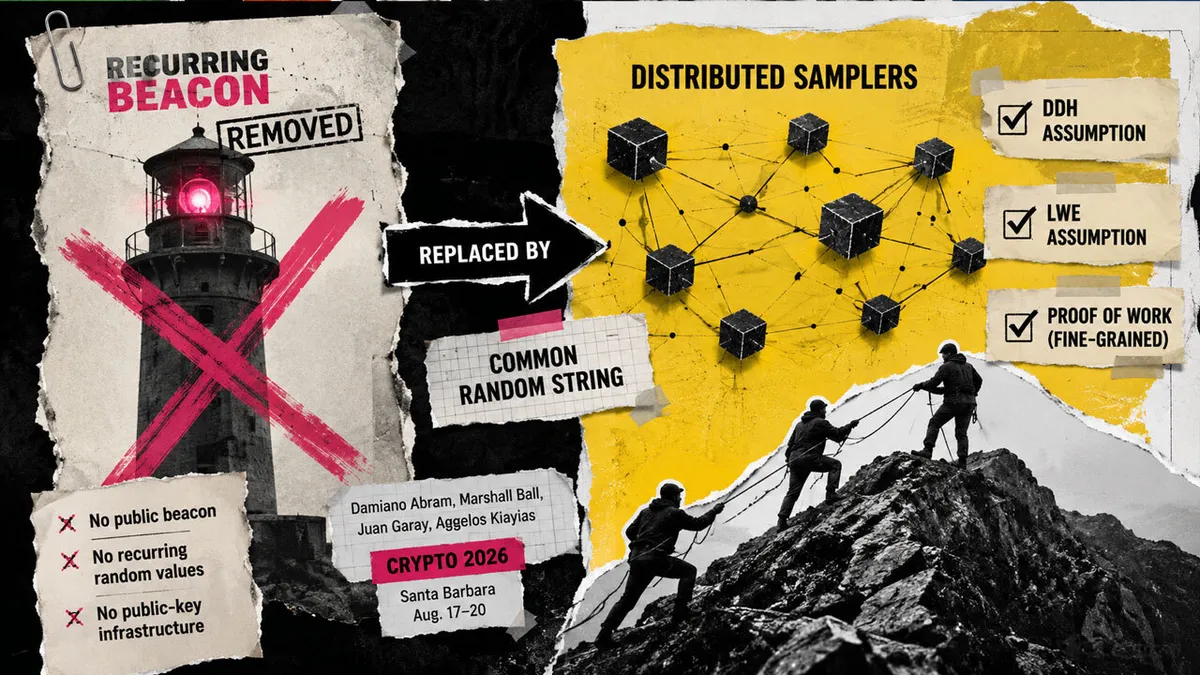
Recent developments in blockchain technology suggest that networks may finally be able to reduce their hidden reliance on a ticking randomness clock for security. Researchers have proposed the use of distributed samplers as a replacement for the traditional method of generating fresh public randomness. This shift could potentially enhance the security and efficiency of blockchain networks, offering a new paradigm for how randomness is integrated into their operations.
Historically, blockchains have depended on a consistent source of randomness to maintain security and integrity. The ticking randomness clock has been a fundamental aspect of many blockchain protocols, helping to ensure that validators are chosen fairly and that transactions are processed securely. However, this approach has its limitations, including vulnerabilities to manipulation and inefficiencies that can hinder network performance.
The introduction of distributed samplers represents a significant advancement in this area, allowing for a more decentralized and secure method of generating randomness. While traditional mechanisms rely on assumptions like Decisional Diffie-Hellman (DDH), Learning With Errors (LWE), and proof-of-work, the new approach aims to create a more robust framework that could mitigate some of the risks associated with the current reliance on public randomness generation.
Industry experts are optimistic about the implications of these developments. By reducing dependency on a ticking randomness clock, blockchains may enhance their resilience against attacks and improve overall network performance. This could lead to greater adoption of blockchain technologies across various sectors, as the perceived security risks diminish, making it a more attractive option for enterprises and developers alike.
Looking ahead, the integration of distributed samplers into blockchain protocols is still in the early stages. Continued research and testing will be necessary to validate their effectiveness and address any potential challenges that may arise. As these innovations progress, it will be fascinating to see how they reshape the landscape of blockchain security and functionality.

CoinMagnetic Team
Crypto investors since 2017. We trade with our own money and test every exchange ourselves.
Updated: August 2026
From our insights:
Related news

Independent Community Bankers of America sues U.S. regulator over crypto charters
Circle challenges MiCA's rigid reserve rules for stablecoin regulation

Jay Clayton's SEC legacy could influence future crypto regulations under Trump

Massive $88 billion drop in bank reserves raises Bitcoin liquidity concerns
Bitcoin's October surge to $86K fueled by inflation and Fed signals