BitMEX shuts down without an FTX style crisis, revealing where crypto’s real danger has moved
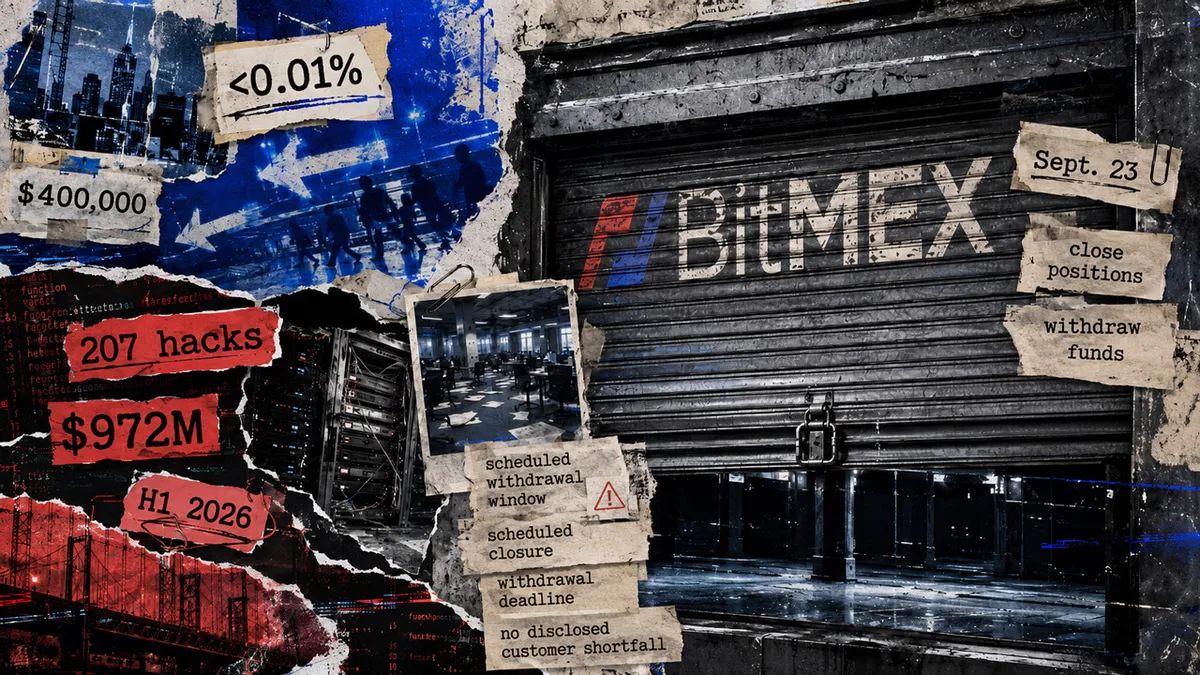
BitMEX, once a prominent player in the crypto derivatives space, has announced that it will be shutting down its operations effective September 23. In a recent communication to its customers, the exchange urged users to close their positions and withdraw their funds before the deadline. Unlike the chaotic scenarios seen with the collapse of exchanges like FTX, BitMEX's closure is characterized by a lack of a significant financial crisis–there are no reports of balance-sheet issues, withdrawal freezes, or bankruptcy filings. According to data from Kaiko, BitMEX's market share has dwindled to below 0.01%, with daily trading volumes hovering around $400,000.
To understand the implications of BitMEX's shutdown, it’s essential to consider the context surrounding its rise and decline. Established in 2014, BitMEX became synonymous with crypto trading due to its innovative leverage trading products. However, the exchange faced increasing scrutiny from regulators and competition from newer platforms over the years. As the crypto landscape evolved, many traders migrated to exchanges that offered more user-friendly interfaces, lower fees, and enhanced security features. This shift has been particularly pronounced as the market has matured and diversified, leading to a slow erosion of BitMEX's user base.
The closure of BitMEX highlights a broader trend in the crypto market–namely, the shifting dynamics of power and risk. As the industry grapples with regulatory pressures and market volatility, the focus on established exchanges is diminishing. This has significant implications for market participants, as the closure of a once-dominant platform like BitMEX may signal a further consolidation of the market. Investors and traders may need to reassess their strategies and consider the reliability and compliance of the exchanges they choose to engage with.
Industry reactions to the news have varied, with some experts viewing BitMEX's closure as a cautionary tale about the importance of regulatory compliance and adaptability in a rapidly changing market. Others suggest that this could open the door for newer platforms to innovate and fill the void left by BitMEX. Analysts emphasize that while the exchange's demise did not follow the catastrophic patterns seen in previous collapses, it serves as a reminder that the landscape of crypto trading is continually evolving, with new threats and opportunities emerging.
Looking ahead, the closure of BitMEX may prompt a wave of regulatory scrutiny across the industry, as authorities look to understand the implications of this development. It also raises questions about the future of decentralized finance and how traditional exchanges will adapt to maintain their relevance. As traders and investors navigate this landscape, staying informed and flexible will be crucial in responding to the shifting tides of the crypto market.

CoinMagnetic Team
Crypto investors since 2017. We trade with our own money and test every exchange ourselves.
Updated: July 2026
From our insights:
Related news

Meta issues non-voting shares for AI financing while preserving Zuckerberg control

Underdog integrates Zero Hash to enable round-the-clock digital asset deposits
Trump Iran statements pressure equities while bitcoin tests the $81.5K ETF level

Thailand SEC reports spot crypto ETF inquiries from multiple asset managers

SoFi launches 4.40 percent APY tokenized deposit with FDIC coverage