Bitcoin steadies at $62,600 as South Koreans flee stocks rout for crypto
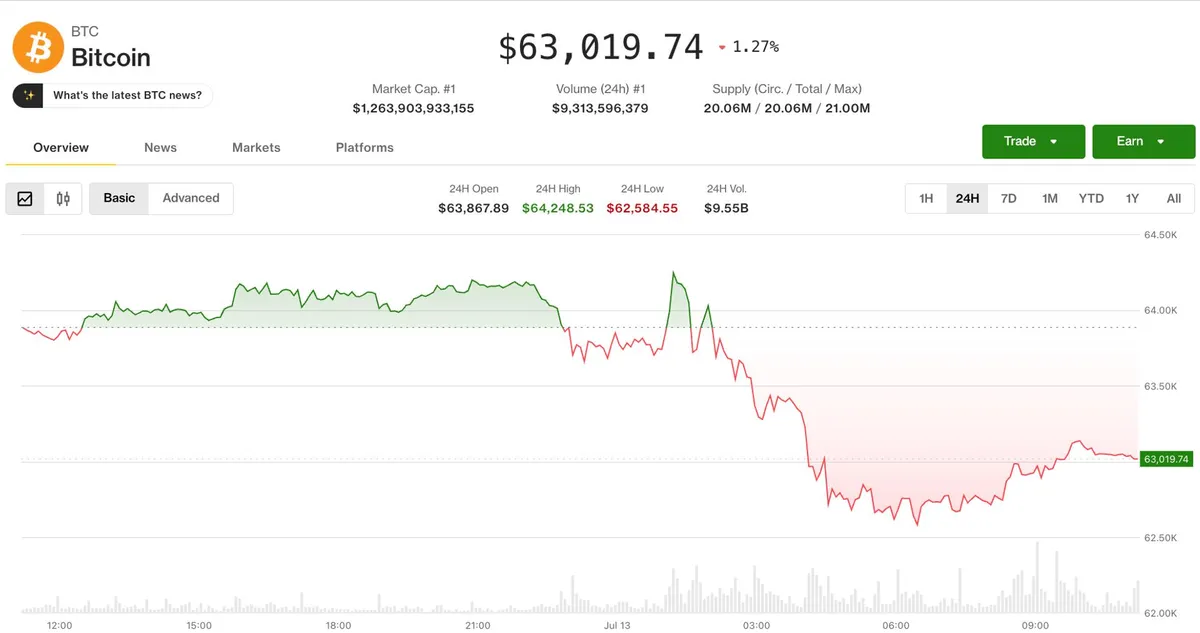
Bitcoin has shown signs of stability around the $62,600 mark following a tumultuous selloff earlier in the week. The digital currency's consolidation comes amidst global uncertainties, particularly as former President Donald Trump has made statements threatening further military actions in Iran. This announcement has added to the volatility across financial markets. Meanwhile, gold prices have continued to decline, and a significant meltdown in South Korea's KOSPI index has resulted in a notable surge in crypto trading volumes within the region.
The current situation in South Korea is particularly relevant as it reflects broader investor sentiment. The KOSPI index, which tracks the performance of South Korean stocks, has faced a notable downturn, prompting many investors to seek refuge in alternative assets such as cryptocurrencies. This trend is not new, as South Korean investors have historically turned to crypto during times of instability in traditional markets, highlighting a growing preference for digital assets as a hedge against volatility. The interplay between traditional stock markets and cryptocurrency has become increasingly pronounced, particularly in the wake of geopolitical tensions.
This market behavior underscores the significant role that external events can play in shaping investor strategies in the crypto space. The flight to cryptocurrencies like Bitcoin during stock market downturns suggests that many traders view digital assets as a more resilient investment option. As investors react to the ongoing geopolitical climate and the performance of traditional markets, Bitcoin's ability to maintain its value amidst these pressures is a testament to its emerging status as a safe haven for some.
Industry experts have weighed in on the current situation, noting that while Bitcoin's price stabilization is a positive sign, the underlying factors driving this shift are critical to monitor. Analysts suggest that geopolitical tensions, combined with local economic pressures, could continue to influence the crypto market in the short term. Additionally, the increasing correlation between traditional markets and cryptocurrencies may lead to more volatility as investors navigate these complex dynamics.
Looking ahead, the market's response to future geopolitical developments and economic indicators will be crucial. Should tensions in Iran escalate or further declines in traditional markets occur, we might see continued inflows into cryptocurrencies as investors seek to mitigate risk. Furthermore, as South Korea remains a pivotal player in the global crypto landscape, any regulatory shifts or economic policy changes in the region could also have significant implications for Bitcoin and its peers in the coming weeks.

CoinMagnetic Team
Crypto investors since 2017. We trade with our own money and test every exchange ourselves.
Updated: July 2026
From our insights:
Related news

Over $770 million in crypto liquidations hit the market as bitcoin dips

Meta claims new Muse Wonder AI models rival OpenAI, Anthropic

IMF chief Kristalina Georgieva warns artificial intelligence will impact 40 percent of jobs
TD Cowen sees 2028 election timeline threatening new CFTC crypto rules

REA toolkit crosses 100,000 GitHub stars in a week as AI reverse engineering takes off