Ten unusual trading days in 2026 challenge traditional risk measures for bitcoin
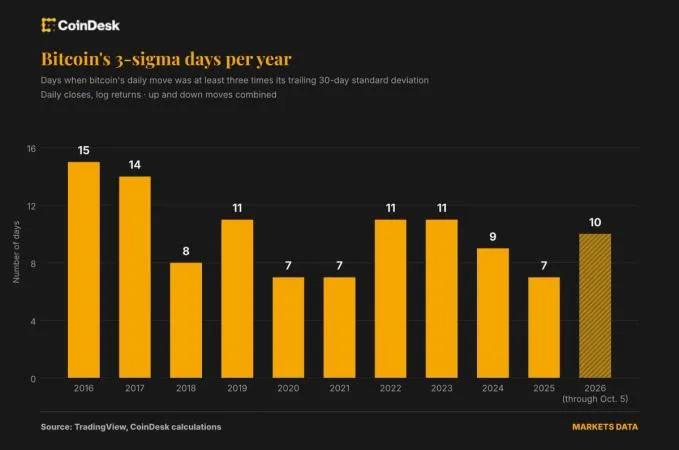
Recent market analysis reveals a paradoxical shift in the behavior of the leading cryptocurrency. While overall bitcoin volatility has plunged to notable lows, extreme price swings have actually become more frequent than they were back in 2018. Data highlights a total of 10 unusually large trading days so far in 2026, forcing a closer look at how digital asset participants gauge market stability.
This dynamic emerges against the backdrop of a maturing crypto landscape. Years ago, high volatility was a constant characteristic across all trading sessions, driven largely by retail sentiment and fragmented liquidity. Today, the influx of institutional capital, regulated exchange-traded products, and sophisticated market-making operations has largely dampened day-to-day fluctuations, creating a smoother baseline trend overall.
For the broader market, this trend matters because traditional risk management models often rely on generalized volatility metrics. When baseline fluctuations decrease while the frequency of sharp, isolated shocks remains high, standard portfolio risk calculations can yield a false sense of security. Institutional allocators and corporate treasuries must now adapt their strategies to account for these sudden, pronounced movements that defy the calmer daily averages.
Industry observers and market analysts are actively debating the underlying catalysts for these concentrated price shocks. Some point to automated deleveraging events and large options expiry dates as primary triggers, while others suggest that institutional block trades and macroeconomic data releases create localized liquidity crunches. Despite the differing theories, consensus is growing that standard historical comparisons to 2018 no longer fully capture modern market mechanics.
As the year progresses, market participants will be watching closely to see if these ten outlier days are an anomaly or a new baseline characteristic of institutionalized crypto trading. Risk desks across major funds are already recalibrating their stress tests to better handle sudden liquidity gaps. Navigating this environment will require a deeper understanding of how structural market changes influence price discovery during periods of stress.

CoinMagnetic Team
Crypto investors since 2017. We trade with our own money and test every exchange ourselves.
Updated: October 2026
From our insights:
Related news

Visa study shows half of APAC shoppers could adopt stablecoins by 2031

US Treasury targets Iran with planned digital asset seizures this week

Robinhood Chain explores priority trading technology after Arbitrum's changes

Bitcoin bounces near $80,000 as traders bet on deeper October losses

HSBC and Ant Digital trial tokenized deposit payments for autonomous AI agents