Bitcoin’s BIP-110 fork fight gives exchanges an August deadline before miners signal support
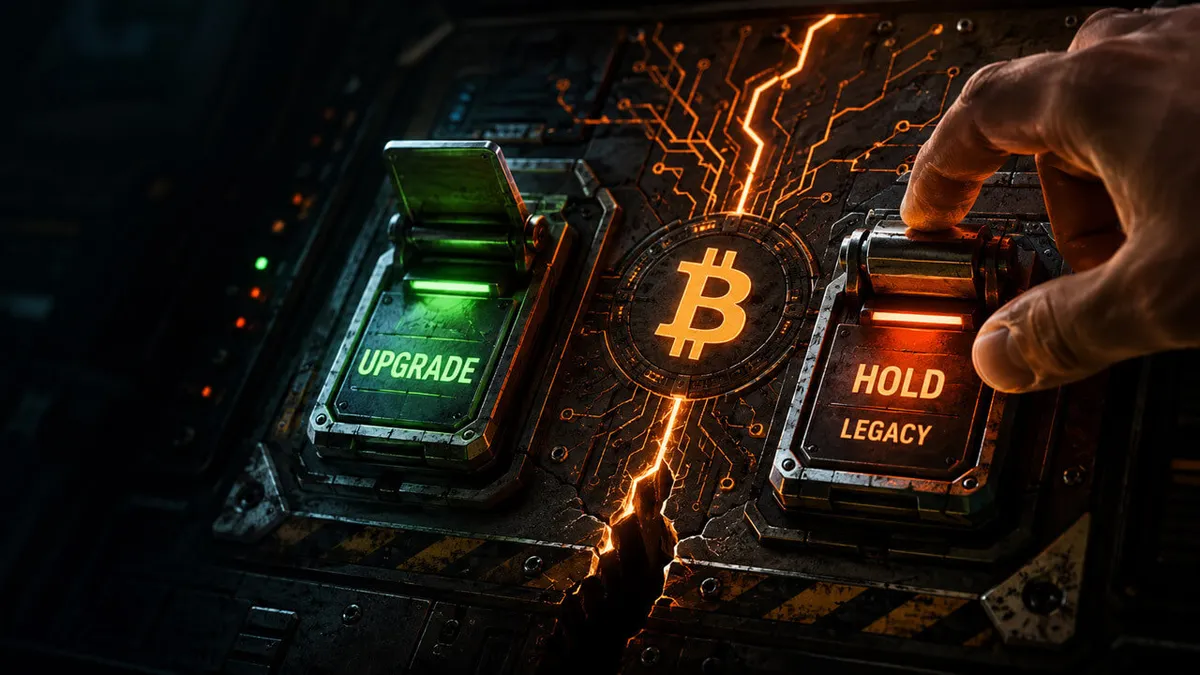
Bitcoin is currently embroiled in a significant debate surrounding the BIP-110 proposal, which aims to introduce crucial changes to its transaction processing mechanism. As the August deadline approaches, exchanges, wallets, pools, and node operators are feeling the pressure to signal their support or risk being left behind. BGeometrics has noted that support for the proposal has remained relatively low at just 0.42% since May 1. This has raised concerns about whether there will be enough backing from key stakeholders to ensure a smooth transition should the proposal go through. The urgency created by Farside's alerts is making it increasingly difficult for these entities to ignore the implications of the impending lock-in window.
To understand this situation better, it is essential to recognize that Bitcoin Improvement Proposals (BIPs) serve as a way for developers and the community to suggest upgrades and modifications to the Bitcoin protocol. BIP-110 specifically pertains to adjusting the transaction output structure to enhance efficiency and scalability. Historically, Bitcoin has faced similar forks with varying degrees of contention and support, shaping its evolution over the years. The community's response to BIP-110 is not merely about technical changes; it reflects broader sentiments regarding governance and the future direction of the Bitcoin network.
The significance of this discussion extends beyond the technical implications of BIP-110; it also signals the broader market's responsiveness to potential changes in Bitcoin's foundational infrastructure. A lack of consensus or failure to reach the necessary support by the August deadline could lead to increased volatility in Bitcoin's price and a potential bifurcation in its user base. For investors and market participants, these developments could influence trading strategies and risk assessments, as they navigate the uncertainties that a contentious fork could introduce.
Industry reactions have been mixed, with some experts expressing concern about the low level of support for BIP-110, while others maintain that such proposals often take time to gain traction. Voices within the mining community have also weighed in, emphasizing the importance of a unified approach to upgrades to avoid fragmentation. Meanwhile, exchanges and wallets are urged to communicate clearly with their users about their positions regarding the proposal, as transparency will be crucial in maintaining trust during this period of uncertainty.
Looking ahead, the next few weeks will be critical for the future of BIP-110 and its potential implementation. As the deadline looms, the focus will shift to whether key stakeholders can rally sufficient support to signal their backing for the proposal. Failure to do so may set the stage for a contentious environment within the Bitcoin community, impacting not only the immediate landscape but also the long-term trajectory of Bitcoin as a leading cryptocurrency. The coming month promises to be a pivotal period for Bitcoin, and all eyes will be on how the community responds to this challenge.

CoinMagnetic Team
Crypto investors since 2017. We trade with our own money and test every exchange ourselves.
Updated: July 2026
From our insights:
Related news

EU regulators scrutinize Binance's MiCA exemption for customer services

Riot Platforms pays off $200 million credit facility, freeing up collateral

Bitcoin surpassing $85,000 production cost may reduce miner sell-off pressure
Power cuts to Bitcoin miners may paradoxically increase energy consumption

Grayscale’s Zcash ETF plans 3-for-1 split after $233 million inflow surge