Bitcoin recedes to $63,000 as Iran-Israel trade strikes and Korean stocks crash
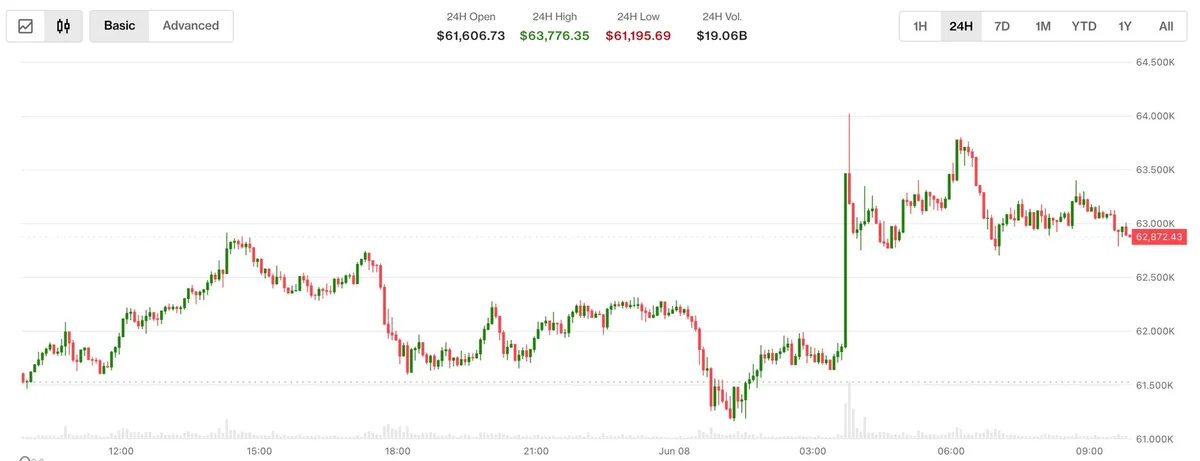
Bitcoin has seen a notable pullback, dipping to $63,000 after touching overnight highs, as escalating geopolitical tensions between Iran and Israel impact market sentiment. The ongoing conflict has led to a surge in oil prices, which is often perceived as a risk-off signal for investors. This volatility in the geopolitical landscape has made traders more cautious, prompting them to reassess their positions in volatile assets like cryptocurrencies. As a result, Bitcoin's recent gains have been tempered, reflecting broader concerns in the financial markets.
The backdrop to this Bitcoin decline is rooted in the complex relationship between Iran and Israel, with escalating trade strikes and military actions creating uncertainty in the region. Such geopolitical issues have historically influenced global markets, leading to fluctuations in asset prices. The current situation has exacerbated fears of potential disruptions in oil supply, which further complicates the economic environment. Alongside this, the crash in Korean stocks has added another layer of volatility, as investors grapple with the implications of these events on their portfolios.
This pullback in Bitcoin is significant for the market, especially as it highlights the cryptocurrency's sensitivity to external pressures. The interplay between geopolitical risks and asset performance is particularly relevant for Bitcoin, which has often been viewed as a hedge against traditional market uncertainties. A decline in Bitcoin's price could influence investor behavior, potentially leading to a broader risk-off sentiment in the cryptocurrency space. Consequently, this situation may prompt traders to evaluate their strategies and positions more critically.
Industry reactions to the recent downturn have been mixed, with some experts emphasizing the resilience of Bitcoin in the face of adversity. Analysts suggest that while short-term volatility may be concerning, the long-term fundamentals of Bitcoin remain strong, bolstered by its finite supply and increasing institutional adoption. Others caution that increased geopolitical tensions could lead to further price fluctuations in the near term, urging investors to remain vigilant. The sentiment in the market appears to be one of cautious optimism, as many believe that Bitcoin could bounce back as the situation evolves.
Looking ahead, the next steps for Bitcoin will likely hinge on developments in the geopolitical landscape and their impacts on global markets. Traders will be closely monitoring any shifts in the Iran-Israel situation, as well as broader economic indicators that could influence asset prices. Additionally, the response of the cryptocurrency community to these market fluctuations will be critical in shaping Bitcoin's trajectory. As risk sentiment continues to fluctuate, the coming days will be pivotal in determining whether Bitcoin can regain its recent highs or if further declines are on the horizon.

CoinMagnetic Team
Crypto investors since 2017. We trade with our own money and test every exchange ourselves.
Updated: June 2026
From our insights:
Related news
Iran hints at reopening Strait of Hormuz, WTI oil drops to $89

New altseason signal emerges as Bitcoin market cap stays under 60%

Bitcoin nears $86,000 as crypto market cap surpasses $3 trillion
Bitcoin's weekly close above $81,000 signals potential rise to $90,000

Elon Musk's X integrates bitcoin trading options for U.S. users