Bitcoin price sags under $62.5K as Iran strikes add to US stocks pressure

Bitcoin's price has recently dipped below the $62,500 mark, experiencing a notable rejection at local highs that has caused concern among investors. This decline comes amid rising tensions between the U.S. and Iran, which have exerted pressure on the broader stock market as well. Over the past few days, Bitcoin has shown a strong correlation with traditional stock indices, highlighting a shift in market sentiment as geopolitical events unfold. The current environment has led to increased volatility in the crypto space, pushing traders to reassess their strategies in response to external factors.
To understand the current situation, we must consider the backdrop of the escalating U.S.-Iran conflict. Recent military actions and diplomatic tensions have stirred anxiety among investors, leading to sell-offs in both equity markets and cryptocurrencies. Bitcoin has historically been viewed as a hedge against economic instability; however, in times of heightened geopolitical risk, it appears to be moving in tandem with traditional markets rather than acting as a safe haven. This correlation raises questions about investor sentiment and the perceived role of cryptocurrencies in the current economic landscape.
The implications of Bitcoin's price dip are significant for the broader market. A sustained decline could undermine confidence in the crypto asset class, especially as institutional investors have increasingly entered the space. The current price action could lead to increased scrutiny from both retail and institutional traders, potentially triggering a more significant sell-off if the downward trend continues. If Bitcoin struggles to regain its footing above the $62,500 level, it may prompt a reevaluation of bullish positions and a shift in market dynamics.
Reactions from industry experts and analysts have been mixed, with some cautioning that geopolitical risks could persist and further impact market performance. Others believe that Bitcoin's fundamentals remain strong, suggesting that the recent price movement is more of a short-term reaction to external pressures rather than a reflection of underlying demand. Analysts are closely monitoring key support levels and market sentiment, indicating that traders should remain vigilant as the situation develops.
Looking ahead, the market will likely continue to react to news surrounding the U.S.-Iran conflict, as well as other macroeconomic indicators. If tensions escalate further, we could see additional volatility not only in Bitcoin but across the entire cryptocurrency market. Conversely, any signs of de-escalation may provide a much-needed boost to investor confidence, allowing Bitcoin to reclaim its upward momentum. As always, staying informed and agile will be crucial for navigating these turbulent times.

CoinMagnetic Team
Crypto investors since 2017. We trade with our own money and test every exchange ourselves.
Updated: July 2026
From our insights:
Related news
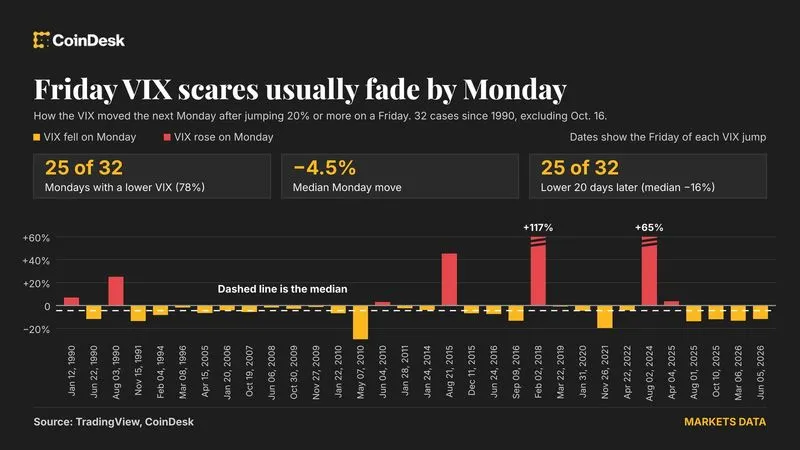
VIX and bitcoin point to a quick recovery from Friday stock market panic

Attacker mints 10 million CYS before bridge suspension and Ethereum transfer

Allium reports stablecoin payments reached $482 billion this year amid 45% growth

Prediction market growth contrasts with poll showing opposition to election bets

Bitwise eyes $100,000 bitcoin finish while LO:TECH flags inflation risks