Bitcoin funds capture $700 million as institutions place their bets

Bitcoin funds have seen a remarkable influx of capital, with institutions pouring approximately $700 million into these investment vehicles recently. This surge in investment highlights a growing confidence among institutional investors in Bitcoin's long-term potential, as they increasingly view it as a viable asset class. The funds that have attracted this capital include both exchange-traded products (ETPs) and actively managed Bitcoin investment funds. This influx has occurred despite a backdrop of regulatory scrutiny and market volatility, indicating a robust belief in Bitcoin's resilience and future growth.
To provide some context, institutional interest in Bitcoin has been on the rise since late 2020, when major companies and investment firms began to add Bitcoin to their portfolios. This trend has accelerated as traditional financial institutions, such as banks and hedge funds, have started to offer cryptocurrency-related products. The evolving regulatory landscape, particularly in the U.S. where the Securities and Exchange Commission has shown signs of being more amenable to Bitcoin-related investment products, has further fueled this interest. The substantial capital inflow suggests that institutions are increasingly comfortable navigating the complexities of investing in digital assets.
This $700 million investment in Bitcoin funds is significant for the market as it signals a renewed bullish sentiment. Institutional investments often lead to increased liquidity and higher price stability, which can positively influence the overall crypto market. Additionally, such large-scale investments can help to legitimize Bitcoin as a mainstream asset class, potentially attracting even more investors who may have previously been hesitant. The correlation of Bitcoin with traditional assets may also shift as more institutions enter the space, leading to changes in trading strategies and market dynamics.
Industry experts have reacted positively to this influx of capital, with many noting that it could represent a turning point for Bitcoin's market cycle. Analysts believe that the recent institutional bets could lead to a more sustainable price rally, as the capital employed by institutional investors tends to be more patient and long-term oriented compared to retail investors. Moreover, some experts highlight that the current macroeconomic environment, characterized by inflation concerns and geopolitical tensions, is conducive for Bitcoin to be viewed as a hedge against traditional financial risks.
Looking ahead, the next steps for Bitcoin funds may include further product innovation and expansions into new markets. As interest from institutions continues to grow, we may see the launch of additional investment products tailored to meet this demand. Furthermore, regulatory developments will play a crucial role in shaping the future landscape of Bitcoin investment. As institutions continue to navigate these waters, their moves will likely influence market trends and investor sentiment, making it an exciting time for both the crypto industry and traditional finance.

CoinMagnetic Team
Crypto investors since 2017. We trade with our own money and test every exchange ourselves.
Updated: May 2026
From our insights:
Related news

Bitcoin ETFs attract nearly $1B in a single day as holders regain profitability
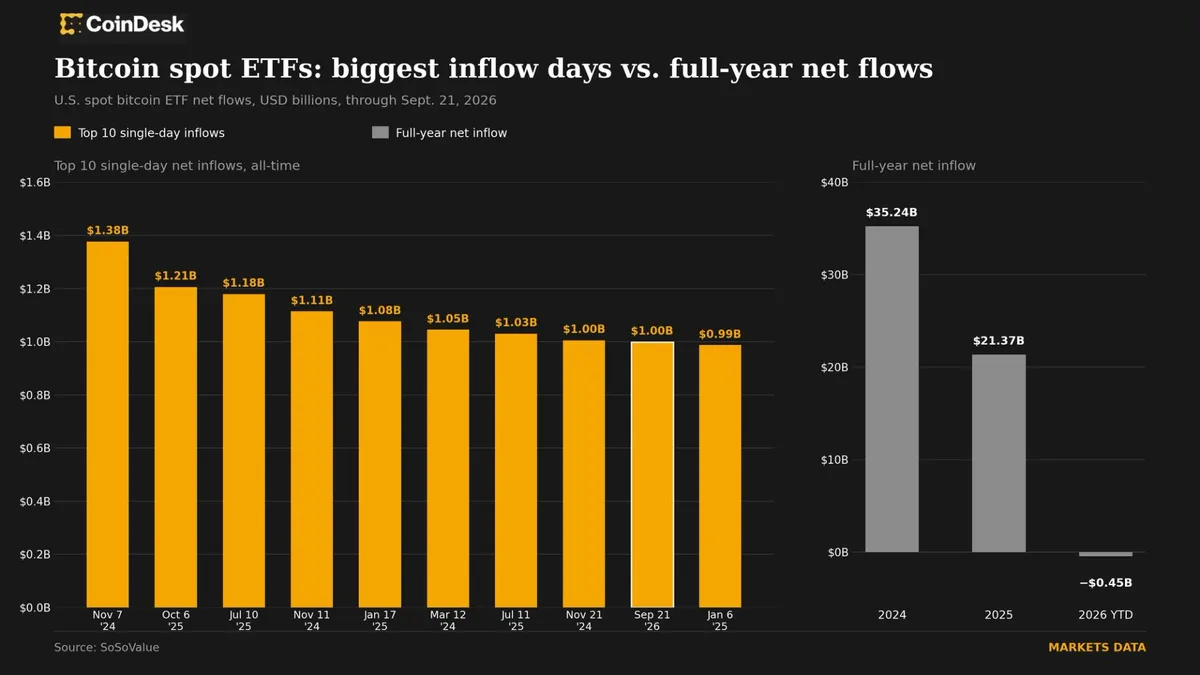
Spot bitcoin ETFs see nearly $1 billion inflow as bitcoin hits January highs

US spot Bitcoin ETFs see nearly $1 billion inflow, highest since October 2025

Bitcoin's rise to $86,000 restores profitability for ETF investors

Apple and Google seek crypto experts, signaling potential stablecoin initiatives