Bitcoin ETFs 'will be larger' than gold ETFs: Analyst

A recent statement from ETF analyst James Seyffart suggests that Bitcoin exchange-traded funds (ETFs) are poised to surpass gold ETFs in terms of size and significance within investor portfolios. Seyffart highlights that Bitcoin ETFs present a wider array of use cases for the average investor than their gold counterparts. This assertion comes at a pivotal moment as the cryptocurrency market is witnessing growing institutional interest and regulatory advancements that aim to broaden the accessibility of Bitcoin investments.
The backdrop to this assertion is the ongoing evolution of the cryptocurrency landscape, particularly in the realm of financial products designed for retail and institutional investors. Historically, gold has been the go-to asset for investors seeking a hedge against inflation and economic instability. However, the introduction of Bitcoin ETFs marks a shift in how investors perceive digital assets. The increasing acceptance of Bitcoin as a legitimate store of value, coupled with its unique characteristics–such as scarcity and decentralization–positions it as a compelling alternative to traditional assets like gold.
This perspective carries significant implications for the broader market. If Seyffart's predictions hold true, a surge in Bitcoin ETF popularity could lead to substantial inflows of capital into the cryptocurrency market. Such a trend might not only bolster Bitcoin's price but also reinforce the narrative of digital assets as an essential component of modern investment strategies. Additionally, this shift could prompt further regulatory scrutiny and the development of more innovative financial products centered around cryptocurrencies, ultimately contributing to the maturation of the digital asset ecosystem.
Industry reactions to Seyffart's insights have been mixed, reflecting the diverse opinions that exist within the financial community. Some experts agree with his assessment, noting that Bitcoin's unique features can attract a broader range of investors compared to gold, which may be perceived as more traditional and less innovative. Others, however, caution against underestimating gold's historical role as a safe haven, arguing that it remains a crucial part of many investment strategies, especially during turbulent economic times. As the debate continues, it is clear that the dynamics between these two asset classes will remain a focal point for investors and analysts alike.
Looking ahead, the potential approval of more Bitcoin ETFs could catalyze further developments in this area. As regulators refine their approaches to cryptocurrencies and provide clearer guidelines, we may see an increase in offerings that cater to different investor needs. This could lead to the emergence of specialized Bitcoin ETFs that explore various strategies, such as yield generation or thematic investments. As the landscape evolves, both Bitcoin and gold will likely continue to coexist, but the balance of power may shift in favor of Bitcoin as it captures an increasingly larger share of the investment market.

CoinMagnetic Team
Crypto investors since 2017. We trade with our own money and test every exchange ourselves.
Updated: April 2026
From our insights:
Related news
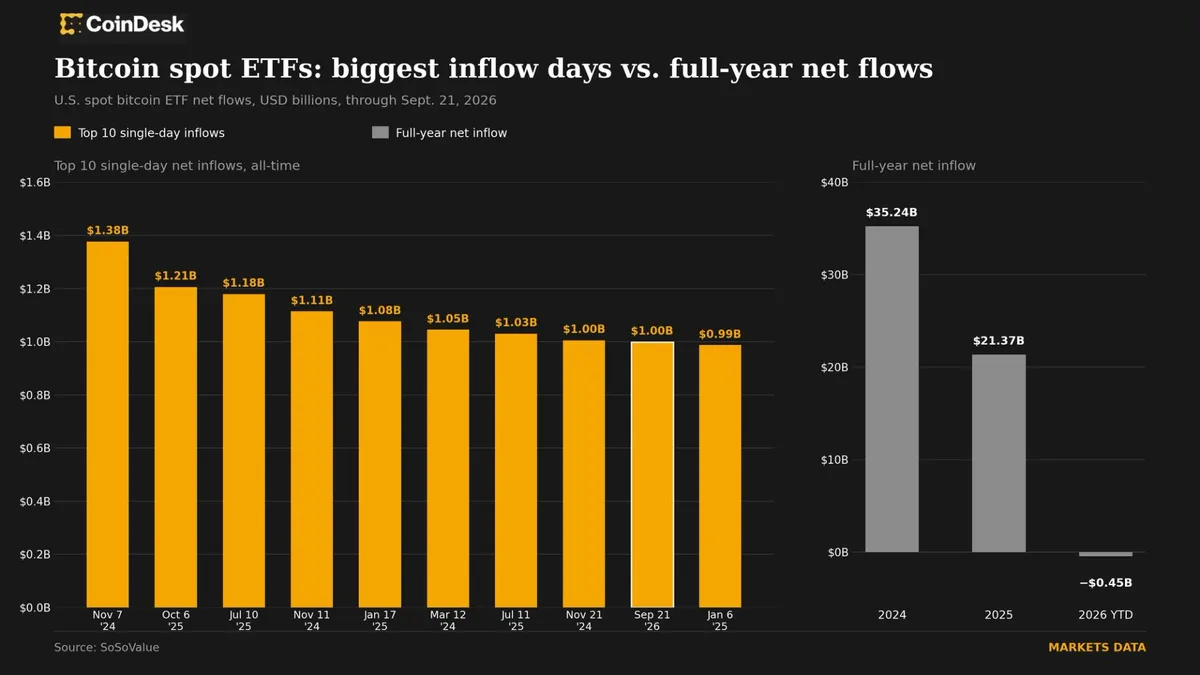
Spot bitcoin ETFs see nearly $1 billion inflow as bitcoin hits January highs

US spot Bitcoin ETFs see nearly $1 billion inflow, highest since October 2025

Bitcoin's rise to $86,000 restores profitability for ETF investors

Apple and Google seek crypto experts, signaling potential stablecoin initiatives

ECB initiates bond purchases using its own funds in crypto-linked system