Bitcoin ETFs Shed $630M in Largest Daily Exit Since January

In a significant turn of events for the cryptocurrency market, Bitcoin exchange-traded funds (ETFs) experienced outflows totaling $630 million, marking the largest daily exit since January. This sudden decline in assets under management comes in the wake of rising inflation fears and uncertainty regarding the Federal Reserve's monetary policy. Market participants have reacted to these macroeconomic concerns by reallocating their investments, leading to a shift in sentiment that has impacted the Bitcoin ETF landscape. The sharp outflow has disrupted what had been a trend of institutional inflows, raising questions about the future of Bitcoin investments in the ETF space.
To understand the context of this situation, it is essential to recognize the broader economic environment. For some time, inflation has been a dominant concern for investors, particularly as central banks globally grapple with the implications of rising consumer prices. The U.S. Federal Reserve's recent statements have added to this uncertainty, leaving investors anxious about potential rate hikes and their effects on risk assets like Bitcoin. Historically, ETF inflows have been a positive indicator for the cryptocurrency market, so this sudden outflow signals a notable shift in investor confidence and market dynamics.
The implications of such large-scale exits from Bitcoin ETFs are profound. For one, this trend could lead to increased volatility in the price of Bitcoin itself, as large sell-offs often trigger a ripple effect across the market. Additionally, the retreat of institutional investors from Bitcoin could signal a broader loss of confidence in the asset class, which may deter new investments. As volatility increases, the attractiveness of Bitcoin as a hedge against inflation may also be called into question, potentially impacting its long-term valuation and adoption.
Industry experts have weighed in on the situation, emphasizing the need for investors to remain cautious amid these outflows. Some analysts suggest that this could be a temporary reaction to macroeconomic pressures, while others warn of a more significant shift in sentiment that could change the landscape of Bitcoin investments. The consensus appears to be that while this outflow is concerning, it is essential to monitor broader trends and developments in the market before drawing any definitive conclusions about the future of Bitcoin ETFs.
Looking ahead, market participants will likely keep a close watch on upcoming economic indicators and Federal Reserve announcements. The potential for further ETF outflows or recoveries may be tied to how inflation data unfolds and the Fed's subsequent policy decisions. As the situation develops, the crypto community will be eager to see whether institutional investors return to Bitcoin ETFs or if this marks the beginning of a more extended period of volatility and uncertainty in the market.

CoinMagnetic Team
Crypto investors since 2017. We trade with our own money and test every exchange ourselves.
Updated: May 2026
From our insights:
Related news
Bitcoin ETFs attract nearly $1B in a single day as holders regain profitability
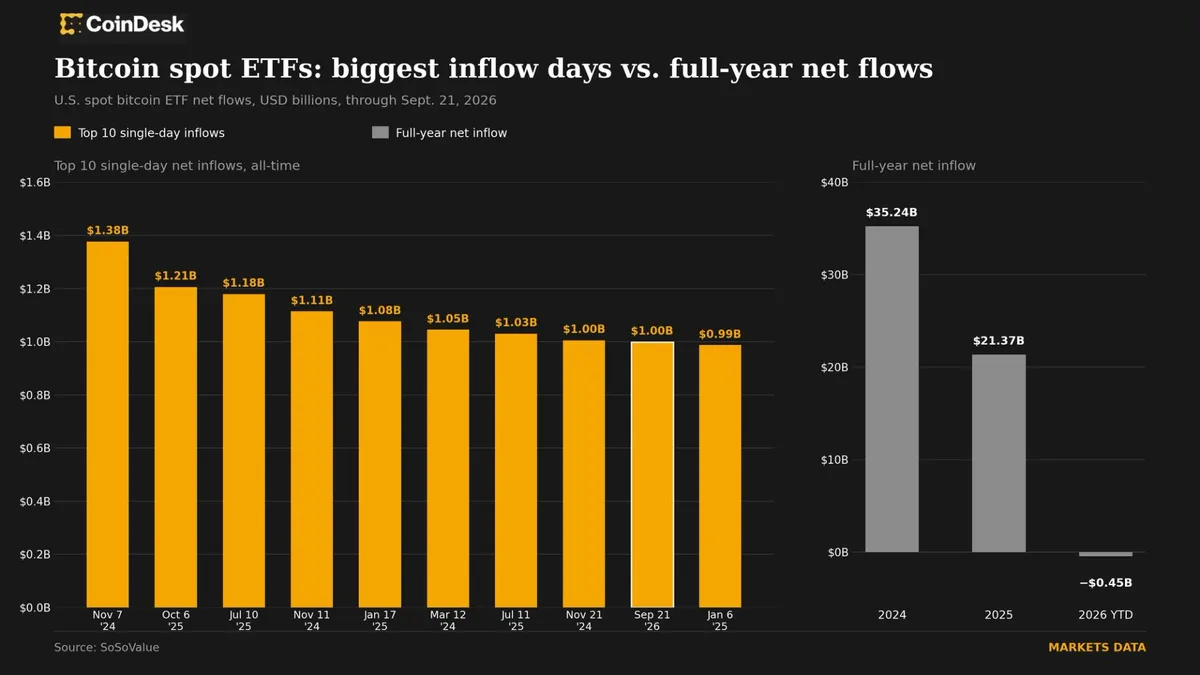
Spot bitcoin ETFs see nearly $1 billion inflow as bitcoin hits January highs

US spot Bitcoin ETFs see nearly $1 billion inflow, highest since October 2025

Bitcoin's rise to $86,000 restores profitability for ETF investors

Apple and Google seek crypto experts, signaling potential stablecoin initiatives