Bitcoin ETF flows reverse as US funds shed $1B amid inflation fears

This week, US-listed Bitcoin exchange-traded funds (ETFs) experienced a significant reversal in capital flows, leading to a staggering $1 billion being withdrawn in just one week. This marks the most substantial outflow since late January, indicating a sharp shift in investor sentiment. The primary driver behind this sudden surge of withdrawals appears to be heightened concerns regarding rising inflation and its potential effects on the broader economy. As inflation fears mount, institutional investors are reassessing their risk exposure, leading to this notable capital flight from Bitcoin ETFs.
To understand the current situation, it is essential to consider the broader economic backdrop. Inflation has been a growing concern globally, with rising prices impacting various sectors and prompting central banks to reconsider monetary policies. In the United States, recent economic data suggests that inflationary pressures are not easing as quickly as anticipated, leading to a more cautious approach from institutional investors. This shift in focus has prompted many to reevaluate their positions in riskier assets such as cryptocurrencies, with Bitcoin being particularly affected due to its volatility and speculative nature.
The significance of these outflows cannot be understated. A $1 billion withdrawal from Bitcoin ETFs not only reflects a lack of confidence in Bitcoin as a store of value amidst inflation but also signals broader market apprehension. This trend could lead to increased selling pressure on Bitcoin, as institutions offload their holdings to mitigate potential losses. Additionally, the overall sentiment in the crypto market may become more bearish if these outflows continue, potentially impacting Bitcoin's price and its position within the larger financial ecosystem.
Industry reactions to this news have been mixed. Some analysts see this as a temporary setback, arguing that the fundamentals of Bitcoin remain strong despite the short-term volatility. Others, however, express concern that this could be the beginning of a more prolonged trend of institutional withdrawal, especially if inflation continues to rise and economic conditions remain uncertain. Experts suggest that the market may need to brace for further fluctuations as investors adjust their strategies in response to the evolving economic landscape.
Looking ahead, it will be crucial to monitor how these trends develop in the coming weeks. Should inflation fears persist, we may see continued volatility in both Bitcoin and other cryptocurrencies. Conversely, if economic indicators begin to stabilize, there could be a resurgence of interest in Bitcoin, particularly among institutional investors looking for long-term growth opportunities. As always, the crypto market remains dynamic, and the interplay between macroeconomic factors and investor sentiment will be key in shaping its trajectory.

CoinMagnetic Team
Crypto investors since 2017. We trade with our own money and test every exchange ourselves.
Updated: May 2026
From our insights:
Related news
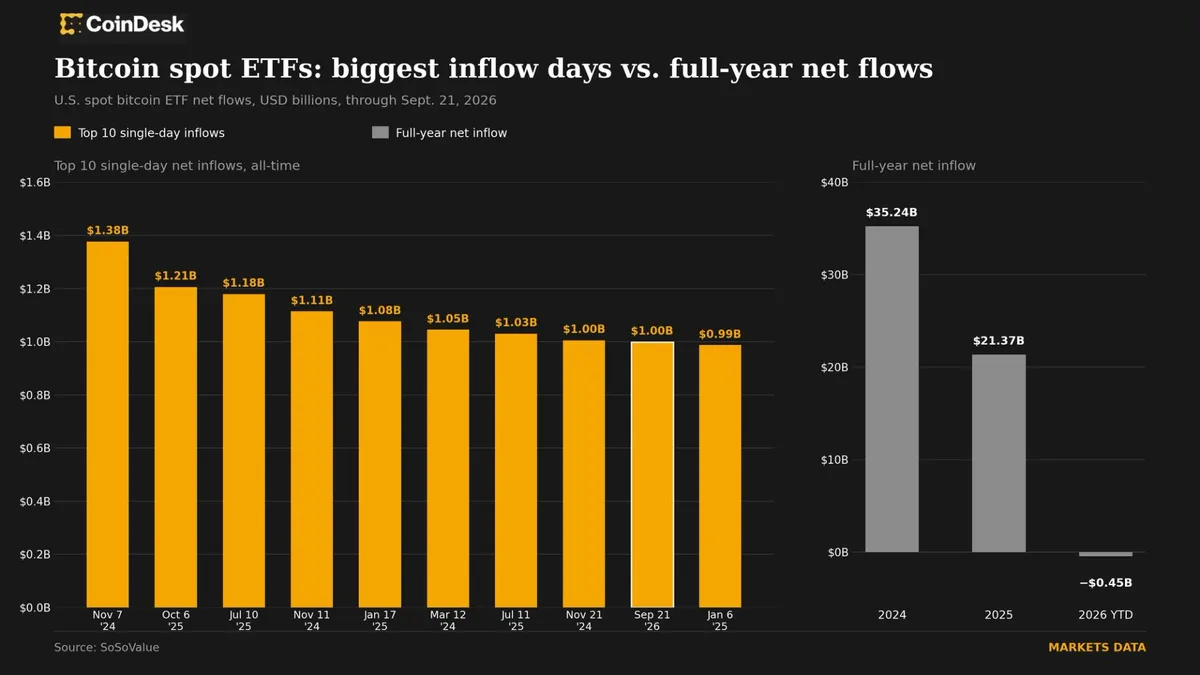
Spot bitcoin ETFs see nearly $1 billion inflow as bitcoin hits January highs

US spot Bitcoin ETFs see nearly $1 billion inflow, highest since October 2025

Bitcoin's rise to $86,000 restores profitability for ETF investors

Apple and Google seek crypto experts, signaling potential stablecoin initiatives

ECB initiates bond purchases using its own funds in crypto-linked system