Bitcoin and software stocks are breaking up — and history says a major crypto move is coming
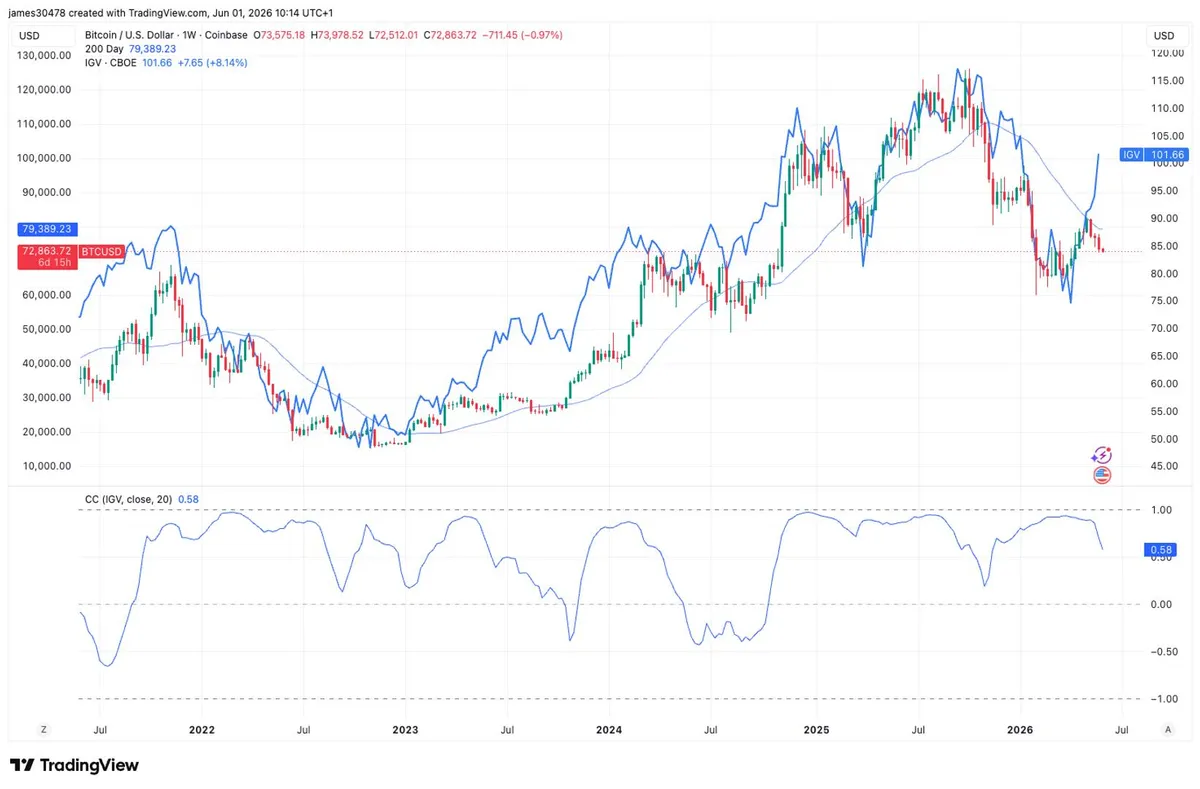
Recently, Bitcoin and software stocks have shown a marked divergence in their price movements, ending a trend of correlation that has persisted for several years. As Bitcoin's price has begun to fluctuate independently from software equities, analysts and investors are left pondering what this shift means for the crypto market. Historically, such breaks in correlation have preceded significant movements in Bitcoin's price, leading many to speculate that a major crypto move could be on the horizon. This divergence raises questions not only about Bitcoin’s future but also about the overall sentiment in the tech and crypto sectors.
To understand this shift, we need to look back at the relationship between Bitcoin and software stocks, particularly during the pandemic when both asset classes experienced remarkable growth. The rise of remote work and digital solutions drove demand for software companies, which in turn seemed to buoy Bitcoin's price as investors sought refuge in digital assets. However, as macroeconomic conditions change–such as rising interest rates and inflation concerns–the relationship between these two sectors appears to be unraveling. The factors driving software stocks and Bitcoin may be diverging, leading to this recent disconnect.
This divergence is significant for the market as it may signal a shift in investor sentiment. If Bitcoin continues to move independently from software stocks, it could lead to increased volatility in the crypto space, as traders react to Bitcoin's price movements without the influence of tech equities. Moreover, if Bitcoin does catch up to software stocks, it could indicate a renewed interest in the cryptocurrency, possibly attracting new investors and driving prices higher. Alternatively, if Bitcoin continues to underperform relative to tech stocks, it could signal a broader bearish trend in the crypto market.
Industry experts are taking note of this split, with many suggesting that the disconnect could lead to a reassessment of Bitcoin's role as an asset class. Some analysts believe that Bitcoin has the potential to emerge as a hedge against traditional equities, especially if macroeconomic conditions continue to deteriorate. Others caution that this divergence could also indicate a loss of confidence in Bitcoin as an alternative investment, particularly if it fails to establish a new upward trend. Market participants are eager to see how this divergence will play out and whether it will lead to a reversion or a further separation of the two asset classes.
Looking ahead, the crypto market may be at a critical juncture. As Bitcoin's price movements become more isolated from software stocks, investors will be keeping a close eye on macroeconomic indicators, regulatory developments, and overall market sentiment. If Bitcoin can regain its upward momentum and establish a new narrative that separates it from traditional equities, it may pave the way for a renewed bullish cycle. Alternatively, if the divergence continues, we could see an extended period of uncertainty for Bitcoin and the broader crypto market as investors reassess their strategies in light of changing economic conditions.

CoinMagnetic Team
Crypto investors since 2017. We trade with our own money and test every exchange ourselves.
Updated: June 2026
From our insights:
Related news

Bitcoin's weekly close above $81,000 signals potential rise to $90,000

Elon Musk's X integrates bitcoin trading options for U.S. users
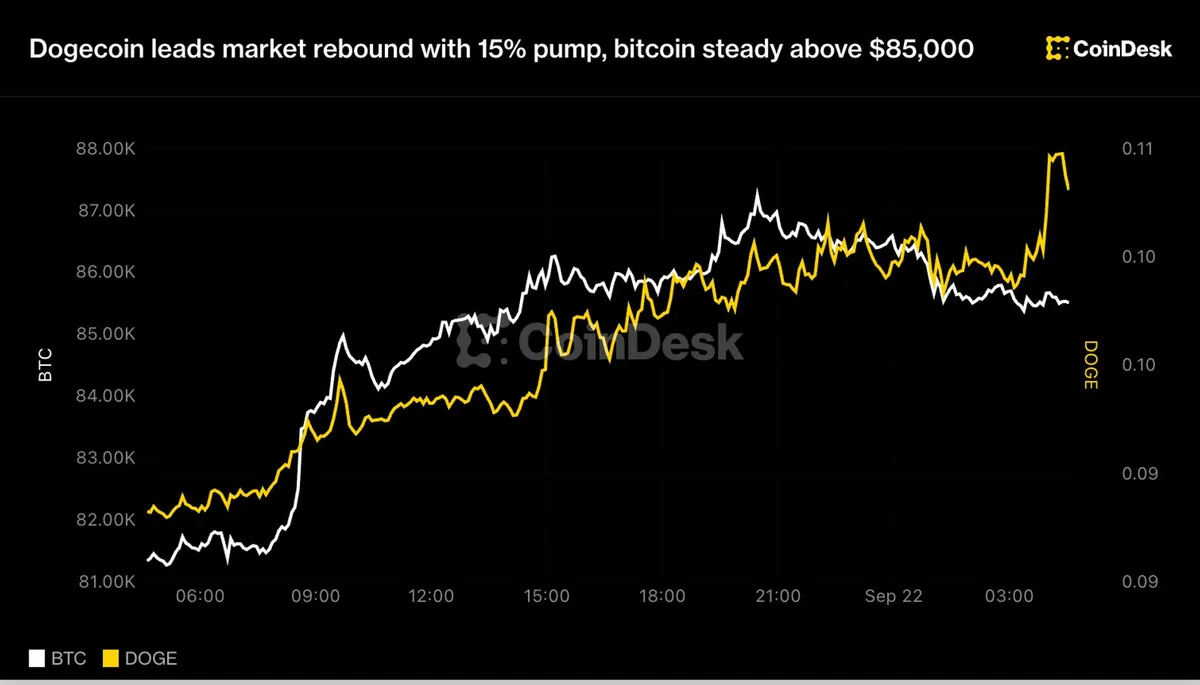
Dogecoin's 15% surge drives market recovery as bitcoin stabilizes above $85,000

Cardano adds tools for AI agent payments, joining Solana and XRP Ledger

Trueo prediction market moves from Base to Ethereum