AI Models Can’t Agree on Basic Facts Most of the Time, Study Shows

A recent study has revealed that leading AI models struggle to reach consensus on fundamental facts. Researchers tested five advanced AI systems against 1,000 real-world claims, only to find that these models disagreed on a staggering 67% of them. This finding raises concerns about the reliability of AI-generated information, especially as these models continue to be integrated into various sectors, including journalism, legal advice, and education. The study underscores the challenges in achieving accurate and dependable AI systems capable of verifying factual claims.
The backdrop to this study is the rapid evolution of AI technologies, particularly in natural language processing. As these models have become more sophisticated, businesses and individuals have increasingly turned to them for assistance in fact-checking and information retrieval. However, the discrepancies observed in their outputs suggest that despite their advancements, AI models can still produce inconsistent results. This inconsistency raises questions about their reliability in critical applications, highlighting an ongoing debate in the tech community regarding the limits of AI in accurately interpreting and validating information.
The implications of this study are significant for the market, particularly for companies relying on AI for content generation and validation. As misinformation remains a pressing issue across digital platforms, the inability of AI models to agree on basic facts could undermine public trust in AI-driven solutions. Organizations may need to reconsider their reliance on these systems for factual verification, potentially leading to a reevaluation of AI's role in content creation and dissemination. This could impact companies' investment strategies and influence the development of more robust AI systems that prioritize accuracy.
Industry experts have expressed varied reactions to the findings. Some argue that this study highlights the pressing need for continued investment in AI research to improve the accuracy of these models. Others caution that while AI can assist in fact-checking, it should not replace human oversight, particularly in sensitive areas. The study has also sparked a broader conversation about the responsibility of AI developers to ensure that their models are equipped to handle the complexities of real-world information. As the landscape evolves, stakeholders are calling for greater transparency in how AI systems are trained and evaluated.
Looking ahead, it is clear that the path to reliable AI fact-checking is fraught with challenges. Researchers and developers will need to focus on refining algorithms and incorporating diverse data sets to improve consensus among AI models. As the demand for accurate information continues to grow, the pressure will be on the industry to develop solutions that not only enhance the capabilities of AI but also instill confidence among users. The outcomes of this study may serve as a catalyst for further research, ultimately leading to advancements that could bridge the current gap in AI's factual consistency.

CoinMagnetic Team
Crypto investors since 2017. We trade with our own money and test every exchange ourselves.
Updated: May 2026
From our insights:
Related news

Bitcoin's weekly close above $81,000 signals potential rise to $90,000

Elon Musk's X integrates bitcoin trading options for U.S. users
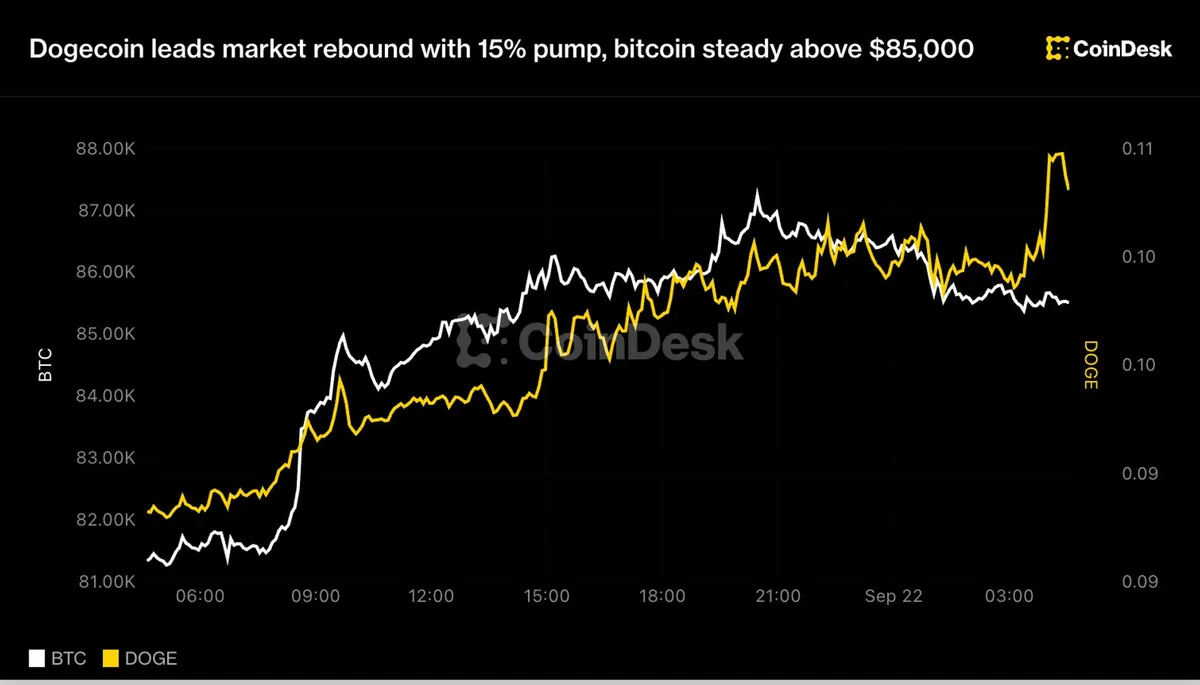
Dogecoin's 15% surge drives market recovery as bitcoin stabilizes above $85,000

Cardano adds tools for AI agent payments, joining Solana and XRP Ledger

Trueo prediction market moves from Base to Ethereum