Quantum attack cost on Bitcoin reduced by 86% due to ECDSA.Fail challenge

Recent developments in the realm of quantum computing have revealed a significant reduction in the costs associated with potential attacks on Bitcoin. The ECDSA.Fail challenge has resulted in an 86% decrease in the resource benchmark for one critical component of a theoretical quantum attack. This revelation has raised alarms within the crypto community as quantum technology continues to advance at an unprecedented pace, potentially threatening the security of widely-used cryptocurrencies.
To understand the implications of this news, it’s essential to comprehend the background of the challenge and its relation to Bitcoin’s security framework. Bitcoin relies on the Elliptic Curve Digital Signature Algorithm (ECDSA) to secure its transaction signatures. The ECDSA.Fail challenge was initiated to incentivize researchers to explore vulnerabilities in this algorithm, particularly in the context of quantum computing. As quantum computers evolve, they may be capable of executing complex calculations that could compromise traditional cryptographic techniques, including those used by Bitcoin.
This drastic reduction in the cost of executing a quantum attack could have far-reaching consequences for the cryptocurrency market. As the barriers to launching such attacks lower, it instills a sense of urgency among developers and stakeholders to fortify Bitcoin's security measures against the evolving threat of quantum computing. Investors and users alike may begin to reassess their risk tolerance and the overall viability of Bitcoin as a secure store of value.
Industry reactions to this development have been mixed, with some experts expressing concern over the potential for increased vulnerability, while others advocate for proactive measures to enhance Bitcoin’s resilience. Many in the crypto space are calling for accelerated research and development into quantum-resistant algorithms to ensure the longevity and security of Bitcoin and other cryptocurrencies. This is viewed not only as an essential step for safeguarding digital assets but also as a way to maintain investor confidence in an increasingly competitive market.
Looking ahead, the implications of the ECDSA.Fail challenge are likely to catalyze further discussions around the integration of quantum-resistant technologies into the existing cryptocurrency infrastructure. As research progresses, we can expect ongoing debates regarding the balance between innovation and security, particularly as quantum computing continues to make strides. The crypto community must remain vigilant and adaptive to navigate the challenges posed by this emerging technology.

CoinMagnetic Team
Crypto investors since 2017. We trade with our own money and test every exchange ourselves.
Updated: September 2026
From our insights:
Related news

Gartner predicts over 80 percent of specialist cloud providers will cease independence by 2030
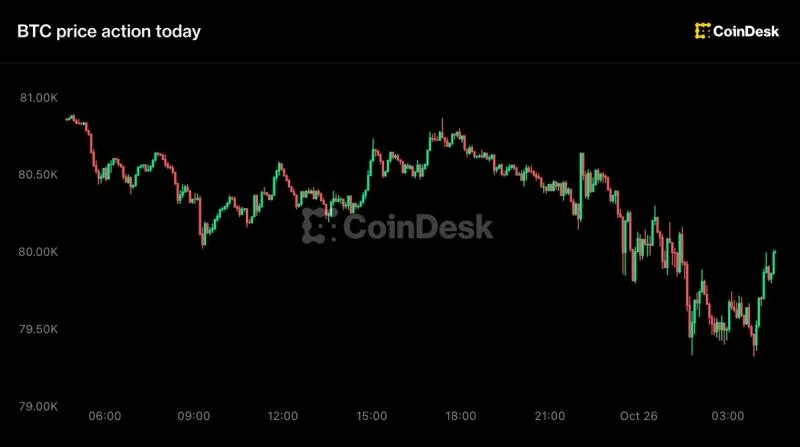
Federal Reserve meeting prompts traders to de-risk as bitcoin drops below $80,000

Hong Kong names Nasdaq-listed Solana Company a strategic enterprise

Elon Musk confirms $40 billion SpaceX debt deal for AI chips, warns of neocloud shakeout

Anchorpoint delays retail stablecoin launch beyond 2026 target