Solana Hosts Wall Street Stablecoins and Korea's First Rugpull Prosecution Simultaneously
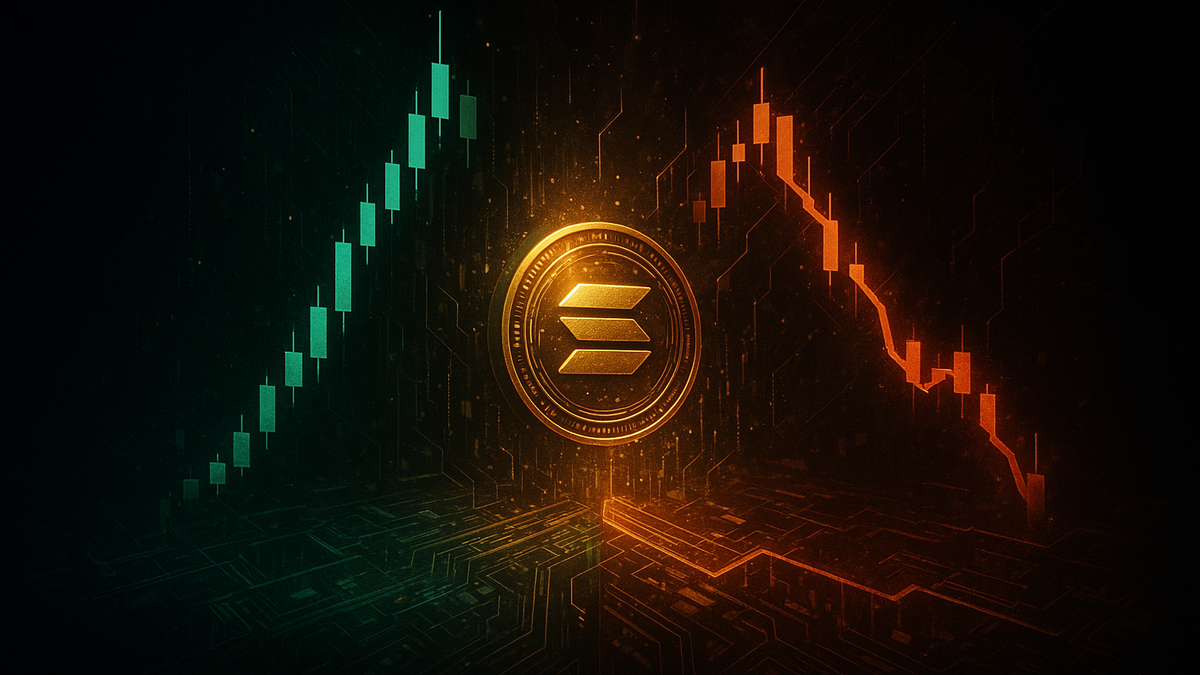
Cash App and SoFi chose Solana for regulated stablecoin launches this week, while South Korean prosecutors filed the first memecoin rugpull case under new law against CatFi creators. The same network is attracting both institutional fintech and convicted fraudsters, and the gap between those two facts is where Solana's real story lives.
Original analysis, verified sources, real-world experience
Two things happened on Solana this week that point in completely opposite directions. Cash App began supporting USDC transfers on Solana (alongside Ethereum, Polygon, and Arbitrum), and SoFi rolled out its bank-issued SoFiUSD stablecoin to 14.7 million members on the same chain. On the same days, South Korean prosecutors sent the CatFi memecoin creators to the Seoul District Court for the country's first rugpull prosecution under the Virtual Asset User Protection Act – a scheme that allegedly cost investors more than $650,000.
Bulls read one set of headlines. Bears read the other. We think both camps are missing the more interesting question.
The Bull Case: Solana Is Becoming Regulated Finance's Back End
The institutional stablecoin story is genuine and material. Cash App – a product with tens of millions of users – now routes USDC on Solana. SoFi, a licensed U.S. bank, chose Solana and Ethereum for its first bank-native stablecoin. Orca, a Solana DEX, launched a secondary trading marketplace for tokenized real-world assets where accredited investors can trade the gold-backed GLDY token through permissioned liquidity pools. CoinDesk reported this as part of a broader industry push toward tokenizing traditional financial assets. Cointelegraph noted that Orca and Streamex built this infrastructure specifically because Solana's settlement speed and fee structure makes it practical for securities-adjacent products.
The bull narrative goes like this: regulated entities picking a chain is a signal that cannot be faked. Banks do compliance checks. Fintech apps carry regulatory risk if they touch broken infrastructure. When Cash App and SoFi deploy on Solana, they are implicitly endorsing its technical reliability.
Weak points in this narrative:
- Cash App's executive Miles Suter told The Block the firm remains bitcoin-focused. The stablecoin expansion is a product feature, not a strategic bet on Solana specifically. These companies would have deployed on whichever chain offered cheapest settlement – Solana won a price competition, not a philosophical endorsement.
- The RWA marketplace at Orca is restricted to accredited investors with permissioned pools. It is a walled garden sitting on a public chain, not proof that Solana's open ecosystem is maturing into regulated territory.
- SoFi's bearish framing by The Block signals that the stablecoin launch is partly a banking app feature race driven by the GENIUS Act momentum – Solana is one of several chains, not the chosen network.
The Bear Case: Solana's Memecoin Culture Keeps Producing Fraud
The CatFi case is worth taking seriously. According to The Block, the suspects used fake social media channels to pull thousands of buyers into a Solana memecoin before abandoning the project. South Korean investigators valued the creators' profit at roughly $300,000 against more than $650,000 in investor losses. The prosecution marks the first application of South Korea's Virtual Asset User Protection Act to a rugpull – a regulatory milestone that signals regulators now have both the legal tools and the appetite to pursue memecoin fraud.
The bear narrative goes like this: Solana's low fees and fast settlement that attract fintech companies are exactly the same properties that make it cheap and fast to launch and dump a memecoin. The chain cannot distinguish between SoFi's compliance team and a Korean fraud ring. Every legitimizing institutional deployment happens alongside an ongoing stream of retail-targeting scams.
Decrypt reported a striking data point: the CatFi token surged 6,000% after the arrests. The bears would say this is proof that Solana's memecoin market is so detached from fundamentals that even a fraud prosecution triggers a speculative rally.
Weak points in this narrative:
- The 6,000% post-arrest surge is a short-squeeze and spectacle trade, not evidence of systemic Solana failure. It happened because a tiny float with arrested sellers suddenly had no supply. This is a market microstructure accident, not an endorsement of fraud.
- South Korea prosecuting the CatFi creators under a new law is actually a bullish signal for regulatory clarity, not a bearish one. The fact that the legal framework exists and is being applied means the ecosystem has more protection than it did a year ago.
- Memecoin fraud is not a Solana-specific pathology. Ethereum had years of ICO scams before regulators built enforcement capacity. Solana is passing through the same phase at a different speed.
What the Zcash Number Actually Tells Us
One data point from this week's coverage that neither bulls nor bears flagged properly: BeInCrypto reported that Zcash annual fees crossed $405 million – higher than Ethereum and Solana – driven by a 300% increase in shielded transactions. We mention this because it is a reminder that fee revenue does not directly track narrative quality. A chain can generate fee revenue through legitimate use or through speculative frenzy. The same is true for Solana: stablecoin volume and memecoin volume both show up as chain activity, and neither alone tells you whether the network is healthy.
The Contradiction That Actually Matters
The real tension is not between "Solana is institutional" and "Solana is a fraud casino." Both things are happening simultaneously, and the market has priced both in for months. The more useful question is whether the institutional layer will grow faster than the fraud layer, or whether regulatory pressure – like South Korea's new law – will eventually make meme speculation more costly and drive more of the fee base toward legitimate products.
We think the institutional signal this week is slightly stronger. Cash App and SoFi deploying on Solana are permanent integrations that create real user exposure to the chain, not speculative inflows that reverse on a headline. The RWA infrastructure at Orca is early and permissioned, but it exists and is operating with real assets.
The memecoin fraud signal is real but familiar. South Korea's prosecution is meaningful for legal precedent, but $650,000 in losses is small relative to the chain's daily volumes. The 6,000% token surge is noise.
Our Take
If you hold SOL and you are deciding whether to add or trim, this week's news does not change the underlying picture. The chain is gaining regulated users at a pace that matters, and it is losing retail credibility through fraud at a pace that has been roughly constant for two years. Neither trend accelerated materially this week.
What we would watch instead: whether the GENIUS Act passes in the U.S. Senate, because bank-issued stablecoins on Solana become a much bigger story if stablecoin legislation clears. And whether South Korea's Virtual Asset User Protection Act generates more prosecutions – because five or ten cases over the next six months would signal that the enforcement friction for Solana rugpulls has genuinely increased, not just as a one-time event.
The honest position is that Solana is two chains running on one network at the same time. Regulated fintech is building on the first. Retail speculation is burning money on the second. Which one you invest in depends on your time horizon, and right now the institutional layer is showing more evidence of durability.
This article is for educational purposes and is not investment advice. Cryptocurrencies carry high risk. Only trade with funds you can afford to lose.

CoinMagnetic Team
Crypto investors since 2017. We trade with our own money and test every exchange ourselves.
Updated: May 2026
Follow our analysis on Telegram
We publish analysis, digests and forecasts on our Telegram channel.
Follow the channelUseful tools and resources
Related articles
Ethereum Expands Its Autonomous Utility Even While Institutional Capital Pulls Away

Institutional Accumulation Masks Severe Balance Sheet Stress and Structural Cryptographic Deadlocks

Solana Alpenglow masks massive institutional growth despite crashing headline transaction metrics