시장Bullish
Bitcoin slips from near $80,000 as oil price increase weighs on risk assets
Source: CoinDesk
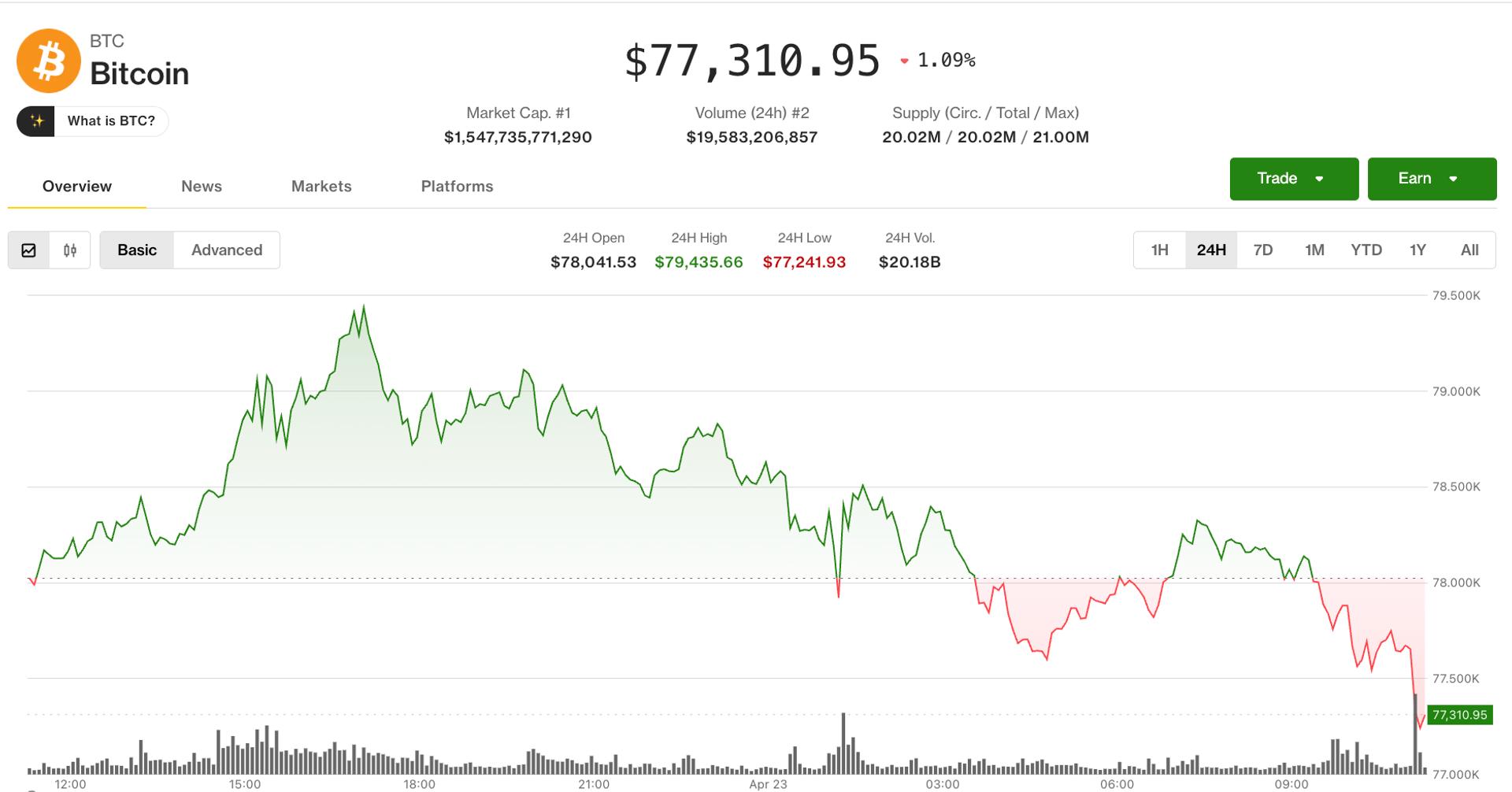
Bitcoin experienced a notable dip after nearing the $80,000 mark, as a surge in oil prices has begun to weigh heavily on risk assets, including cryptocurrencies. The leading digital currency briefly touched the psychological barrier of $80,000 before retreating, reflecting the broader market's sensitivity to external economic factors. Traders are increasingly adopting a bearish sentiment, which is being amplified by the rising prices of oil, leading many to speculate about the sustainability of Bitcoin's recent rally. Despite this downturn, some analysts believe that a potential breakout could occur, fueled by short squeezes that might accelerate the upward momentum.
To understand the current situation, it's important to look at the context surrounding this movement. Oil prices have been on the rise, driven by geopolitical tensions and supply chain constraints, causing investors to reassess their risk appetites. Historically, increases in commodity prices can lead to a flight to safety, pushing investors away from riskier assets like cryptocurrencies. This backdrop has created a challenging environment for Bitcoin, which has seen significant volatility in recent weeks, raising questions about its resilience in the face of external pressures.
This development matters for the market as it highlights the interconnectedness of traditional commodities and cryptocurrencies. The recent price action suggests that Bitcoin may not be insulated from macroeconomic trends, which can lead to broader implications for market participants. If oil prices continue to rise, the risk-off sentiment may persist, potentially leading to further declines in Bitcoin and other digital assets. Conversely, if Bitcoin can regain its footing and push past the $80,000 threshold, it might signal a strong recovery and renewed confidence among investors.
Industry reactions have been mixed, with some experts pointing to the potential for a rebound based on technical indicators suggesting that a short squeeze could propel prices higher. Others remain cautious, emphasizing the importance of monitoring global economic conditions, particularly oil prices, as they can significantly influence market sentiment. Analysts warn that while the short-term outlook may appear uncertain, the long-term fundamentals of Bitcoin remain strong, driven by adoption trends and institutional interest.
Looking ahead, market participants will be closely watching the interplay between oil prices and Bitcoin's price action. Any significant shifts in the geopolitical landscape or changes in supply dynamics could further impact risk assets. As traders navigate this complex environment, the potential for volatility remains high, highlighting the need for investors to stay informed and agile in their strategies. The coming days and weeks will be critical in determining whether Bitcoin can reclaim its recent highs or if it will continue to face headwinds from external economic factors.
CM
CoinMagnetic 팀
2017년부터 암호화폐 투자. 직접 돈을 넣고 모든 거래소를 테스트합니다.
업데이트: 2026년 4월
인사이트에서 읽기:
![[속보] 美 4월 제조업 PMI 54.0…예측치 상회](https://cdn.blockmedia.co.kr/wp-content/uploads/2026/02/20260221-000315-560x300.jpg)


![[뉴욕 개장 전 점검] 중동 리스크 재부각…유가 상승에 증시 선물 하락](https://cdn.blockmedia.co.kr/wp-content/uploads/2025/11/20251113-222306-560x373.png)