기관Neutral
Staggering $28 trillion flows through crypto’s ‘agent economy’ – but 76% of it is just bots shuffling stablecoins
Source: CryptoSlate
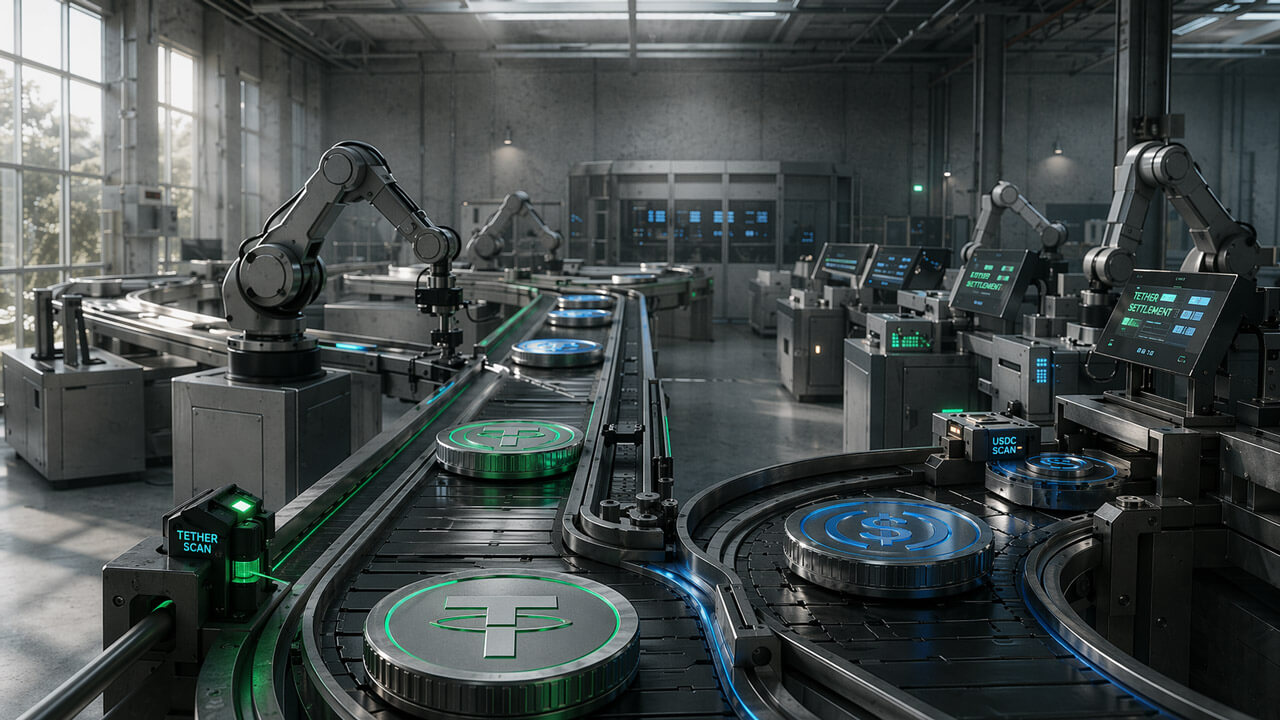
Recent insights from a report by DWF Ventures reveal a staggering $28 trillion flowing through what is being termed the crypto's "agent economy." This rapid evolution highlights how artificial intelligence and crypto-native tools are paving the way for autonomous software agents that can fund themselves and execute cross-chain strategies without human intervention. The report notes that automated activities now represent approximately 19% of all on-chain transactions, with around 17,000 distinct agents at play. However, a significant portion of this activity–76%–is attributed to bots merely shuffling stablecoins, raising questions about the depth and utility of this burgeoning sector.
To better understand this phenomenon, it's essential to consider the broader context of the crypto landscape. The rise of decentralized finance (DeFi) and the increasing interconnectivity of blockchain networks have created fertile ground for these automated agents to thrive. As traditional finance grapples with regulatory challenges and inefficiencies, the allure of an agent economy that operates seamlessly across multiple chains becomes increasingly attractive. The integration of AI into this space has accelerated the pace at which transactions occur, enabling real-time responses to market conditions that humans may struggle to match.
The implications of this development for the market are profound. With 76% of the transactions driven by bots focused on stablecoin movements, the actual innovative potential of these agents may be diluted. Nevertheless, the remaining 24% of activity indicates a growing trend where automated systems are not just facilitating trades but also engaging in more complex financial strategies. This shift could lead to a more dynamic market environment where algorithmic trading strategies dominate, potentially impacting liquidity, price volatility, and overall market behavior.
Industry experts have voiced a mixed response to the findings. Some see the rise of the agent economy as a natural progression toward a more automated financial ecosystem, suggesting that it could ultimately enhance efficiency and reduce costs. Others caution against the over-reliance on bots, arguing that the inherent lack of human oversight may introduce systemic risks. The debate continues around the sustainability of this model, especially if the majority of activity is confined to stablecoin transactions rather than innovative applications that could drive growth and user engagement.
Looking ahead, it is crucial to monitor how these trends evolve and whether the agent economy will diversify beyond stablecoin movements. As more sophisticated strategies emerge and regulatory frameworks develop, we may see a shift in the types of activities these agents undertake. The future landscape could be defined by a balance between automation and human oversight, ensuring that while technology drives efficiencies, it does not compromise the integrity of the financial systems being built. As the crypto space continues to mature, the dialogue surrounding the role of AI and automation will undoubtedly shape the trajectory of the industry.
CM
CoinMagnetic 팀
2017년부터 암호화폐 투자. 직접 돈을 넣고 모든 거래소를 테스트합니다.
업데이트: 2026년 4월
인사이트에서 읽기:


![[코인 갱신 일지] SP500 등 주식 연동 토큰화 자산 신고점 경신](https://f1.tokenpost.kr/2025/08/2r5bify2q9.jpg)
![[저녁 뉴스브리핑] 미국 비트코인 현물 ETF, 3거래일 연속 순유입 外](https://f1.tokenpost.kr/2026/04/xa5hm11owu.jpg)