시장Bullish
Bitcoin reverses from $79,500 as oil surge triggers broader crypto selloff
Source: CoinDesk
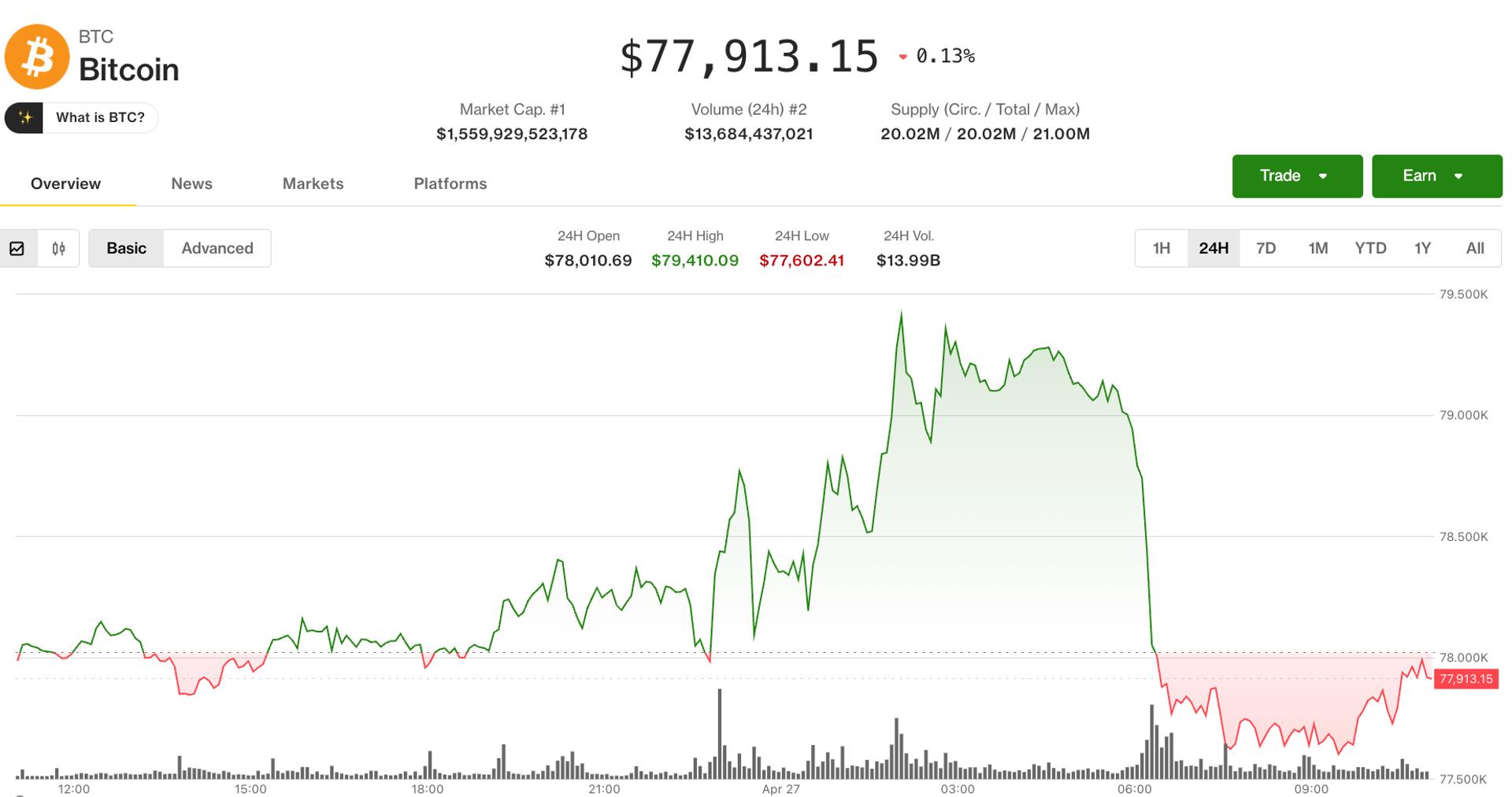
Bitcoin has recently faced a significant downward shift, reversing from its peak of $79,500. After approaching the psychologically important $80,000 threshold, BTC experienced a 2% drop, reflecting a broader market selloff triggered primarily by surging oil prices. This price movement has sparked concerns among investors, with altcoins particularly feeling the brunt of the pressure, leading to a volatile trading session across the cryptocurrency landscape.
To understand this situation, it's essential to consider the interconnectedness of global markets. The increase in oil prices has not only influenced traditional financial markets but also has spilled over into the cryptocurrency sector. Rising oil prices typically indicate inflationary pressures and can lead to increased costs across various sectors. As investors react to these economic indicators, risk assets like cryptocurrencies often experience heightened volatility. The current selloff in Bitcoin and altcoins can be seen as part of this broader economic landscape, where investor sentiment is increasingly cautious.
The implications of Bitcoin's recent price action are significant for the market. The failure to breach the $80,000 mark may signal a potential resistance level, raising questions about the sustainability of recent upward trends in the cryptocurrency market. Additionally, the correlation between oil prices and crypto sentiment suggests that macroeconomic factors will continue to play a vital role in shaping investor behavior. For many, this reinforces the need for a more comprehensive approach to understanding cryptocurrency movements, one that factors in global economic indicators.
Industry experts have weighed in on the situation, noting that while Bitcoin's dip might appear concerning, it could also serve as a healthy correction after a period of strong gains. Some analysts argue that the volatility presents buying opportunities for long-term investors, while others caution that continued pressure from rising oil prices could result in further selloffs. Overall, the sentiment in the industry remains mixed, with many acknowledging the need for a more stable economic backdrop before predicting sustained upward movement in Bitcoin's price.
Looking ahead, the market will closely monitor economic indicators related to oil and inflation, as these factors are likely to influence investor sentiment and trading behaviors in the near term. Analysts suggest that Bitcoin's ability to regain momentum will depend on broader market conditions and the resolution of current economic uncertainties. As we navigate this complex landscape, it will be essential for investors to stay informed about market trends and the potential impact of macroeconomic developments.

인사이트에서 읽기:

![[자정 뉴스브리핑] 코인셰어스, 디지털자산 투자상품 지난주 12억달러 순유입 外](https://f1.tokenpost.kr/2026/04/1lmuv9trni.jpg)