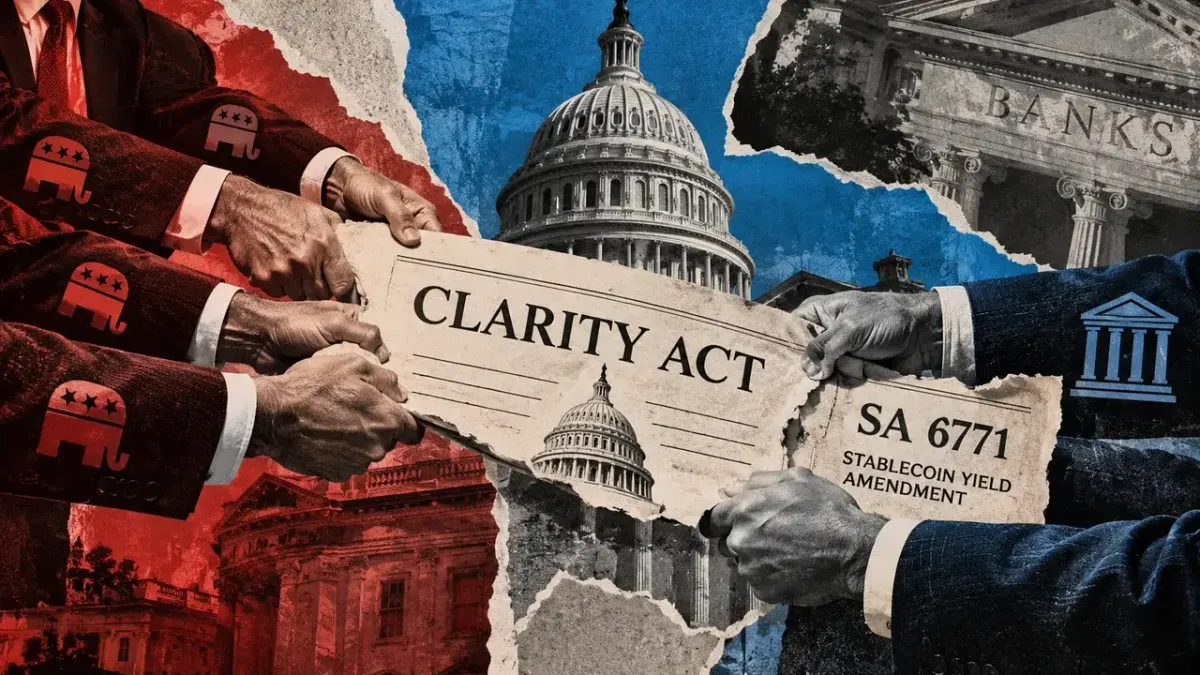
White House crypto adviser Witt says other Clarity Act hurdles being cleared

Patrick Witt, a key crypto adviser at the White House, recently shared insights into the evolving landscape of U.S. cryptocurrency regulation. In an interview with CoinDesk, Witt emphasized that recent compromises related to stablecoin yield are paving the way for the advancement of the Clarity Act in the Senate. This act, aimed at providing a clearer regulatory framework for digital assets, has faced various hurdles in the past. However, Witt's comments suggest a positive shift as legislators work toward a more definitive stance on stablecoin regulations, despite ongoing concerns from banking institutions about the potential risks involved.
The Clarity Act has been a topic of discussion among lawmakers and industry stakeholders for some time now. Its aim is to establish a comprehensive regulatory structure for cryptocurrencies, particularly focusing on stablecoins, which have rapidly gained popularity in the financial ecosystem. The recent discussions around stablecoin yield highlight the Senate's recognition of the need to address the complexities surrounding these digital assets. This comes at a time when the crypto market is experiencing significant growth, and the demand for regulatory clarity has never been more pressing.
The implications of Witt's statements are substantial for the broader crypto market. If the Senate successfully advances the Clarity Act, it could provide much-needed certainty for investors, developers, and companies operating in the digital asset space. A well-defined regulatory environment could bolster trust in cryptocurrencies, encouraging more institutional participation and potentially leading to increased market stability. Conversely, ongoing warnings from bankers about the risks associated with stablecoins could create a dichotomy in sentiment, where traditional financial institutions remain cautious while the crypto market continues to evolve.
Industry reactions to Witt's comments have been mixed but largely optimistic. Many industry experts view the potential for regulatory clarity as a significant step forward, particularly given the historical hesitance from lawmakers to engage with the complexities of cryptocurrency. Some analysts believe that a collaborative approach between regulators and the crypto community could foster innovation while mitigating risks. However, there are also voices of caution, emphasizing the need for a balanced regulatory framework that does not stifle growth or innovation in the sector.
Looking ahead, the fate of the Clarity Act and its impact on the crypto landscape will depend on ongoing discussions in the Senate and the willingness of lawmakers to address the concerns raised by both proponents and skeptics of cryptocurrency. As negotiations continue, stakeholders in the crypto market will be closely monitoring developments, hoping for a resolution that fosters growth while ensuring consumer protection and financial stability. The coming weeks could prove pivotal in determining the regulatory future of digital assets in the United States.

CoinMagnetic Team
Crypto investors since 2017. We trade with our own money and test every exchange ourselves.
Updated: April 2026
From our insights:
Related news

Solo GP Jed Breed raises $15 million for his second early-stage crypto fund

Crypto industry may increase PAC spending after CLARITY vote failure

SEC's crypto counsel outlines strategy for custody of digital assets

Reap aims to enhance cross-border FX with non-USD stablecoins including peso

ECB and EU central banks propose liquidity thresholds for stablecoins