US Bitcoin ETFs pull in $664M in largest daily inflow since January, because Iran reopened Hormuz for a few hours

On April 17, US-listed spot Bitcoin exchange-traded funds (ETFs) experienced a remarkable resurgence, pulling in approximately $664 million in a single day–the largest daily inflow since January. This surge is attributed to the reopening of the strategically important Strait of Hormuz by Iran, albeit only for a few hours. The reopening allowed for increased shipping activity in the region, triggering a broader market rotation toward risk assets, including cryptocurrencies. This significant inflow into Bitcoin ETFs demonstrates an increased appetite among investors for digital assets as they react to geopolitical developments.
The Strait of Hormuz is a vital maritime chokepoint through which a significant portion of the world’s oil supply is transported. The reopening of this route, even temporarily, can have far-reaching implications for global markets. Previously, tensions in the region have led to volatility in both oil and cryptocurrency markets, as investors often seek safe havens during geopolitical uncertainty. The context surrounding this recent inflow is essential in understanding how external factors can influence investor sentiment and market dynamics within the crypto space.
The implications of this substantial inflow into Bitcoin ETFs are noteworthy for the overall market. First and foremost, it signals a shift in investor confidence, suggesting that individuals are willing to allocate significant capital to cryptocurrencies at a time when traditional markets may be facing uncertainty. This could indicate a broader trend of institutional adoption, as ETFs provide a more accessible and regulated avenue for investing in Bitcoin. As more capital flows into these products, it may lead to increased price stability and further legitimacy for Bitcoin as an asset class.
Industry experts have weighed in on the recent inflow, noting that while the geopolitical situation remains fluid, the response from investors reflects a growing trend of diversifying portfolios to include cryptocurrencies. Many analysts believe that the reopening of the Strait of Hormuz could play a role in reducing market volatility and increasing liquidity in the crypto sector. Furthermore, the fact that this inflow occurred shortly after a period of relative stagnation suggests that the market is primed for further growth, especially if similar geopolitical developments continue to unfold.
Looking ahead, the outlook for Bitcoin ETFs appears promising, particularly if the trend of inflows persists. As geopolitical tensions fluctuate, investors may continue to view Bitcoin as a hedge against traditional market risks. Additionally, regulatory developments surrounding cryptocurrency ETFs in the US could further enhance investor confidence and attract more capital. Overall, the recent influx into Bitcoin ETFs signifies a pivotal moment for the market, highlighting the interconnectedness of global events and the evolving landscape of digital asset investment.

CoinMagnetic Team
Crypto investors since 2017. We trade with our own money and test every exchange ourselves.
Updated: April 2026
From our insights:
Related news
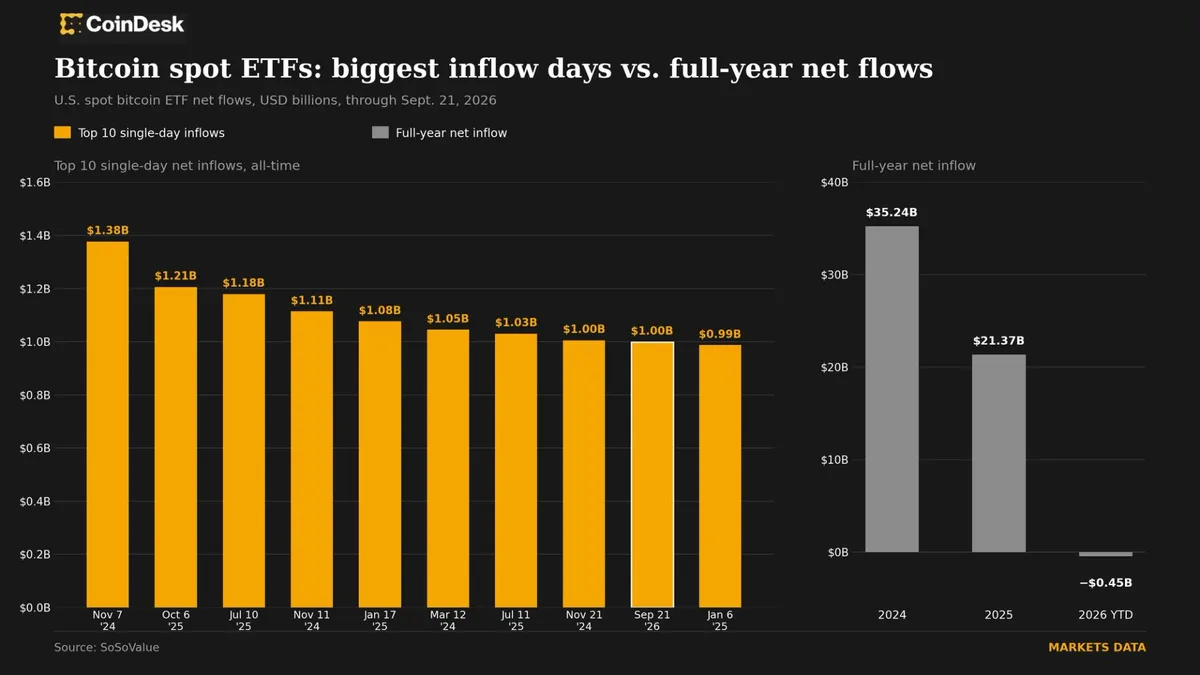
Spot bitcoin ETFs see nearly $1 billion inflow as bitcoin hits January highs

US spot Bitcoin ETFs see nearly $1 billion inflow, highest since October 2025

Bitcoin's rise to $86,000 restores profitability for ETF investors

Apple and Google seek crypto experts, signaling potential stablecoin initiatives

ECB initiates bond purchases using its own funds in crypto-linked system