Reserve assets face new test as sanctions risk pushes Bitcoin into policy debate

Recent discussions surrounding reserve assets have gained momentum following a new paper released by the Bitcoin Policy Institute, which specifically focuses on Taiwan's financial strategy. The paper argues that Taiwan's current reserves are overly concentrated in U.S. dollars, a position that poses significant risks in light of increasing geopolitical tensions and potential sanctions. While the initial argument suggests gold has not fulfilled its potential as a reserve asset, the paper posits that Bitcoin could serve as a valuable complement to both gold and dollars, shifting the narrative around how countries should strategize their reserve holdings.
The backdrop of this discussion is crucial, especially considering Taiwan's unique geopolitical situation. As a territory that faces ongoing threats from larger neighbors, particularly China, Taiwan's financial security is of utmost importance. The historical reliance on the U.S. dollar has implications not just for currency stability but also for the nation's ability to respond to economic sanctions and trade restrictions. By introducing Bitcoin into the conversation, the paper challenges traditional notions of reserve assets and pushes for a broader reevaluation of what constitutes a secure financial strategy in today’s complex international landscape.
This debate matters significantly for the market as it opens the door for Bitcoin to be viewed not merely as a speculative asset but as a legitimate component of national financial strategy. If Bitcoin is adopted as part of reserve assets by countries like Taiwan, it could trigger a broader acceptance of cryptocurrency within institutional frameworks. This shift could enhance Bitcoin's legitimacy and stability, potentially leading to increased demand and higher valuations in the market. Furthermore, it may encourage other nations to reconsider their own reserve strategies, particularly those with vulnerable geopolitical positions.
Industry reactions have been mixed, with some experts praising the paper's insights while others remain skeptical. Proponents argue that Bitcoin's decentralized nature and deflationary characteristics make it an appealing alternative to traditional reserve assets, particularly in times of economic uncertainty. Critics, however, caution against overreliance on cryptocurrencies, citing their volatility and regulatory challenges. They emphasize that while Bitcoin could diversify reserves, it should not completely replace established assets like gold or fiat currencies in national treasury strategies.
Looking ahead, the implications of this paper could influence discussions at higher levels of government and financial institutions regarding reserve asset management. If nations begin to take these ideas seriously, we may see a gradual shift in how reserve assets are allocated, particularly in regions facing geopolitical risks. As this dialogue evolves, it will be crucial for market participants to monitor developments closely, as changes in national reserve strategies can have far-reaching effects on the cryptocurrency landscape.

CoinMagnetic Team
Crypto investors since 2017. We trade with our own money and test every exchange ourselves.
Updated: April 2026
From our insights:
Related news

Bitcoin price targets $86K support as oil falls under $90

GameStop possibly forfeits $31 million in Bitcoin gains from options trade

Researchers trace 1.1 million Bitcoin to early miner but Satoshi's identity remains unclear

Bitcoin, ether perpetual volumes on Kalshi are dominated by an unusual, repetitive trade, data shows
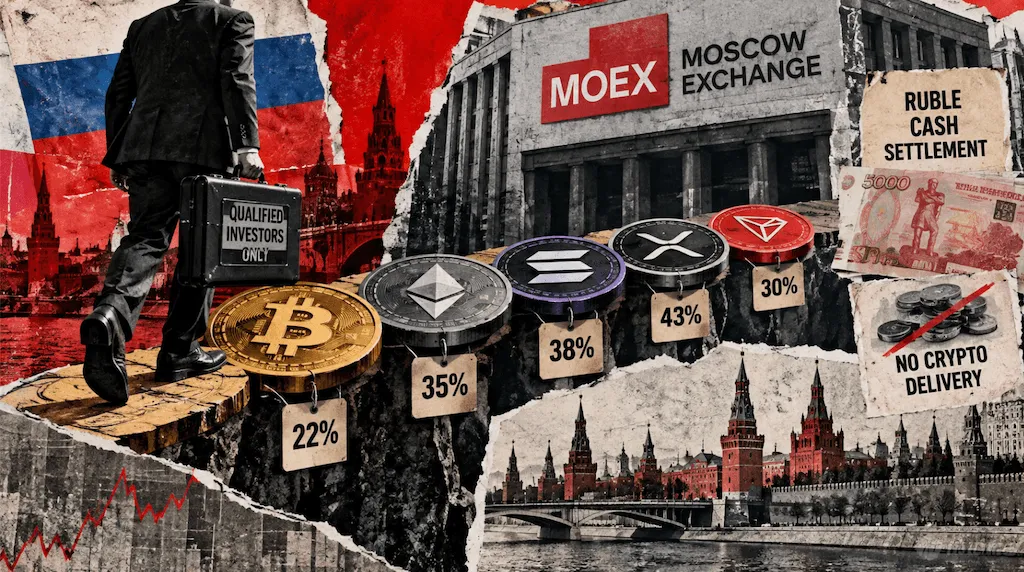
Moscow Exchange introduces 5 crypto perpetual futures amid 600 billion ruble demand