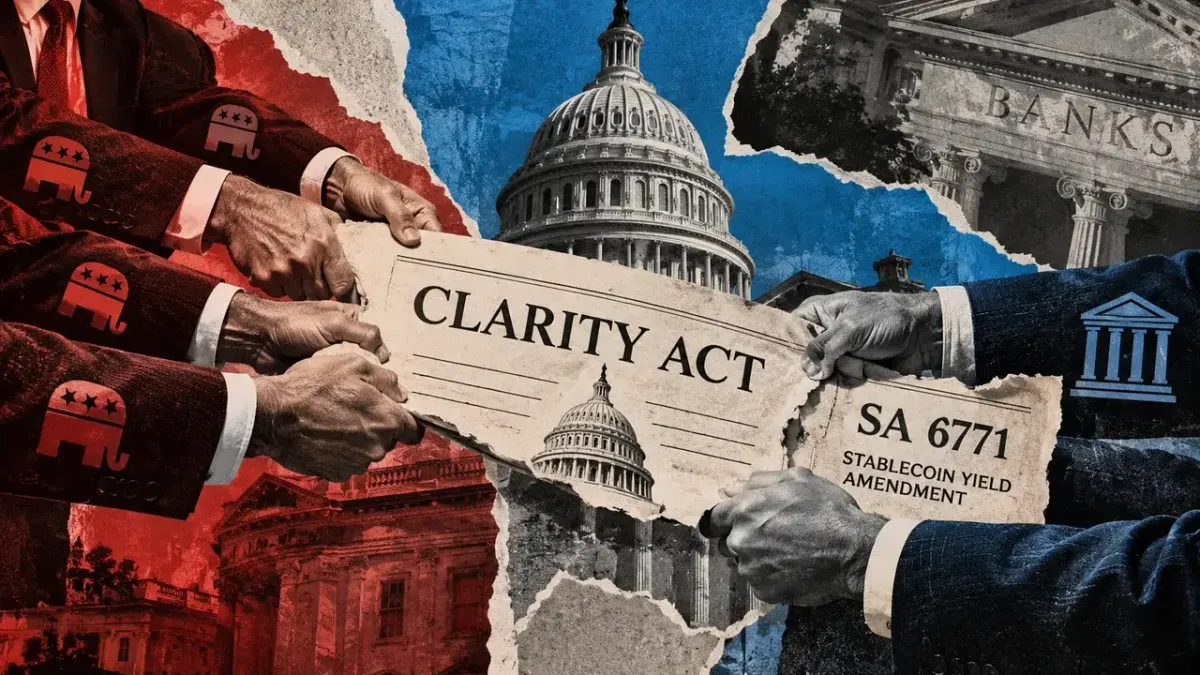
Key Senator Pushes for Vote on Clarity Act–But Hurdles Remain
Senator Thom Tillis has made headlines recently by advocating for a vote on the long-awaited Clarity Act, a piece of legislation that aims to provide clearer regulatory guidelines for the cryptocurrency industry. The bill has been stalled for several months, and Tillis, who holds a crucial swing vote on the Senate Banking Committee, believes it is time for his colleagues to take action. The Clarity Act seeks to establish a framework that defines digital assets and delineates the roles of various regulatory bodies, aiming to foster innovation while ensuring consumer protection. As the cryptocurrency sector continues to evolve, the need for regulatory clarity is increasingly evident, and Tillis is pushing for timely progress on this matter.
The Clarity Act has been a topic of discussion among lawmakers for some time, reflecting broader debates over how best to regulate the burgeoning cryptocurrency market. The legislation aims to address the patchwork of existing regulations that often leaves both consumers and businesses in a state of uncertainty. Previous attempts to pass similar regulations have faced significant hurdles, including differing opinions among lawmakers on the appropriate level of oversight and the potential implications for innovation in the financial technology space. In light of these challenges, Tillis's renewed push signals a growing recognition of the importance of establishing a coherent regulatory framework for cryptocurrencies.
The implications of the Clarity Act for the market cannot be understated. If successful, the legislation could usher in a new era of regulatory certainty that would likely encourage investment and innovation within the cryptocurrency sector. Many industry participants have long argued that the lack of clear guidelines has stifled growth and hindered the United States' competitive position in the global digital asset landscape. By providing clarity, the Clarity Act could help attract more institutional investors and foster a more vibrant ecosystem for startups and established firms alike.
Reactions from the industry have been mixed, with some crypto advocates applauding Tillis's efforts while others express skepticism about the bill's potential effectiveness. Experts highlight the importance of a nuanced approach that balances regulation with innovation, cautioning against overly restrictive measures that could hamper growth. Furthermore, some industry insiders have pointed out that the bill may face opposition from lawmakers who prioritize stringent regulatory measures in the wake of recent market volatility and scandals. This ongoing discourse underscores the complexity of crafting legislation that satisfies both regulatory demands and the need for a thriving crypto ecosystem.
Looking ahead, the fate of the Clarity Act remains uncertain. While Tillis's push for a vote is a positive development, it is clear that significant hurdles still lie ahead. The legislative process can be unpredictable, and the bill will likely face scrutiny and amendments as it makes its way through the Senate. As discussions continue, all eyes will be on the Senate Banking Committee to see if they can reach a consensus that satisfies both regulators and industry stakeholders. The outcome of this legislative effort could greatly influence the future landscape of cryptocurrency regulation in the United States.

CoinMagnetic Team
Crypto investors since 2017. We trade with our own money and test every exchange ourselves.
Updated: April 2026
From our insights:
Related news

Solo GP Jed Breed raises $15 million for his second early-stage crypto fund

Crypto industry may increase PAC spending after CLARITY vote failure

SEC's crypto counsel outlines strategy for custody of digital assets

Reap aims to enhance cross-border FX with non-USD stablecoins including peso

ECB and EU central banks propose liquidity thresholds for stablecoins