Bitcoin at $40,000 would be 'near-unprecedented' statistical outcome, analyst says
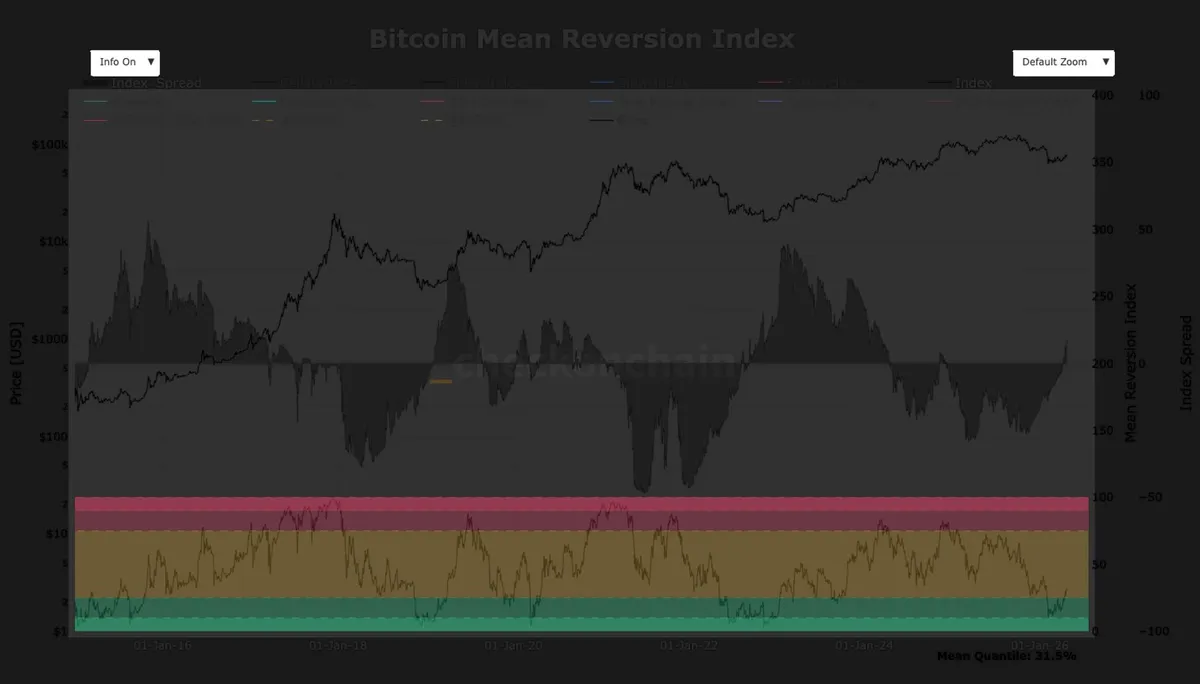
Bitcoin's recent fluctuation around the $40,000 mark has sparked significant discussion among analysts regarding its implications for the cryptocurrency market. According to a recent analysis, reaching this price point would represent a "near-unprecedented" statistical outcome based on mean-reversion models. These models suggest that bearish price targets are indicative of a 0.4th percentile event, which is far beyond what traders have experienced during typical market corrections. This analysis raises concerns about the sustainability of Bitcoin's current price levels and the potential for deeper market corrections.
To understand this perspective, it's essential to look back at Bitcoin's historical performance and the factors that have influenced its price movements over the years. The cryptocurrency market is known for its volatility, which has been exacerbated by macroeconomic conditions, regulatory developments, and shifts in investor sentiment. As Bitcoin has evolved from a niche digital asset to a mainstream investment, its price behavior has become increasingly scrutinized. The current analysis situates Bitcoin's performance within a broader context, highlighting that a drop to $40,000 would not only be statistically rare but would also signify a shift in market dynamics that has not been observed in previous cycles.
This analysis is particularly critical for investors and traders as it underscores the potential risks associated with holding Bitcoin at its current price levels. The notion that a decline to $40,000 would represent a rare event suggests that the market may not be prepared for a significant downturn. For many participants, this could signal the need for a reassessment of their investment strategies. The implications extend beyond individual portfolios; they may influence overall market sentiment and drive larger trends in cryptocurrency trading.
Industry experts have weighed in on this analysis, expressing a mix of caution and optimism. Some analysts argue that while the statistical models indicate a potential for significant price corrections, the underlying fundamentals of Bitcoin–such as adoption rates and institutional interest–remain robust. Others caution that the market is heavily influenced by external factors, including regulatory changes and macroeconomic pressures, which could exacerbate volatility in the near term. This divergence in perspectives shows that while some remain optimistic about Bitcoin's long-term trajectory, others are wary of potential short-term pitfalls.
Looking ahead, the situation remains fluid, and market participants will be closely monitoring Bitcoin's price movements for further indications of its direction. Analysts suggest that the coming weeks could be pivotal in determining whether Bitcoin can maintain its current levels or if a deeper correction is on the horizon. As the market grapples with these uncertainties, investors will need to stay informed and adapt to the evolving landscape of the cryptocurrency market.

CoinMagnetic Team
Crypto investors since 2017. We trade with our own money and test every exchange ourselves.
Updated: April 2026
From our insights:
Related news

Bitcoin price targets $86K support as oil falls under $90

GameStop possibly forfeits $31 million in Bitcoin gains from options trade

Researchers trace 1.1 million Bitcoin to early miner but Satoshi's identity remains unclear

Bitcoin, ether perpetual volumes on Kalshi are dominated by an unusual, repetitive trade, data shows

Moscow Exchange introduces 5 crypto perpetual futures amid 600 billion ruble demand