PasarNetral
Bitcoin passes halfway point in halving cycle as price gains trail prior cycles
Sumber: CoinDesk
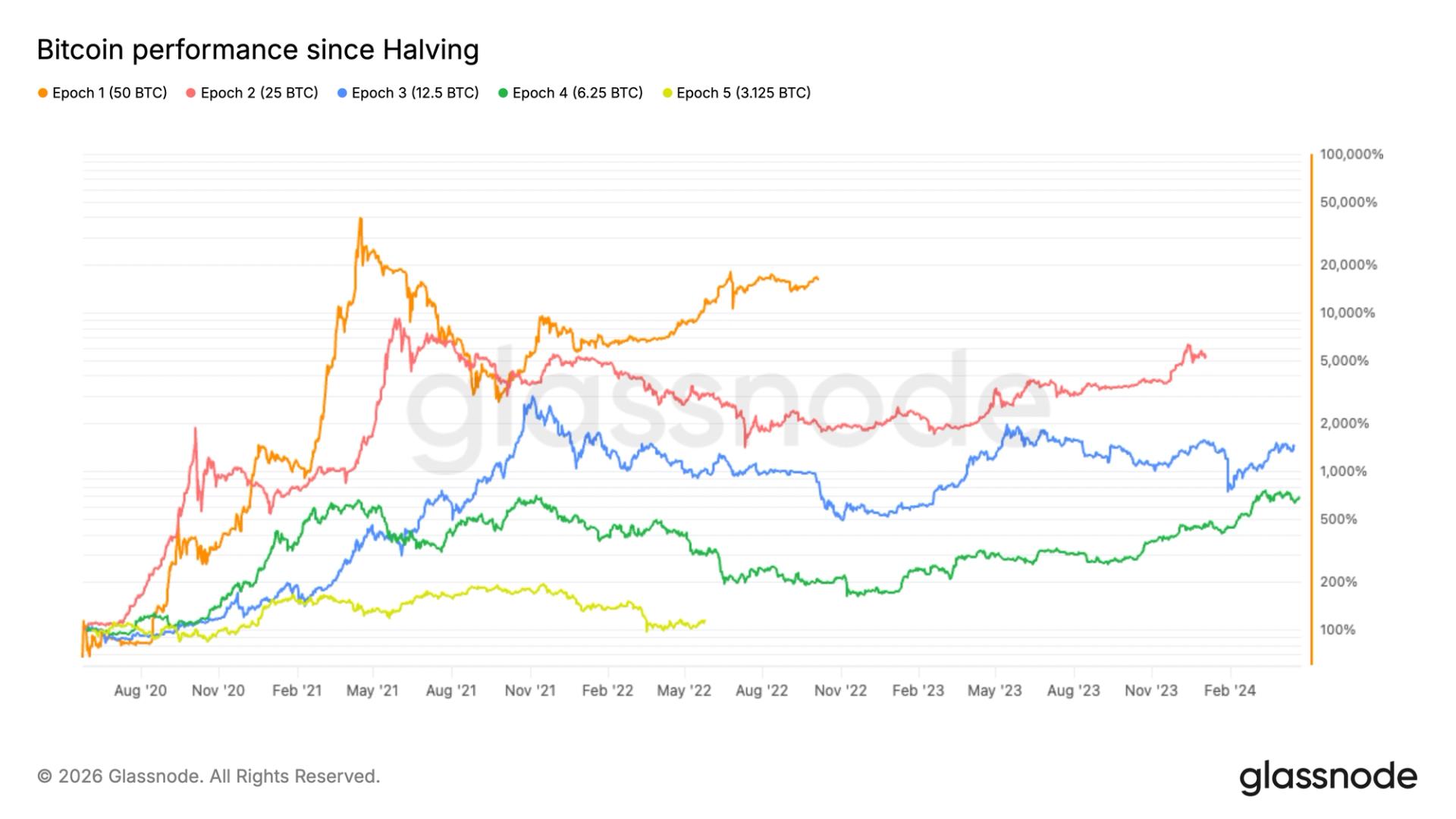
Bitcoin has officially crossed the halfway point in its halving cycle, a significant milestone that historically precedes notable market movements. This event is marked by Bitcoin's block reward being reduced from 6.25 BTC to 3.125 BTC for every block mined, a mechanism designed to curb inflation and maintain scarcity. While many investors are keenly watching the price action, the recent trends indicate that Bitcoin's gains following this halving are trailing behind those of previous cycles. As of now, Bitcoin's price has shown modest growth, suggesting a shift in market dynamics as the cryptocurrency matures.
To understand the implications of this halfway mark, it is essential to consider the historical context of Bitcoin's halving events. The first halving occurred in 2012, followed by another in 2016, each resulting in substantial price surges in the months and years that followed. These events have been pivotal in establishing Bitcoin's narrative as "digital gold," attracting both retail and institutional investors. However, as Bitcoin matures and integrates into mainstream finance, the environment surrounding these halvings has evolved. Regulatory scrutiny, market saturation, and increased competition from alternative cryptocurrencies have all played a role in shaping current market sentiment.
The slower post-halving gains highlight Bitcoin's transformation into a more established asset class, which may signal a new era for the cryptocurrency. Investors are now more discerning, focusing not just on speculative gains but also on fundamentals, technology, and regulatory developments. This maturation could lead to more stable price movements, albeit at the cost of the explosive growth seen in earlier cycles. As Bitcoin transitions into a more mainstream financial instrument, the market may begin to prioritize sustainability and utility over sheer price speculation.
Industry experts have weighed in on the current state of Bitcoin in relation to its halving cycle. Many analysts emphasize the importance of recognizing the changing landscape, suggesting that slower price movements may indicate a healthier market. Notably, some crypto veterans express optimism about Bitcoin's long-term potential, citing its increasing adoption in various sectors and its role as a hedge against inflation. However, skepticism remains, particularly among those who remember the euphoric highs of previous cycles, leading to a mixed bag of sentiment across the community.
Looking ahead, the implications of this halfway point in the halving cycle will likely play a critical role in shaping market strategies. Investors and analysts will closely monitor Bitcoin's performance in the coming months to gauge whether it can sustain its current trajectory or if it will revert to the volatility that characterized its earlier days. As the cryptocurrency landscape continues to evolve, the insights gained from this cycle may inform future decisions and strategies for both individual traders and institutional players alike.
CM
Tim CoinMagnetic
Investor kripto sejak 2017. Kami berinvestasi dengan uang sendiri dan menguji setiap exchange secara langsung.
Diperbarui: April 2026
Dari analisis kami:
Ingin mendapatkan berita lebih awal?
Ikuti saluran Telegram kami – kami memposting berita dan analisis terkini.
Ikuti saluran