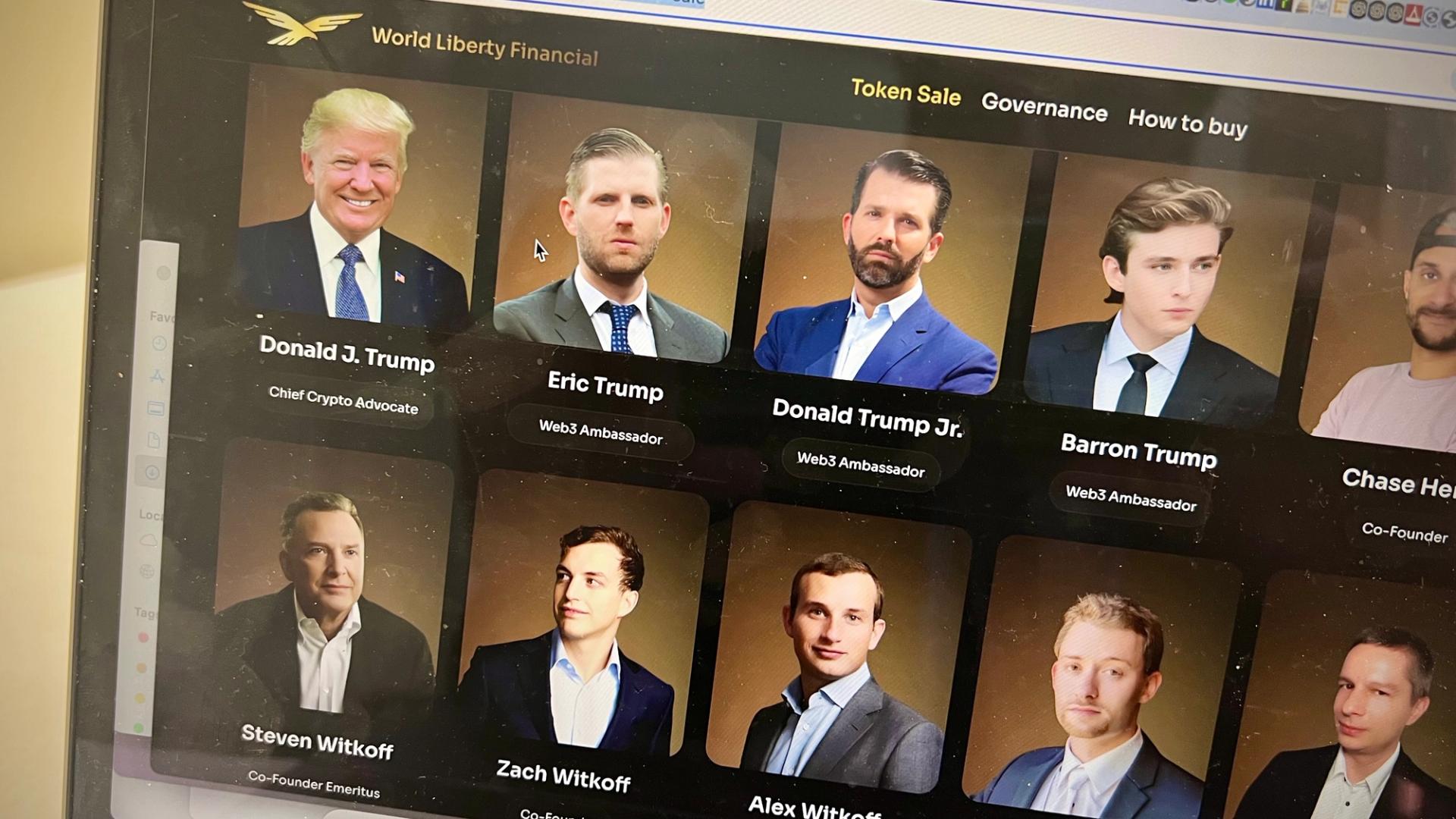
In a recent development that has captured the attention of the crypto community, Trump's World Liberty Financial (WLFI) has utilized a staggering 5 billion of its own tokens as collateral to secure a $75 million loan from a platform co-founded by one of its advisors. This transaction has raised eyebrows, particularly because the borrowed stablecoins were subsequently transferred to Coinbase Prime. The implications of this move have been significant, pushing the lending pool to full utilization and leaving depositors unable to make withdrawals, a situation that can create ripples of concern among investors and stakeholders.
To understand the gravity of this situation, it is essential to consider the context surrounding it. World Liberty Financial, a company associated with former President Donald Trump, has been attempting to carve out a niche within the volatile crypto landscape. The use of WLFI tokens as collateral is not just a straightforward borrowing mechanism; it reflects a strategic financial maneuver designed to leverage available assets in a highly competitive market. However, the decision to deposit such a large amount of tokens raises questions about liquidity and risk management, especially when the lending pool reaches full capacity.
The implications for the market are significant. The fact that a single entity can push a lending pool to 100% utilization underscores the potential for liquidity crises, particularly in decentralized finance (DeFi) environments where user access to their funds may be suddenly curtailed. This incident could instigate further scrutiny from regulators and industry participants alike, leading to discussions about the sustainability of lending protocols that rely heavily on token collateral. Market participants may also be concerned about the broader ramifications this could have on token prices and investor confidence in WLFI and similar projects.
Industry reactions have been mixed, with some experts expressing concern over the risks associated with such high levels of collateralization in a volatile market. Others suggest that this could be a calculated risk on WLFI's part, indicating a belief in the stability and future value of its own tokens. Commentators have pointed out that this move may provoke discussions about the robustness of lending protocols and their ability to manage liquidity crises, especially when utilizing native tokens as collateral. As more stakeholders weigh in, it is likely that this incident will become a case study for both risk management and strategic financial planning in the crypto space.
Looking ahead, the key question for WLFI and its stakeholders is how this situation will unfold. Will the platform manage to maintain liquidity and trust among depositors, or will this incident spark a wider reevaluation of lending practices in the crypto industry? Observers are keen to see whether WLFI will take steps to reassure investors and stabilize the situation, or if further developments will emerge that could exacerbate concerns about liquidity and market confidence. As the story unfolds, it will undoubtedly be a focal point for discussions around the future of DeFi lending and collateralization strategies.
Equipo CoinMagnetic
Inversores en cripto desde 2017. Operamos con nuestro propio dinero y probamos cada exchange personalmente.
Actualizado: abril de 2026
¿Quieres enterarte de las noticias primero?
Síguenos en nuestro canal de Telegram – publicamos noticias importantes y análisis.
Seguir el canal