Marc Andreessen calls AI job loss fears “fake,” expects employment gains

In a recent statement, Marc Andreessen, the co-founder of Andreessen Horowitz, has characterized the prevailing fears surrounding job losses due to artificial intelligence (AI) as “all fake.” He argues that rather than a threat to employment, AI is poised to usher in a “massive jobs boom.” His comments come at a time when fresh data from the U.S. labor market indicates a rise in long-term unemployment, with several tech companies citing AI advancements as a reason for recent workforce reductions. Andreessen's perspective challenges the narrative that AI will lead to significant job displacement, suggesting instead that it could create new opportunities in various sectors.
The backdrop to Andreessen's remarks is the ongoing debate about the impact of AI on the workforce. Over the past few years, concerns have intensified as automation and machine learning technologies have advanced rapidly. Many industry experts and labor advocates have warned that AI could replace numerous jobs, particularly in routine and manual tasks. This concern has been echoed in the tech industry, where companies are increasingly implementing AI solutions, leading to layoffs in some areas. However, Andreessen's optimistic outlook presents a counter-narrative, focusing on the potential for AI to enhance productivity and generate new jobs that we may not yet envision.
This perspective is significant for the market as it could influence investor sentiment and corporate strategies. If Andreessen's predictions hold true, we could see a shift in how companies view AI–not merely as a cost-cutting tool but as a catalyst for growth and innovation. This might lead to increased investment in AI technologies, not just for efficiency but for the creation of new roles and industries. As businesses adapt to these changes, the overall labor market dynamics could evolve, potentially alleviating some fears surrounding employment stability in the face of advancing technologies.
Industry reactions to Andreessen's comments have been mixed. While some experts share his optimism, believing that AI will lead to the creation of new job categories, others remain skeptical. They argue that the transition may not be smooth and could exacerbate existing inequalities in the labor market. Critics emphasize the need for retraining and education to ensure that the workforce is prepared for the jobs of the future. The ongoing discourse highlights the complexity of the relationship between technological advancement and employment, indicating that the true impact of AI on jobs may take time to fully understand.
Looking ahead, the conversation around AI and employment is expected to intensify. As more companies adopt AI technologies, the effects on job creation and loss will become clearer. Policymakers, educators, and industry leaders will need to collaborate to ensure that the workforce is equipped to adapt to these changes. Andreessen's predictions serve as a reminder that while challenges may arise, opportunities for growth and innovation also exist. The next few years will be crucial in determining how society navigates this evolving landscape, and the outcomes will likely shape the future of work for generations to come.

CoinMagnetic Team
Crypto investors since 2017. We trade with our own money and test every exchange ourselves.
Updated: April 2026
From our insights:
Related news

Bitcoin's weekly close above $81,000 signals potential rise to $90,000

Elon Musk's X integrates bitcoin trading options for U.S. users
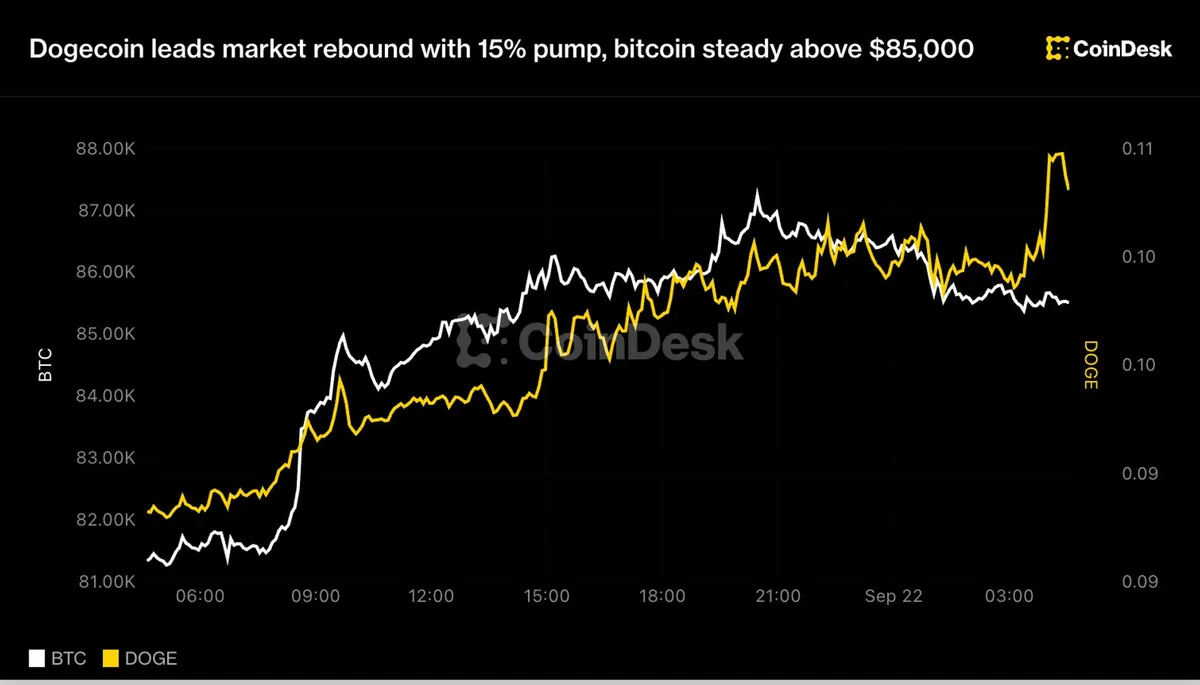
Dogecoin's 15% surge drives market recovery as bitcoin stabilizes above $85,000

Cardano adds tools for AI agent payments, joining Solana and XRP Ledger

Trueo prediction market moves from Base to Ethereum